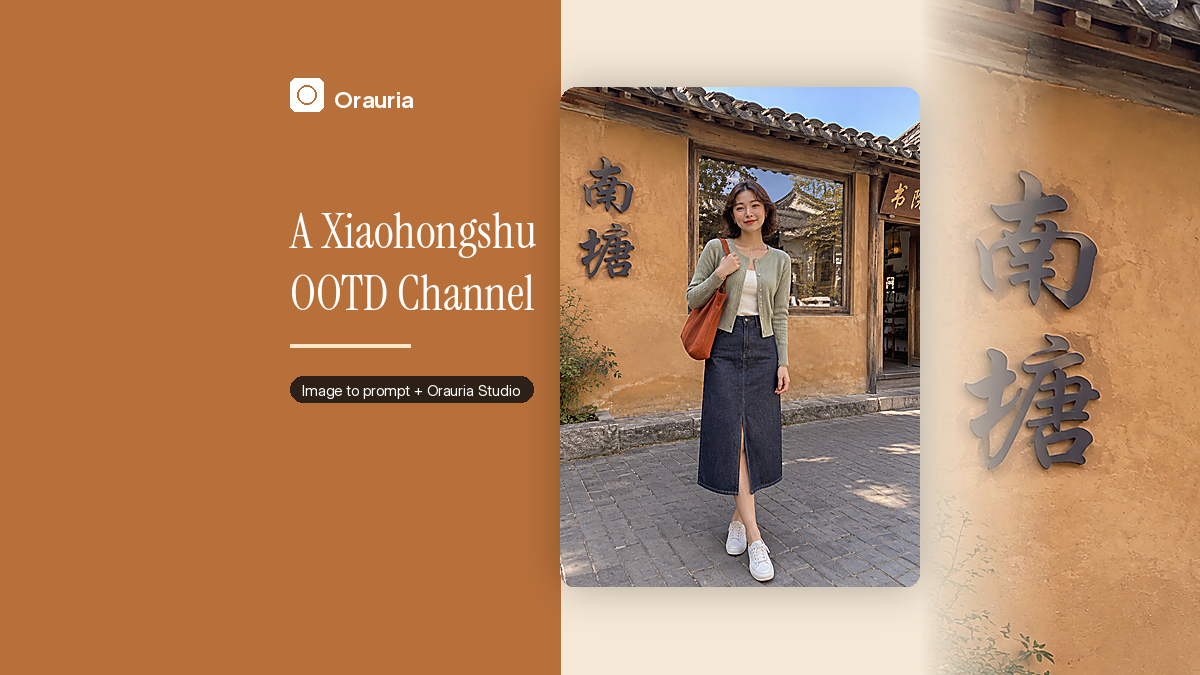
Instagram carousels and TikTok dumps are not the only shape a fashion channel can take. Xiaohongshu — also called RED, or 小红书 — is built around notes: a vertical cover, a short title that has to work in a two-column feed, and a few more frames behind the tap. Travel and street-fashion OOTD notes are a natural fit. The cover is a 3:4 portrait. The title is closer to a search hook than a casual caption. The rest of the note can be the hem, the bag, the street.
This playbook starts from one Pinterest pin. A million views is the direction of the work, not a result we are claiming. We have one generated still, and an illustration of how a note would hold it.
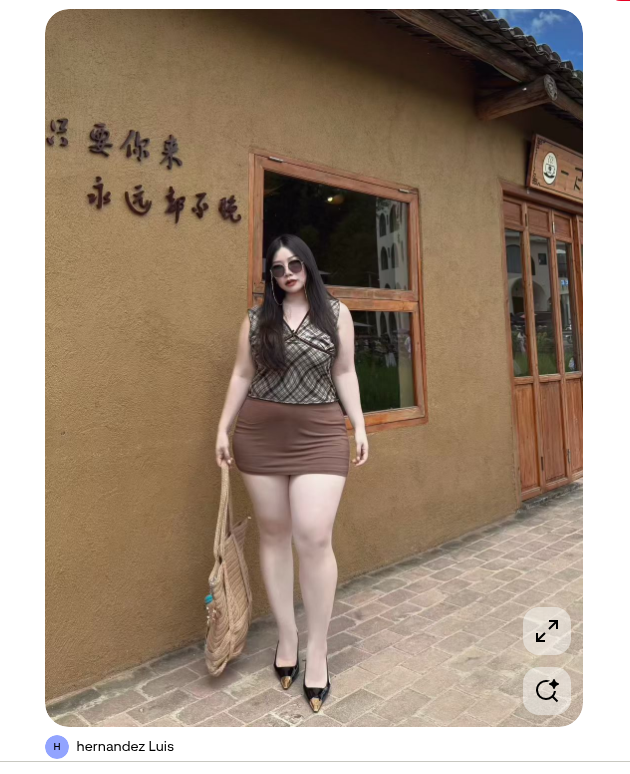
The reference is this pin by hernandez Luis: a full-body street-fashion portrait outside a rustic ochre storefront, plaid wrap top, brown mini, gold-toe heels, a woven bag, raised calligraphy on the wall. It is a complete travel-OOTD frame. It is also someone else’s face and someone else’s outfit. The woman in the still we generated is a different person, on purpose, in a different look, on the same kind of street.
The playbook at a glance
- Install the Chrome extension.
- Find a pin with a place and a 3:4 (or close) full-body crop — a street you could return to, not just a pose.
- Run Image to prompt and copy the brief.
- Rewrite the character. Restyle the outfit. Keep the storefront and the light.
- Generate the first cover in Studio, then plan the note as a cover plus supporting frames, not as a reprint of the pin.
First, install the extension
Image to prompt only works after you install the Chrome extension AI Assistant Copilot – Orauria. Get it from the Chrome Web Store before you go looking for a reference. Once it is on, you can right-click a pin and pull a prompt from it.
Find a street, not a look to clone
Xiaohongshu’s discovery feed is a two-column waterfall. The first image of a note is what people see before they tap, and in common practice that cover is a 3:4 vertical — taller than a square, shorter than a story, with a larger footprint than a 1:1 card. Other ratios are possible; 3:4 is the one that usually looks native. This pin already thinks that way: a full-body 3:4, a storefront with depth, daylight that can host more than one frame. The original face should not travel into those later frames, and neither should the original outfit if you want the note to be yours.
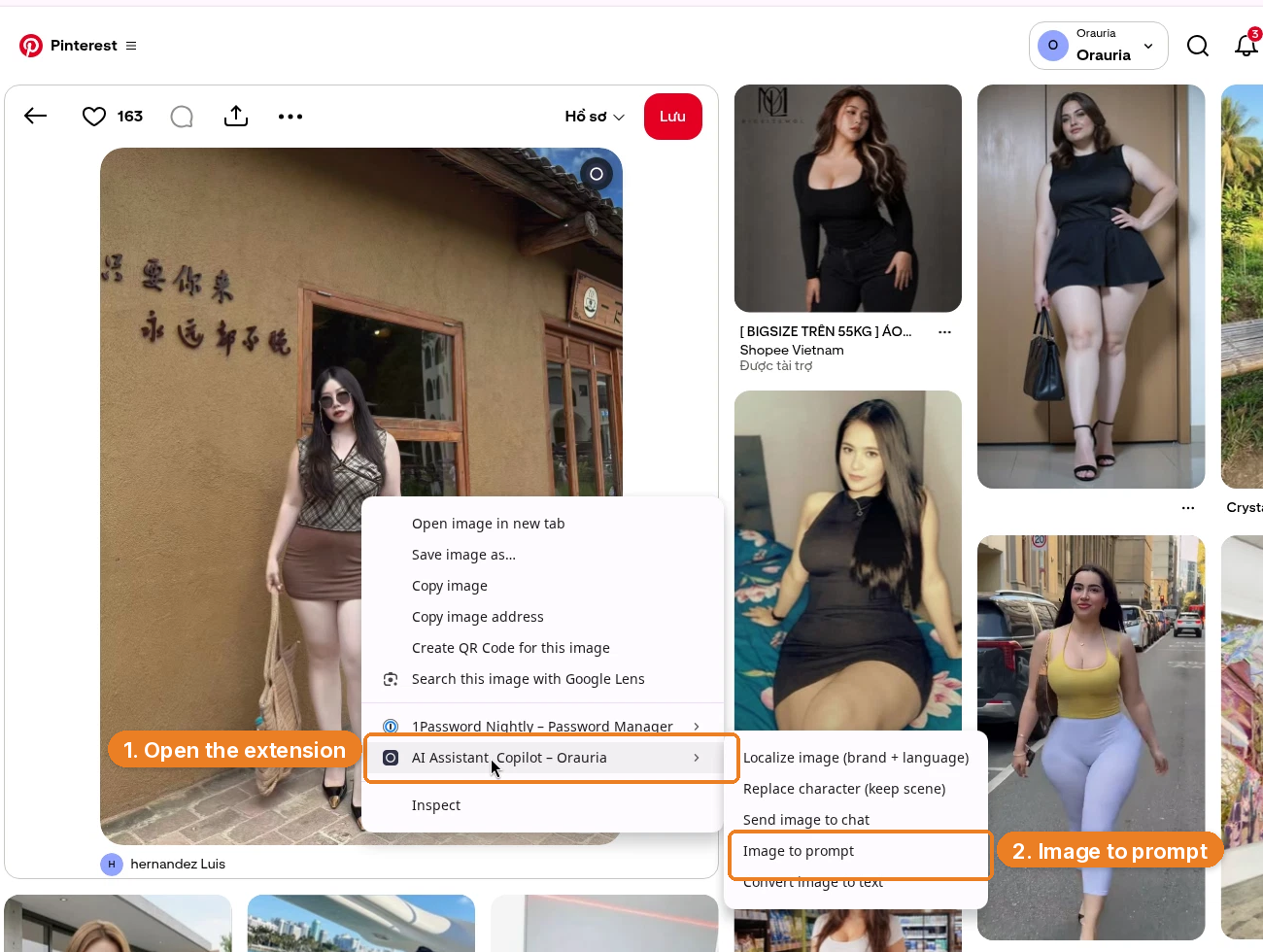
Right-click the image, open AI Assistant Copilot – Orauria, and choose Image to prompt.
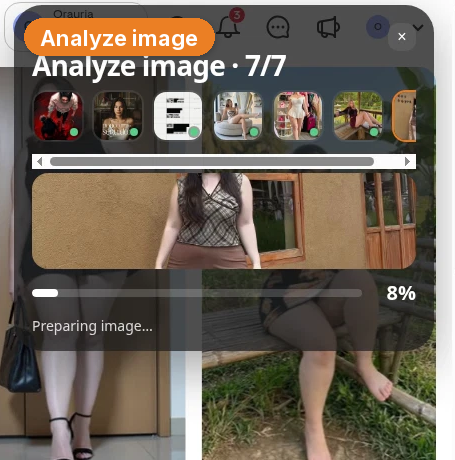
The panel analyzes the picture, then returns a prompt you can copy.
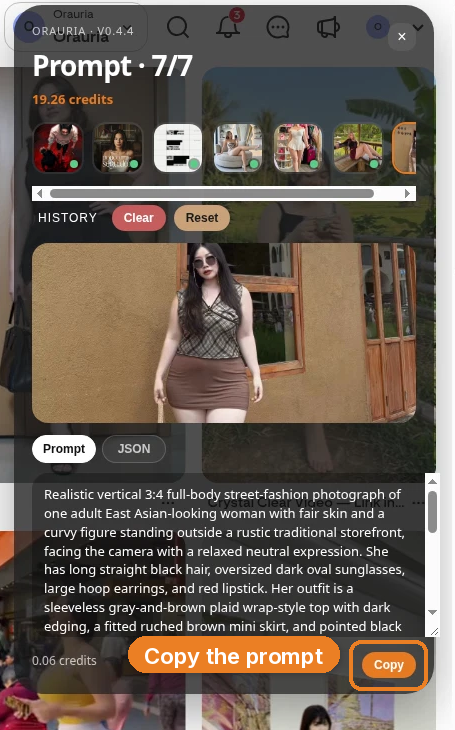
This is the prompt as it came back:
Realistic vertical 3:4 full-body street-fashion photograph of one adult East Asian-looking woman with fair skin and a curvy figure standing outside a rustic traditional storefront, facing the camera with a relaxed neutral expression. She has long straight black hair, oversized dark oval sunglasses, large hoop earrings, and red lipstick. Her outfit is a sleeveless gray-and-brown plaid wrap-style top with dark edging, a fitted ruched brown mini skirt, and pointed black high heels with metallic gold toe caps. She holds a large woven beige shoulder bag with fringe, textured handles, and small turquoise decorations. The background is an ochre textured plaster wall with dark raised Chinese calligraphy on the left, a wooden-framed reflective window behind her showing courtyard architecture, and a wooden entrance with partially visible Chinese signage on the right. A dark tiled wooden roof crosses the upper edge with blue sky above, while gray brick paving fills the foreground. Warm natural daylight, soft shadows, realistic skin and textile texture, moderate wide-angle smartphone or compact-camera perspective, slight clockwise tilt, muted earthy colors, natural reflections, documentary travel-fashion finish.
The useful part is the street: the ochre plaster, the calligraphy, the wooden-framed window, the tiled roof, the 3:4 crop, the slight clockwise tilt, the warm daylight. The part you owe the rewrite is the person — and, for an OOTD channel, the clothes.
Change the face, then restyle the OOTD
A Xiaohongshu fashion note is easy to get wrong in both directions. If you keep the pin’s face, you do not have a channel; you have a reprint. If you keep every stitch of the outfit and only tweak a hairstyle, you are still too close. So we changed both.
The new character is still a young East Asian woman — this street photograph sits in that world — but she is not the woman in the pin. We asked for a clearly distinct face: warm light-medium skin, a softly rounded oval, a small beauty mark near the left cheek, a chin-length softly wavy dark-brown bob with a side part, no sunglasses, understated makeup, small silver studs. The long straight black hair, oversized dark ovals, hoops, and red lipstick stay with the pin.
Then we restyled the look, the way you would if you packed for this street: a cropped muted-sage knit cardigan over a cream top, a high-waisted dark indigo denim midi with a front slit, clean white sneakers, a small rust-orange canvas tote. The plaid wrap, the ruched mini, the gold-toe heels, and the fringed woven bag stay with the pin too.
Realistic vertical 3:4 full-body Xiaohongshu street-fashion photograph of a different young adult East Asian woman, about 24, with warm light-medium skin, a softly rounded oval face, a small beauty mark near her left cheek, dark brown eyes, and a petite athletic build. Give her a clearly distinct appearance from the pin model: a chin-length softly wavy dark-brown bob with a side part, no sunglasses, understated natural makeup, and small silver stud earrings. She stands outside a rustic traditional storefront, facing the camera with a relaxed, friendly expression. Her outfit is a cropped muted-sage knit cardigan over a cream top, a high-waisted dark indigo denim midi skirt with a front slit, and clean white low-top sneakers. She carries a small rust-orange canvas shoulder tote with simple straps. The background is an ochre textured plaster wall with dark raised Chinese calligraphy on the left, a wooden-framed reflective window behind her showing courtyard architecture, and a wooden entrance with partially visible Chinese signage on the right. A dark tiled wooden roof crosses the upper edge with blue sky above, while gray brick paving fills the foreground. Warm natural daylight, soft shadows, realistic skin and textile texture, moderate wide-angle smartphone or compact-camera perspective, slight clockwise tilt, muted earthy colors, natural reflections, polished but candid Xiaohongshu travel-fashion editorial finish.
That is the ethical move, and it is also the editorial one. Followers of an OOTD channel are not signing up to watch you reprint a viral pin. They are signing up for a person and a street that can show up again in a new look.
Generate the first cover in Studio
Open Orauria Studio:
- Image, then Single
- Aspect ratio, Resolution, and Quality: Adaptive
- Model: TT Image 2.5
- Generate with the send button, or Ctrl+Enter
Paste the rewritten prompt. The 3:4 is already in the brief; with Adaptive on, the model can pick up that framing.
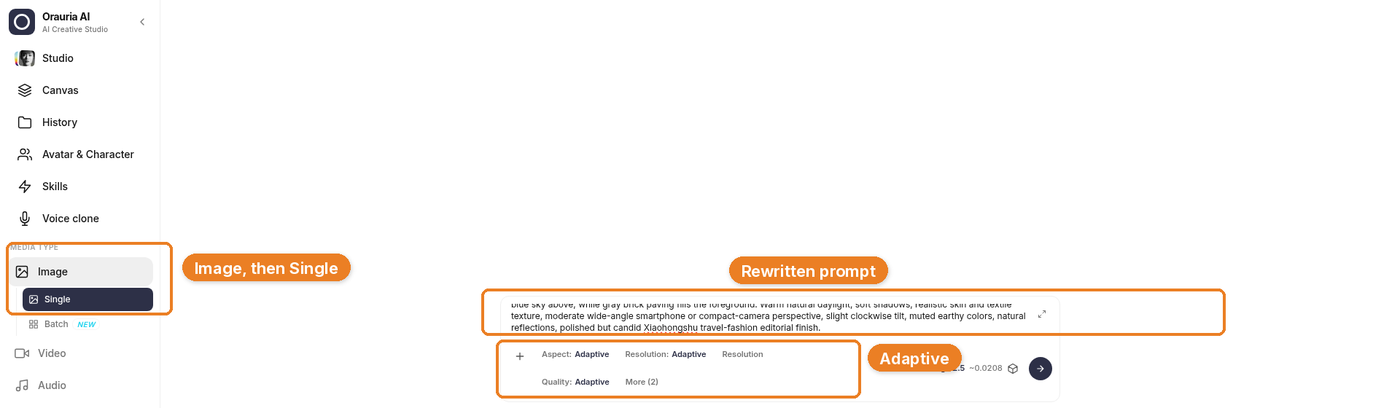
Generation takes a few seconds; the result then appears. The brief is already yours; this is just the model catching up.
The still that came back kept the ochre wall, the wooden window, the tiled roof, the brick pavement, the slight tilt. The woman is not the woman in the pin, and the outfit is not the pin’s outfit.
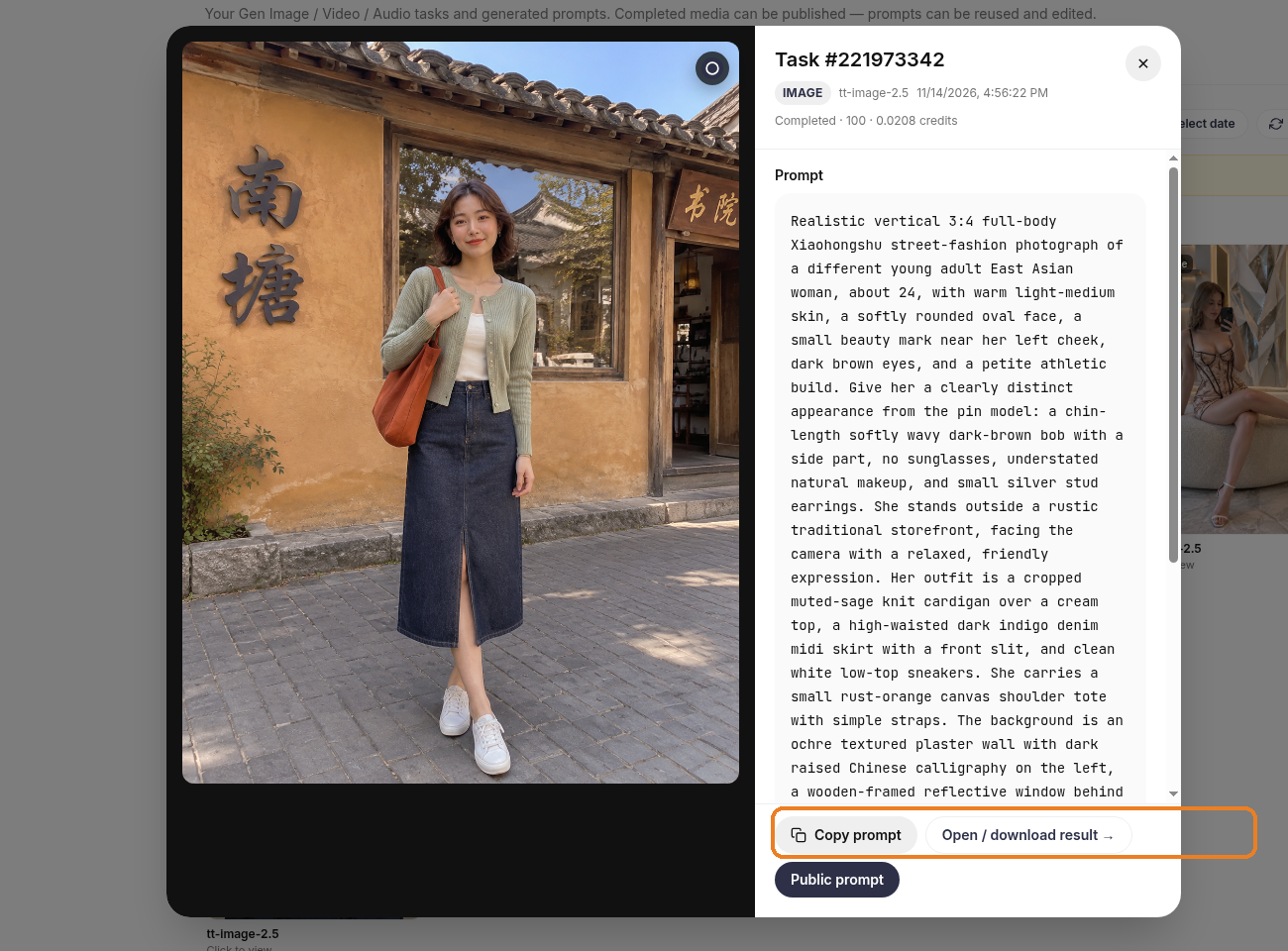
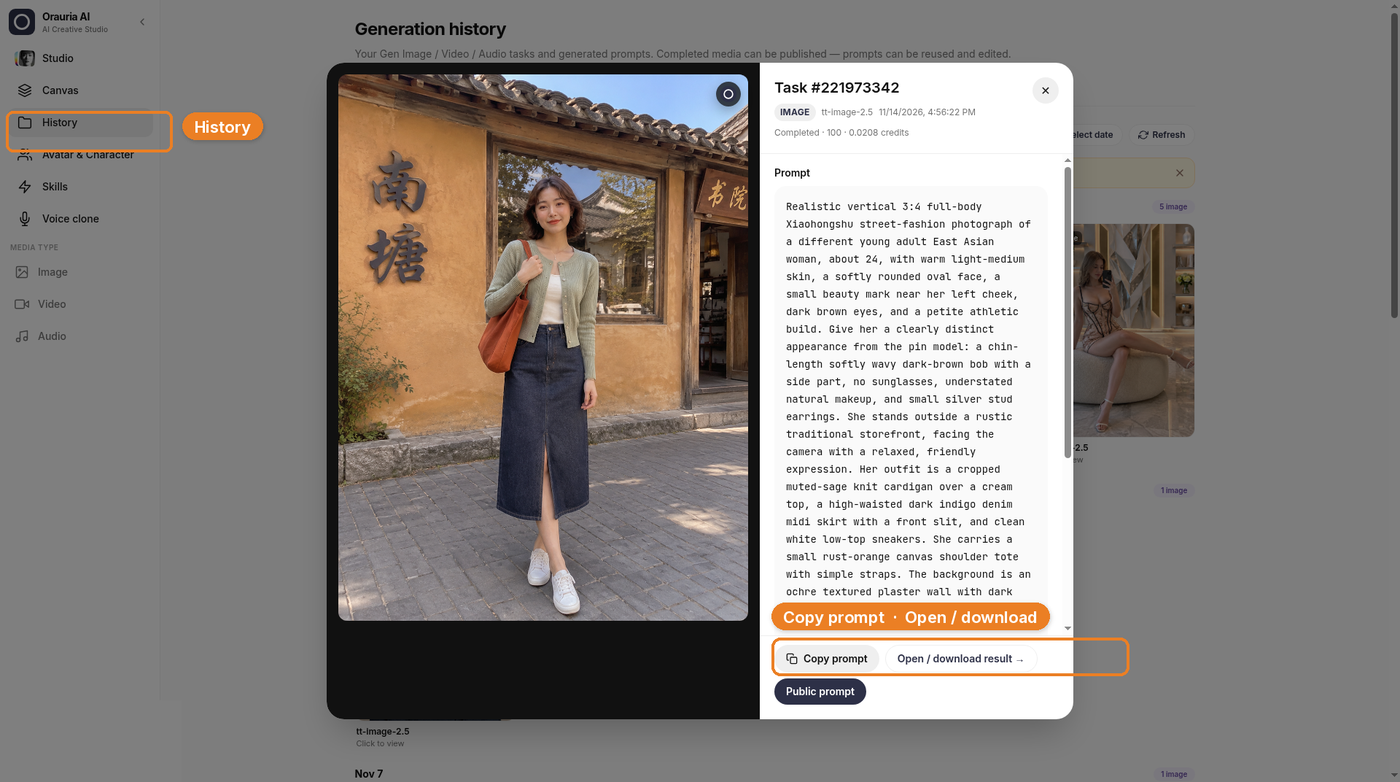
Open History if you want a larger view, a copy of the prompt, or a download. Use Copy prompt and Open / download result. The high-resolution still in this article is the downloaded result, not a crop of the chat thumbnail.
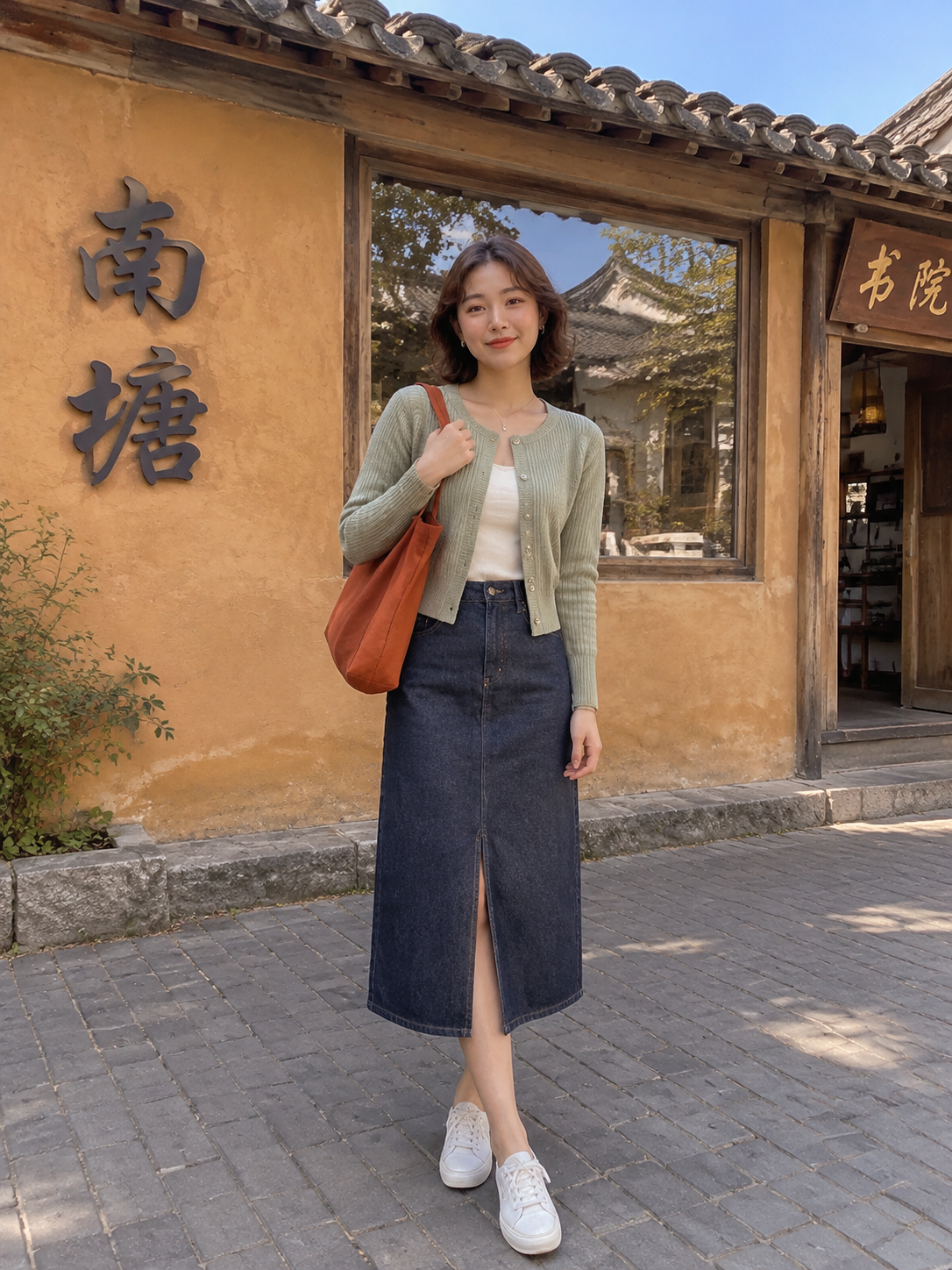
What a note looks like when you only have one still
On Xiaohongshu, the cover does most of the work in the feed. A short, specific title sits with that cover — place, look, season, something a person might search — and it behaves more like a hook than a casual Instagram caption. Real titles on the platform are usually in Chinese; the English line in the layout below is a stand-in, not a live post.
After the tap, a note can hold more than one image. The useful extras are the ones that still belong to the same hour: a closer crop on the cardigan, the slit in the midi, the rust tote against the plaster, maybe the wooden door or the paving. We only made one still, so the other cells in the illustration are empty placeholders. The image is an illustration, not a live note, and it does not carry like counts, collects, or follower numbers we do not have. It also does not use Xiaohongshu’s logo or official branding.
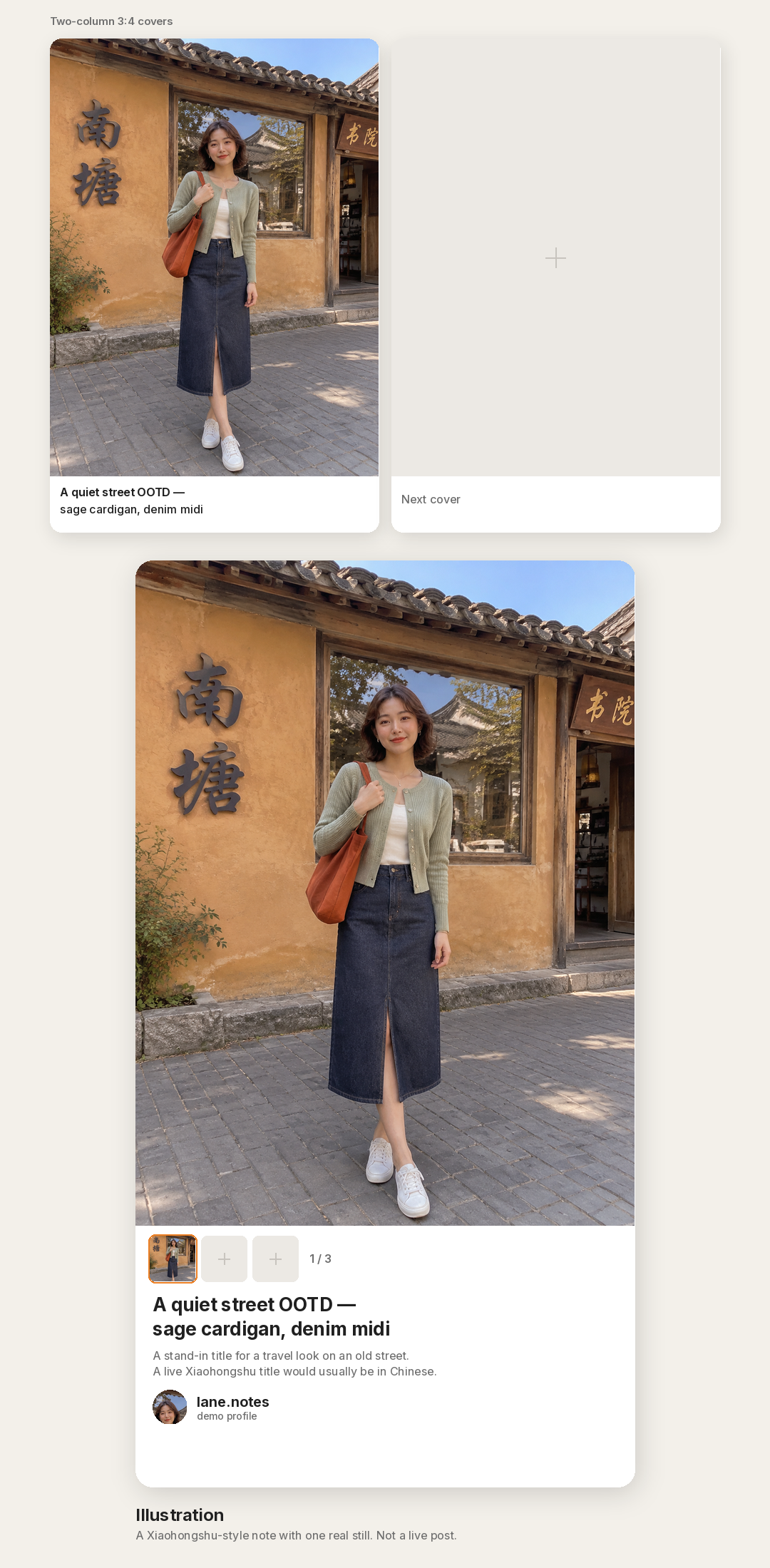
How a note earns the second look
If this were a real note, the next frames would stay on the same street, with the same person, in the same look. We did not generate them, so treat this as a storyboard: a half-body crop that still reads at small size in the two-column feed, a detail of the sage knit and the tote, a step toward the wooden entrance. The cover should stay 3:4, and the other images in the note should share that ratio so the set does not jump when someone swipes.
A channel, as opposed to a single note, is the same person coming back to streets like this in new outfits — not a new face every time a different pin goes viral. When a later cover needs a new composition, run Image to prompt again on a reference that has the crop or the light you want, then keep your character and restyle the clothes. The original pin taught the first street. It does not get to cast the wardrobe.
One practical note for anyone actually publishing there: Xiaohongshu is primarily a Chinese-language platform. The prompt can stay in English; the title and the body of a real note usually should not.
What this playbook is not
It is not a growth report. We are not going to borrow the pin’s save count, or invent a view count for a note we have not posted. A million views is a goal, not a case study. It is not an Instagram carousel and it is not a lifestyle photo dump. And it is not a shortcut around the face rewrite. If the woman on the ochre street is still the woman from the pin, you do not have a channel yet. You have a reprint with a 3:4 crop.
Start here
Install AI Assistant Copilot – Orauria from the Chrome Web Store, find a pin that is really a street, and write a person who can come back to it in a new OOTD. Generate the first 3:4 cover in Studio. Then build the rest of the note from that hour, not from the original portrait.
Start here: orauria.com, and the Chrome Web Store listing for AI Assistant Copilot – Orauria.
Leave a Reply