
This article is part of a practical Grok Bot series that began with 7 Grok Bot Tips to Schedule Posts, Filter Upwork Jobs, and Research Faster and continued through a weekly social-posting routine with Postiz, an Upwork job filter with human-reviewed proposal drafts, a research workflow that turns sources and verification into a skill, and a multi-bot team extended with Orauria. The use-case pieces so far have covered a weekday competitor price watch, a pack that turns one blog post into approved social drafts, a morning trend and industry-news digest, and a lead-research loop that leaves outreach drafts and meeting briefs. This fifth use-case stays with the same rule: a Bot can brief the morning — inbox, calendar, Notion deadlines, and a small set of alerts — while every reply, every listing change, and every decision to act stays with a person. It is written as an illustrative week, not a client case study, and it does not claim an official partnership with xAI or Grok Bot.
Facts about Grok Bot come from public pages on x.ai/bot and docs.x.ai, including the documentation on skills and routines and the cloud computer and apps (updated 11 November 2026). We checked those sources on 12 November 2026 (Asia/Saigon, UTC+7). Official docs describe Connect apps that include Gmail, Google Calendar, and Notion, plus an Email app that gives a Bot one mail.grokbot.com address. Email from a routine waits as a draft until you press Send; there is no unattended sending. Official materials also describe triggers that can include a webhook, Slack, GitHub, Linear, Sentry, and PagerDuty, and they list Stripe among Connect apps. We have not independently verified those connections or triggers end to end in this run, and we have not independently run this exact morning-briefing workflow inside Grok Bot. Nothing in this article asks the Bot to auto-reply to customers or to change a store listing on its own.
Key takeaways. A useful morning brief is not a Bot that forwards your inbox to you a second time, or that replies while you are still making coffee. It is a short, named skill, a weekday routine in your time zone, a one-page pass that names what needs a person, and a hard rule that drafts stay drafts. Official docs describe a persistent cloud computer with a browser, files, and a command line, plus scheduled routines that keep running while your laptop is closed. Gmail, Calendar, and Notion are documented starting points, not paths we verified in this run. Effectiveness is not a promised number of minutes saved. It is what you measure: missed deadlines the brief caught, false alarms, drafts that left the queue without approval, and replies the Bot never sent. Keep every reply, and every change to a live listing, with a person.
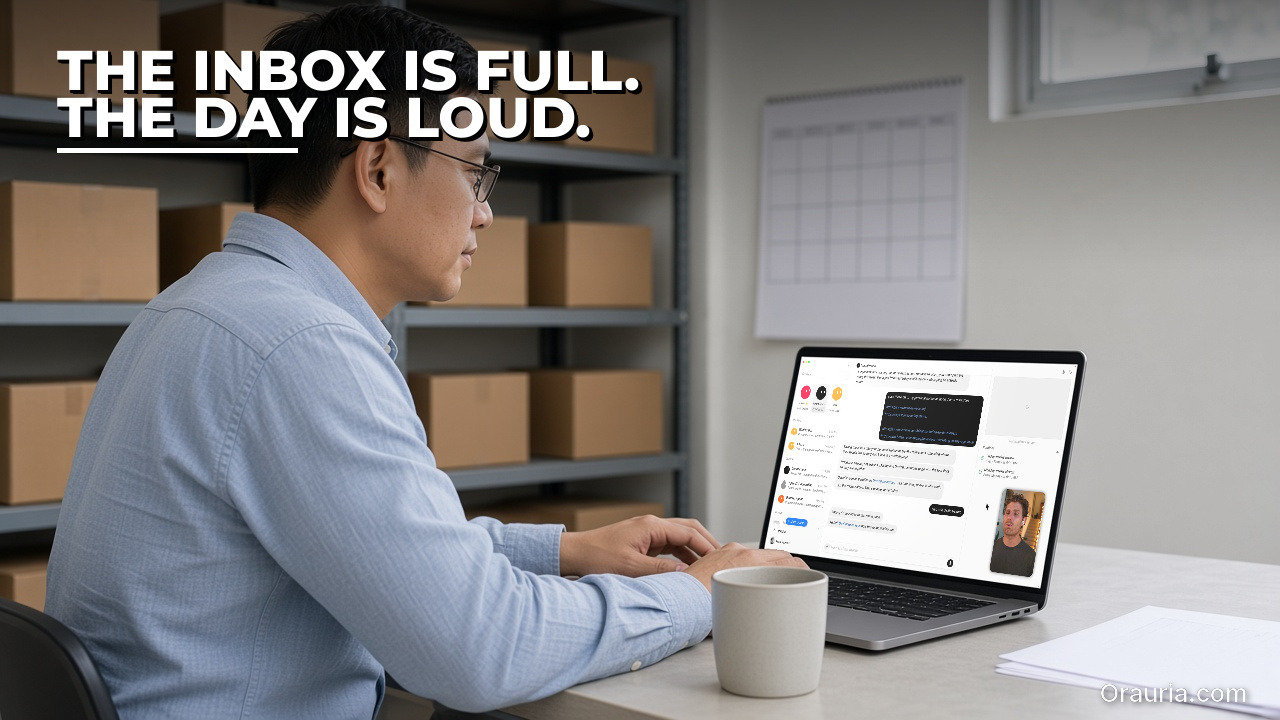
The morning feeling of an inbox and a calendar that both start talking at once
The story in this article is illustrative. Call the person Đức. He is in his mid-thirties, and he runs day-to-day operations for a small shop that sells both from a counter and from a simple online store. At 7:10 the lights in the stockroom-adjacent office are already on. The inbox has a late supplier message, two customer questions that arrived after midnight, a payment receipt, and a newsletter that looks, at a glance, like an alert. The calendar has a 9:00 call, a 10:30 delivery window, and a line that still says “follow up on last week’s delay.” Notion has three tasks due today, one of which he is no longer sure is real. Somewhere in that mix, yesterday, the public product page was slow for twenty minutes, and nobody noticed until a customer mentioned it.
The feeling is not that the tools are missing. It is that they all start talking at once, and the first half hour of the morning is spent deciding which voice is actually a job. A forwarded inbox is not a brief. A calendar dump is not a plan. A Notion list that never gets pruned becomes a second inbox. An alert that fires on every harmless blip trains you to ignore the one that matters. Đức does not need a Bot that “handles operations.” He needs a teammate that can read the surfaces he already uses, write a short morning pass he can trust, leave any outbound message as a draft, and wake him for a small number of events that are worth waking for — a site that does not respond, a new order that needs a person, a deadline that will actually expire today.
The week that follows is not a promise that his shop will run itself. It is a way of asking whether a careful loop can make 7:10 quieter, without giving the Bot permission to speak to a customer or to change a listing. If you already run a morning digest that waits before anything is said in public, or a research pack that leaves outreach drafts for you to send, this use-case will feel like the same standard applied to the first hour of a working day. The cost of a missed approval is simply closer to the till.
What effectiveness looks like, and how to measure your own morning brief
Effectiveness here is not a number we can promise, and it is not a number you should copy from this page. Đức’s week is a story, not a benchmark. What you can do, on your own inbox and your own calendar, is decide what “a quieter morning” means before you ask a Bot to help, and then count it for a week.
Start with misses and false comfort, not with volume. Did the brief name the deadlines that actually expired that day? Did it bury a customer message under a newsletter? Did it treat a marketing mail as an urgent alert? A pack that “summarised forty threads” and missed the one unpaid invoice is not more effective than a pack that named five items and got the important one right. Write down, each morning, the items you still had to hunt for yourself. That missed column is the first number that matters, and only you can measure it.
Second, measure false alarms. An alert that fires because a public page was slow for twelve seconds, or because a test order arrived, will train you to snooze the channel. Count alerts that you acted on, alerts you dismissed, and alerts that were simply wrong. If you want a percentage, use your own: false alerts per ten fires, in your own week, on your own site or order path. Do not import a figure from a vendor story, including this one.
Third, measure time, but measure the right time. The useful clock is not “how fast the Bot wrote the brief.” It is the time from “I sat down” to “I know what needs a person before 9:00, and I have not accidentally sent a reply.” If the Bot saves ten minutes of scanning and costs you twelve minutes of checking whether a summary hid a request, the loop is not yet earning its place. Track that elapsed time for five weekday mornings. After a revision of the skill, track it again. The comparison is with yourself, not with a promised average.
Fourth, count anything that left the draft state, or changed a live listing, without your approval. Official docs say that email from a routine waits as a draft until Send. Your own rule should be stricter than hope: the number of customer replies or listing edits that went out without a human press of Send, or a human confirmation, must be zero. A connected Gmail account, which official pages list among Connect apps, is not permission to let a Bot speak as you. A connected store or Stripe account, if you later explore that documented path, is not permission to change a price or refund an order unattended. Log the queue: briefs delivered, drafts waiting, drafts sent, drafts dropped, alerts fired, alerts dismissed. The dropped column can be a success column. It means the brief was allowed to conclude that this message did not need a reply this morning.
Fifth, measure whether the brief helped you walk into the first real hour of work. Did it give you a sourced list — this event at 9:00, this Notion task due today, this customer thread that still needs a person, this public URL that failed a check — without inventing a meeting or a task that was not there? After five mornings, mark each brief as helpful, neutral, or harmful, in your own words. There is no industry “minutes saved” hiding in that column.
Keep the measurements in a sheet you own. A simple week log is enough: date, items the brief named, items you had to find yourself, false alerts, minutes to a usable pass, drafts sent or not, and whether anything left your queue without you. After seven days you will know if v1 is even worth improving. That is the only effectiveness story this article can honestly offer: a method for you to see your own morning clearly.

How the loop works: inbox, calendar, Notion, alerts, and a human who still acts
The loop has five parts, and they only work together if the last one is a person. First, a skill defines what a morning brief is allowed to contain. Second, connected apps — documented as Gmail, Google Calendar, and Notion — can supply the raw material, if you choose to connect them. Third, a small alert path watches a public URL or a documented trigger, and writes a short notice rather than taking an action. Fourth, a weekday routine leaves the pack on your desk. Fifth, you approve every reply, every skip, and every change.
The skill should be written so that you can audit it. Give it a name, a time window (for example, everything since yesterday’s brief), and a hard output shape: a short calendar block, a short inbox block that names threads which look like they need a person, a Notion block for tasks or deadlines due today, and an alerts block that is allowed to be empty. Give it refusals: no auto-replies, no listing edits, no invented meetings, no “urgent” label unless the skill can point to a reason you wrote down. Teach a task, official docs say, may be enabled gradually; a written skill is the fallback, and it is the clearer artefact anyway, because you can read it.
Gmail, Google Calendar, and Notion appear in the documented Connect apps. That is the starting path this article describes, and it is documented design, not a path we independently verified end to end in this run. If you connect them, keep the skill conservative. The inbox block should list, not answer. The calendar block should report events that are actually on the calendar you shared, not invent a stand-up. The Notion block should report tasks and due dates that are in the database you pointed at, and should say “not found” rather than guess. If a login, a CAPTCHA, or a human check appears on the cloud computer, official guidance is to pause and hand the computer over. Do not paste passwords into ordinary chat. The vault and the secure form exist for credentials.
Alerts need an even tighter rule, because they are the part of the loop that interrupts you. One honest starting path is a public URL check: the cloud computer, which official docs describe as a persistent machine with a browser, can request a page you already publish and report whether it responded. That path was not independently run end to end in this article; treat it as a design you must test yourself. Official docs also describe triggers that can include a webhook, Sentry, and PagerDuty, and they list Stripe among Connect apps. An order alert might later start from a Stripe event, from an order email, or from a webhook you already trust. We have not independently verified those triggers in this run. Whatever you choose, the alert should write a short notice and stop. It should not refund, should not change a listing, and should not reply to the customer “to be helpful.”
Outbound mail, if the brief ever produces any, stays in draft. Official docs describe an Email app at mail.grokbot.com, and they state that email from a routine waits as a draft until Send. If you later use Gmail as a documented Connect path, keep the same rule in the skill. A morning brief may leave a draft reply under a customer thread for you to accept, rewrite, or drop. It may not send the reply because the wording sounded polite.
Underneath the artefacts is the same Grok Bot layer described in the rest of this series. Official docs describe a persistent cloud computer, shared by the Bots in a workspace, with a browser, files, and a command line. Skills and routines are documented with rate limits: 300 runs an hour across all of them, 200 an hour for each, a cap of 50 routines per Bot, and a minimum of five minutes between scheduled runs. A new routine waits for its next scheduled time; Test performs real work, so do not test a send, a refund, or a listing edit. Set the time zone in Settings, under Bot, under Timezone, so the morning pack arrives in the morning you actually have.
The human in the loop is not a closing slogan. It is the only safe interface to a customer and to a live shop. You approve the facts in the brief, you approve the reply, and you approve the skip. A loop that cannot recommend silence — this thread does not need an answer yet, this alert is a blip, this Notion task is stale — is not yet a professional loop. The same standard already appeared in the proposal drafts that wait for review, in the social pack that must not publish without you, and in the outreach drafts that wait for Send. The morning brief is simply the place where a missed approval can reach a customer before breakfast.

Setup experience: from one connected app to the first morning pass
Do not start by connecting every app and turning on every alert. Start with one surface you already trust, one morning, and one pass in chat. The first goal is not a routine. It is a brief you are willing to use before 9:00.
Write the skill first, even if it is only a page. State the job: produce a morning pass with four labelled blocks — calendar, inbox, Notion, alerts — and leave any outbound mail as a draft. State the refusals: no sending, no auto-replies, no edits to listings or prices, no invented events or tasks. Name what “needs a person” means in your shop, in your own words: a customer question, a payment problem, a delivery that will miss its window, a task due today, a public page that did not respond. If a block has nothing to report, it should say so in one line rather than invent work.
Connect one app, not three. Many people will start with Calendar, because the events are already structured and easier to check. Official pages list Google Calendar as a Connect app; treat that as documented design, and then open the brief against the actual calendar you see. If the skill invents a meeting, or drops one that is on the page, fix the skill before you add Gmail or Notion. When you do add the inbox, start with a narrow window and a narrow rule: list threads from a labelled folder, or from a small set of senders, rather than “summarise everything.” When you add Notion, point at one database and one date property, and ask the skill to list what is due today, with a link back to the item. At each step, check the brief as if you were the operations lead, not the owner of a new automation.
Run the first pass in chat, not on a schedule. Ask the Bot to produce this morning’s brief from the surfaces you have actually connected, and from any public URL you want checked. Then sit with the page. Open the calendar event. Open the thread. Open the Notion item. If the public URL check is part of the pass, open the site yourself and see whether the report matches. This is the slowest morning you will do, and it is the one that teaches the skill what you will not tolerate: a hidden request, an invented deadline, a polite draft that answers the wrong question, an alert that cried wolf.
Only after the brief is clean should you look at any draft reply it left. Read it out loud. If you would not send it from your own desk, it is already too much, or already wrong. Leave it in the draft state. Press Send yourself, or do not. For the first morning, not sending is an acceptable outcome. You are testing the pack, not clearing the inbox.
The pitfalls are predictable. The skill may treat every unread mail as urgent. It may summarise a thread and drop the sentence where the customer asked for a refund. It may copy a Notion task that was due last month and present it as today’s work. It may, if you phrase the prompt carelessly, try to reply, or to “just update the listing.” Each of those is a prompt-and-skill fix, not a reason to add more apps. Change the skill, run the same morning again, and only then add the next surface.
Two more practical traps are easy to miss. The first is login. If the cloud browser hits a wall, stop. Hand the computer over, or drop that source for the day. The second is alert noise. A routine that checks a public URL every five minutes, which is also the documented minimum spacing between scheduled runs, can still be too loud if you alert on every hiccup. Official rate limits are enough for a modest weekday pass, but the constraint that matters is editorial, not technical. A new routine waits for its next scheduled time, and Test performs real work, so never test a send or a live change. When the first brief is one you would actually use, you have a template. That is the moment to stop for the day and read it again tomorrow, with a colder eye.
The optimization journey: three versions of the same morning brief
Đức’s first version, in this illustrative week, looked complete and was not usable. He connected Gmail, Calendar, and Notion on the same evening, wrote “brief my morning and flag anything urgent,” and ran it once. The Bot returned a long digest. It forwarded the shape of the inbox rather than naming the two customer threads that needed a person. It listed calendar events, then added a “suggested stand-up” that was not on the calendar. It pulled seven Notion tasks, four of which had no due date and two of which were already done. It also offered, helpfully, to draft replies to everyone and to “keep an eye on the store.” He did not let it. He also had no site check, so the slow public page from the afternoon before never appeared. V1 taught him the only lesson v1 is good for: more surfaces without a shape and a refusal list is not a brief. It is a second inbox with a confident tone. He kept the calendar block, which was mostly right, and he rewrote the skill.
Version two added the missing spine: four labelled blocks, a “needs a person” rule, an explicit ban on sending and on listing edits, and a single public URL check. He ran it in chat for three mornings. The briefs got shorter. The calendar block matched the real day. The inbox block named threads, with subject lines he could click. The Notion block listed only items due today. The URL check reported a successful response, which he confirmed. The new failures were quieter. The skill still occasionally called a newsletter “urgent.” It once drafted a reply that apologised for a delay the customer had not mentioned. It flagged a URL “soft failure” when the page had only been slow from the Bot’s location. He also noticed the time: checking the brief still took most of the first coffee, because the inbox block was still too generous, and because he had not yet told the skill how short “short” was. V2 was honest enough to use, and still too expensive to trust at 7:10 without a sitting.
Version three is the pack he would actually run on a weekday. The skill now has a length cap, a materiality bar, and a failure column. The calendar block is five lines. The inbox block may list at most five threads, and only those that match his written rule for “needs a person.” The Notion block is due today, or overdue, with links, and it may say that nothing is due. The alerts block is empty unless a public URL check fails twice, or a documented order event that he has actually tested later appears. Draft replies, when they exist, are one or two, and they wait. A weekday routine in his time zone prepares the pack before he arrives, and only as a brief plus drafts. It does not send, does not refund, and does not change a listing. After a week of his own logging, he can see whether missed items fell, whether false alerts stayed near zero, and whether the time to a usable pass moved in the right direction. Those figures belong in his sheet, not in this article. The qualitative change is the one you can borrow: v3 leaves a brief, and it is willing to say that this morning, nothing in the inbox needs a reply.
The journey is not a promise that your third version will look like his. It is a way of refusing to skip v1 and v2. If you start by automating replies across a connected inbox, you will only scale the first mistake. If you start with one app, a written shape, and a draft that waits, you can afford to be wrong in private. That is the entire optimization: move the error to a place where you can still delete it, before a customer has to.
What to try this week
Pick one morning and one surface you already trust, often the calendar. Write a short skill with four labelled blocks, a “needs a person” rule, and a hard ban on sending, auto-replies, and listing edits. Run it once in chat. Open every event, thread, and task it names. Add a single public URL check only after the rest of the brief is clean, and treat that check as something you must verify yourself. Leave any reply as a draft, and press Send yourself only if you would sign the same words without a Bot in the room. Measure, on a sheet you own, the items the brief caught, the items you still had to find, false alerts, the time to a usable pass, and whether anything left the draft state without you. Then, and only then, consider a weekday routine that prepares the same pack as a brief plus drafts. If the loop needs a sharper skill, a checked connection to mail, calendar, or Notion, or a Bot built around your approval rules, send a brief to hire Orauria.
Use Grok Bot for the teammate layer: the weekday pass, the named blocks, the draft that waits, the alert that stops after it has spoken to you. Keep the first sentence that a customer will read with a person. The morning gets quieter when the brief is already on the desk, and you can still decide that today, nothing needs a reply.
Leave a Reply