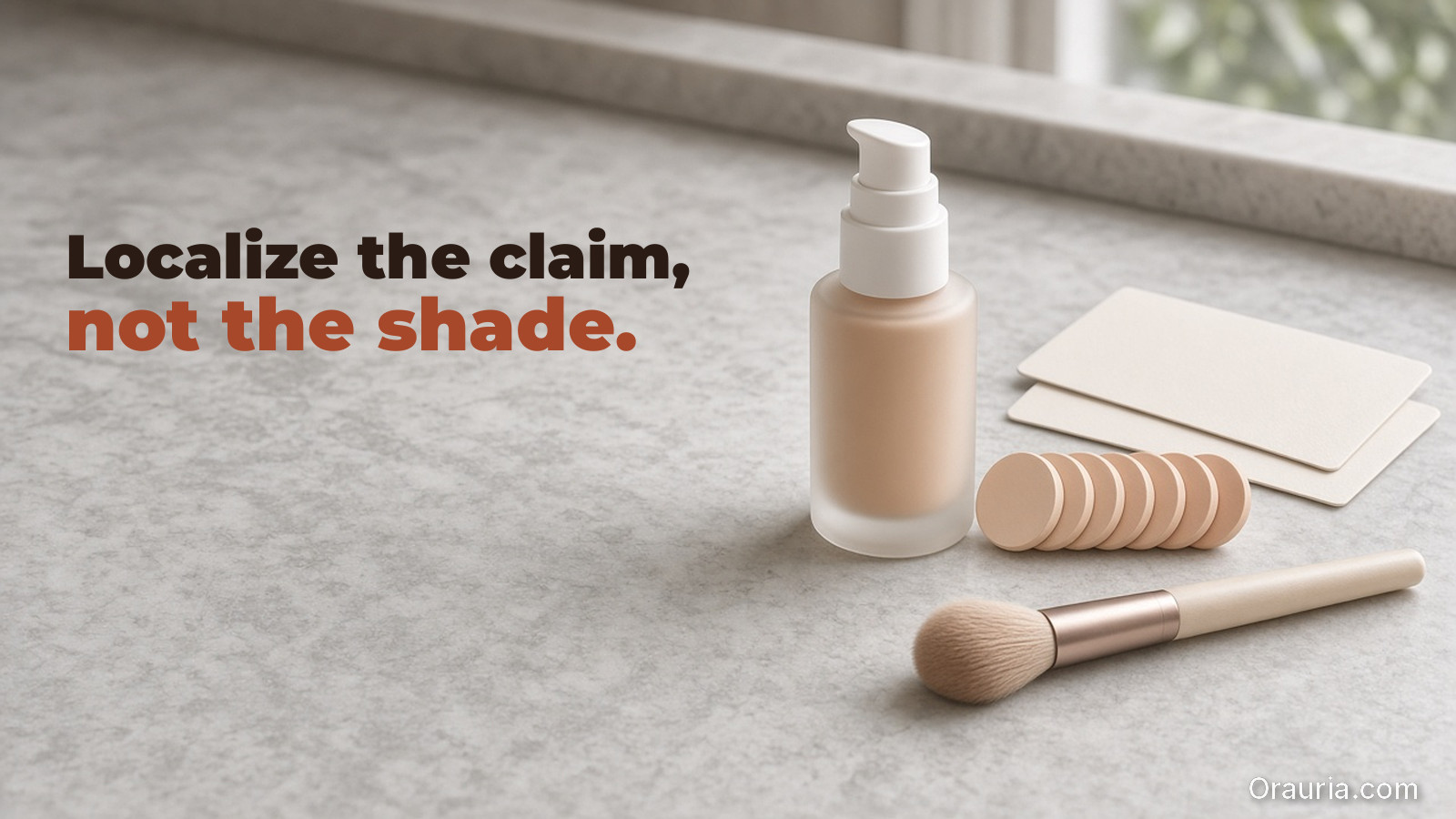
Beauty goes global faster than packaging teams can reshoot. The failure mode is familiar: regenerate the whole lifestyle for each language, watch the foundation shade drift, and discover marketplace complaints that “the bottle looked different.”
AI beauty catalog localization extends cross-border image rules (ecommerce localization) with a beauty-specific law: shade and formula cues are sacred; marketing claims are what you translate.
Key Takeaways
- Never “re-beautify” the SKU while translating overlays — color match is the product.
- Keep ritual contexts from beauty lifestyle mapping; swap language layers, not bathrooms every market.
- Claim sheets per locale beat prompt translation.
- Upscale only after shade QA (upscale after QA).
Why Is Beauty Localization Harder Than Soft Goods Copy?
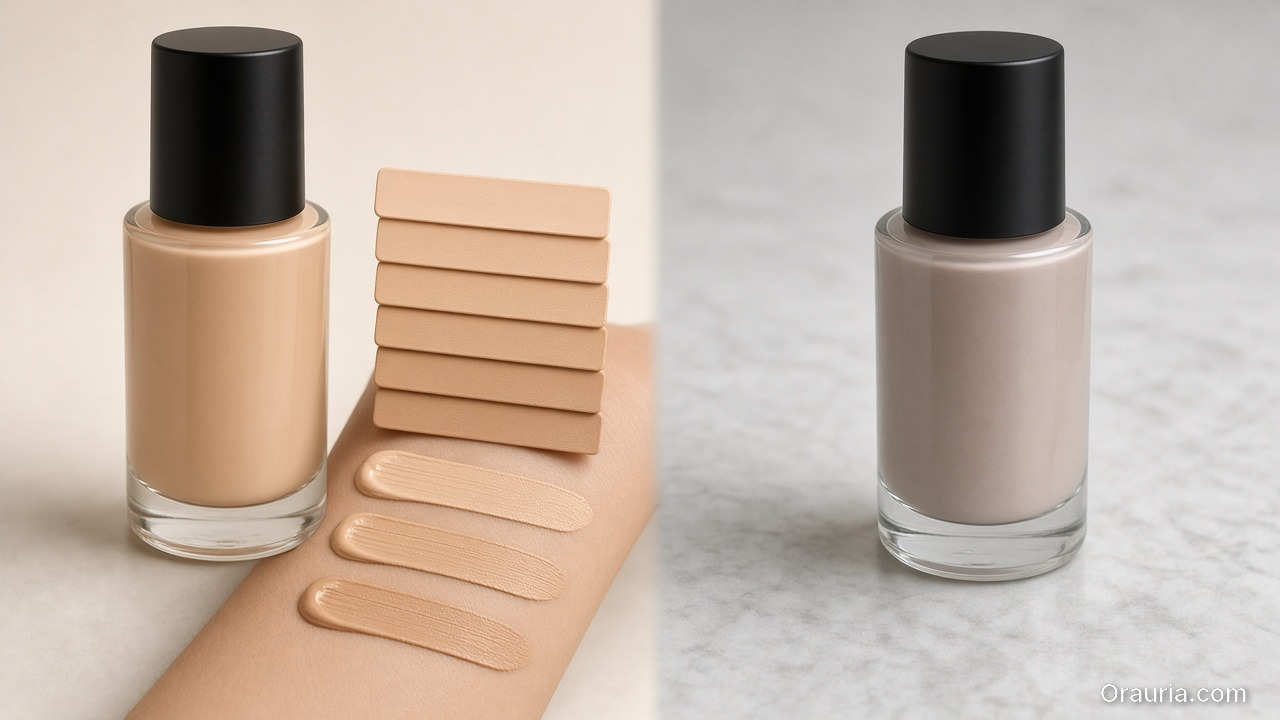
Because buyers purchase color and texture promises.
| Safe to localize | Dangerous to regenerate |
|---|---|
| Promo badges | Foundation shade |
| Hook lines | Serum tone in bottle |
| Units / legal lines | Cap and label print fidelity |
| Ingredient callouts (approved) | “Glow” that changes undertone |
If localization changes undertone, you did not translate — you SKU-swapped.
In beauty, mistranslation is annoying. Mishade is a return. Treat color like a regulatory asset.
Beauty Localization Stack
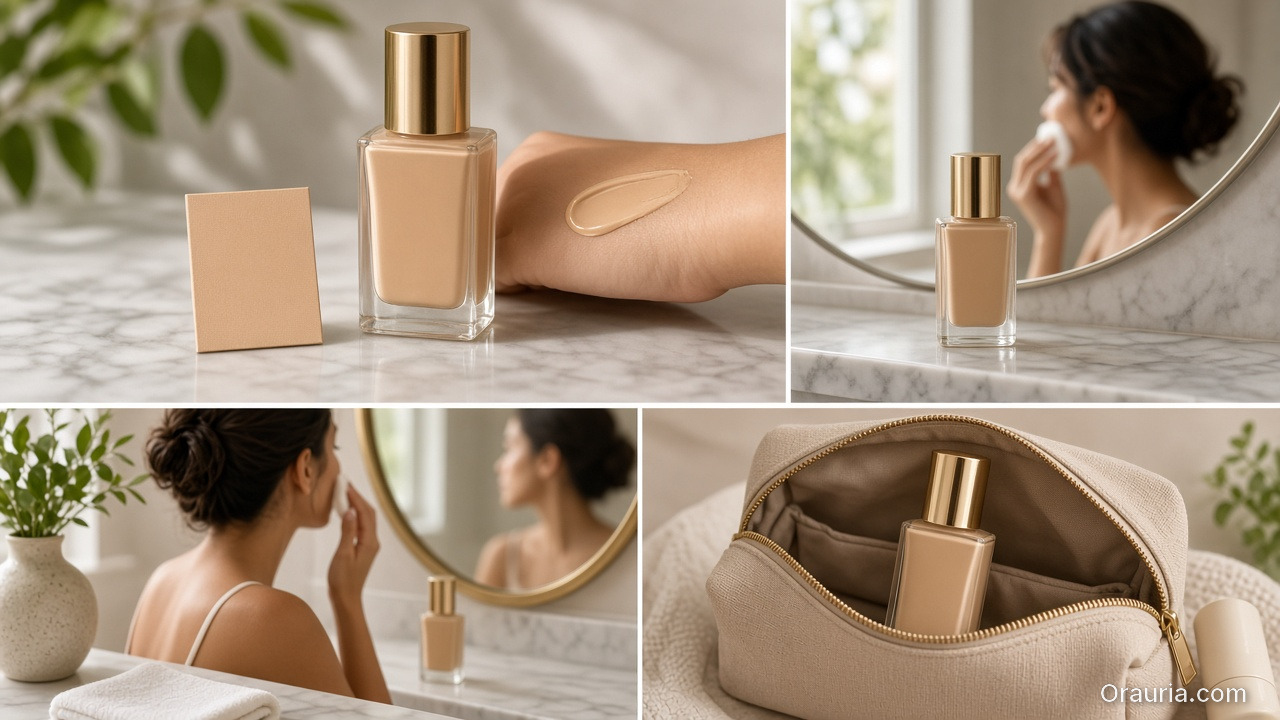
Master layer (global)
- Packshot truth (packshot thinking)
- Shade chip / arm swatch if used
- Ritual scene family (morning mirror, bag, travel)
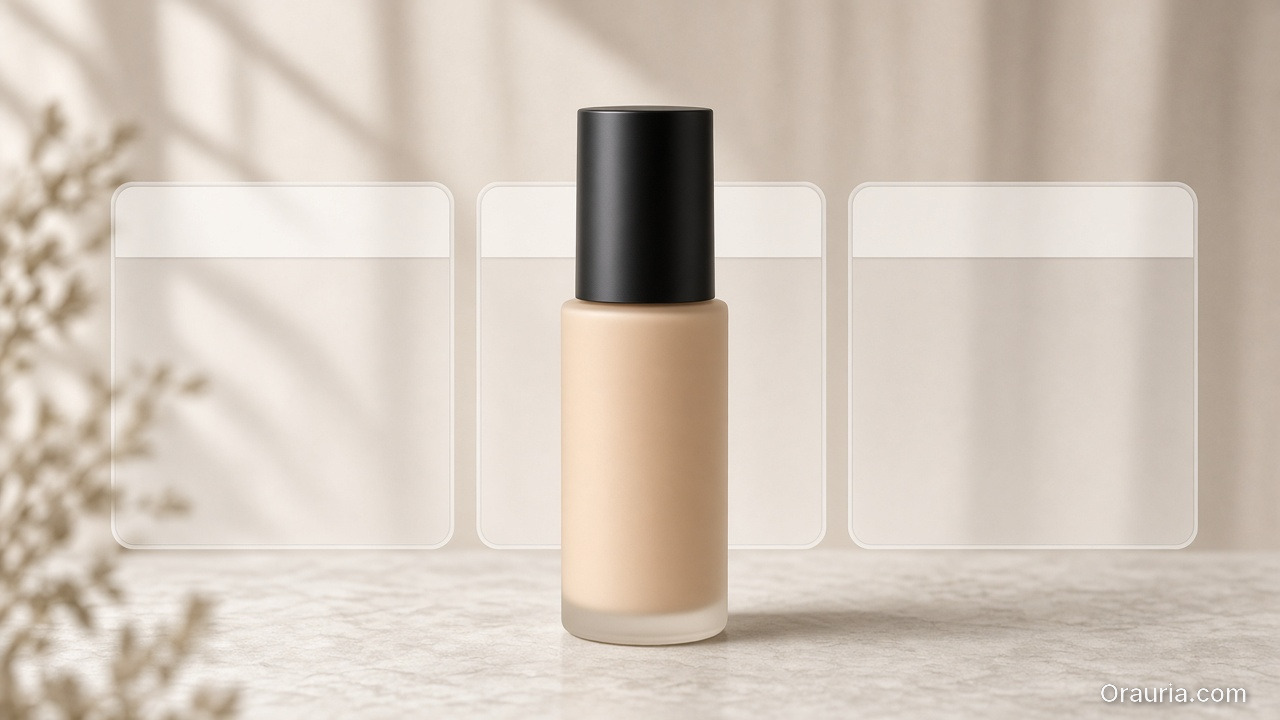
Claim layer (per locale)
- Hook, offer, disclaimer, unit system
- Character limits per marketplace
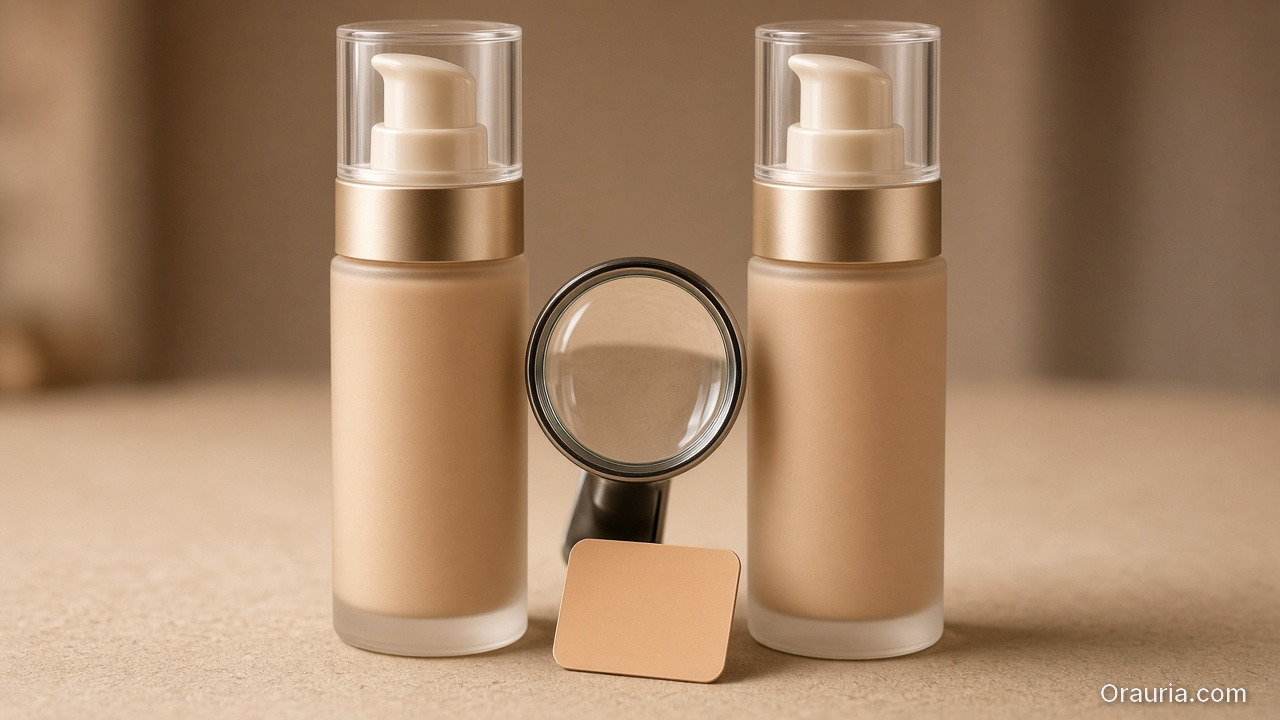
Gate
- Side-by-side diff: bottle geometry + shade unchanged
- Text accuracy reviewed by market owner
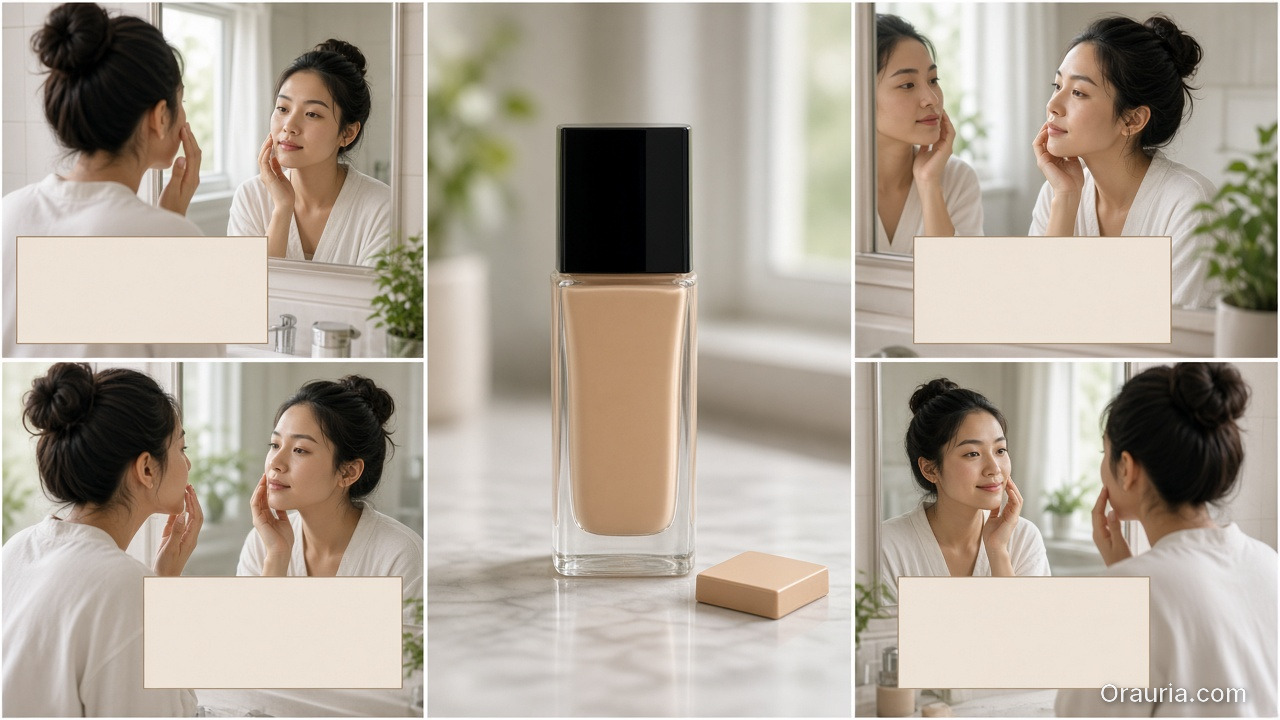
Playbook: One Shade, Many Languages
- Approve shade-true master stills
- Build claim sheet EN → target locales
- Localize overlays in safe zones only
- Diff QA against master
- Attach locale packs to the brand kit for the next SKU drop
- Keep ritual contexts stable across languages unless culture blocks a scene
Soft CTA
Keep beauty catalogs coherent across markets: Ecommerce · Packshot
Frequently Asked Questions
How is this different from general ecommerce image localization?
Same master-and-layer system — with stricter shade/texture gates and beauty ritual contexts.
Can AI translate text on the physical label?
High risk. Prefer real packaging photography for Truth; localize marketing frames separately.
Should every market get new lifestyle bathrooms?
Only when culture requires it. Default to one ritual kit + language layers.
What should QA zoom on first?
Shade, pump/cap geometry, then translated claims.
Conclusion
Translate claims. Protect shade.
Master first. Locale layers second. Diff always. That is AI beauty catalog localization that grows markets without multiplying undertones.
References
- Lumepixa, AI Product Photography Statistics 2026. https://lumepixa.app/blog/ai-product-photography-statistics
- Adobe, 2026 Creators’ Toolkit Report, June 16, 2026. https://news.adobe.com/news/2026/06/creators-toolkit-report-2026
Leave a Reply