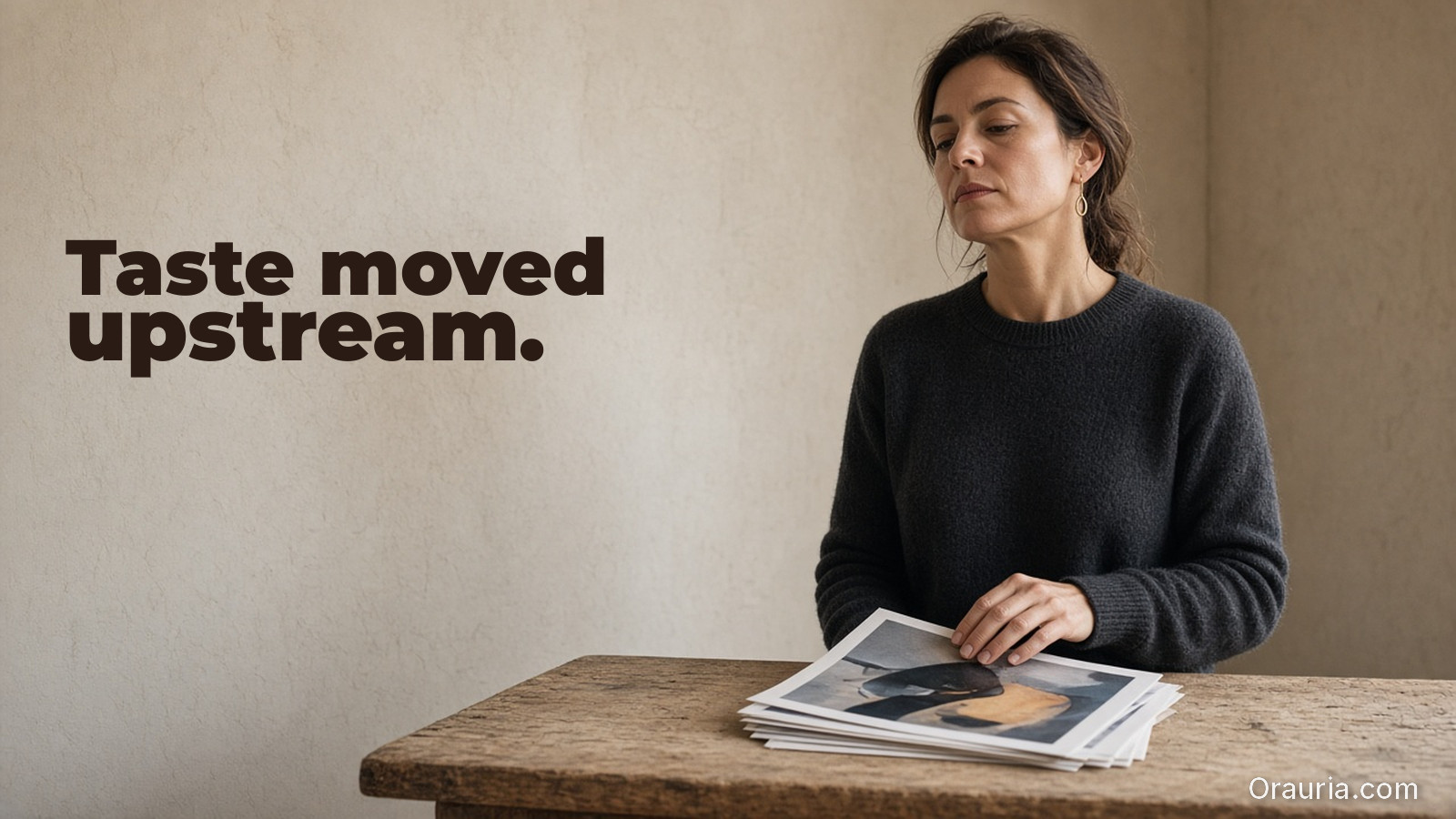
The scared version of the story says AI replaces designers. The accurate version is quieter: pixel production got cheaper, so the scarce skill moved upstream. The designers who win in ecommerce now act like AI creative directors — they own briefs, kits, gates, and routing — not like button operators racing every model release.
Key Takeaways
- Adobe’s 2026 Creators’ Toolkit Report found 57% of creators still edit AI outputs moderately or extensively — direction and curation remain human bottlenecks (Adobe, 2026).
- 42% say AI-generated work makes distinctive voices harder to surface — kits and gates are how brands stay recognizable.
- The role shift: from “make the asset” to “define the system that makes assets.”
- Tools: 3-line brief, node thinking, model after direction.

What Is an AI Creative Director in Practice?
Not a job title on LinkedIn. A responsibility set:
| Old default | AI creative director default |
|---|---|
| Open tool, prompt | Open brief, lock kit |
| Chase pretty seeds | Route by bottleneck |
| Deliver files | Deliver a reusable graph |
| Fix in polish | Reject at gate |
| One-off hero | Slot map across channels |
Freelancers already feel this when one template serves five clients (workflow template).
AI did not remove taste. It moved taste earlier — before generate — and made late taste expensive.

Skills That Compound
- Brief compression — say the job in three lines
- Kit literacy — palette, light, character, no-gos
- QA vocabulary — geometry, shade, typography, world leak
- Routing — which model family for which bottleneck
- Narrative systems — arcs over one-offs for creators/brands
Scattered stacks punish people who only know buttons (Orauria vs scattered stack).

What Leaders Should Stop Asking Designers
- “Can you make it pop?” without a job
- “Try the new model” without a gate
- “Just upscale it” after a failed Truth frame
- Volume targets without curator hours
Ask instead: What is the slot? What is locked? What fails the set?
Soft CTA
Build direction-first ecommerce workflows: Workflow · Studio Guide
Frequently Asked Questions
Does AI creative director mean managers only?
No. Individual designers and freelancers practice it whenever they own brief → kit → gate → route.
Will junior designers be obsolete?
Juniors who only push pixels struggle. Juniors who learn QA and kits accelerate — because volume needs more gates, not fewer.
How is this different from a traditional CD?
Same ownership of coherence — faster loops, more variants, stricter need for written kits because models forget.
What should I learn first?
Three-line briefs and a personal reject checklist. Then node thinking.
Conclusion
The designer role is not disappearing. It is concentrating on direction.
Own the brief. Guard the kit. Staff the gates. Route the models. That is the AI creative director shift — and the unfair advantage in ecommerce creative teams.
References
- Adobe, 2026 Creators’ Toolkit Report, June 16, 2026. https://news.adobe.com/news/2026/06/creators-toolkit-report-2026
- Adobe, Inaugural Creators’ Toolkit Report (Adobe MAX 2025), October 28, 2025. https://news.adobe.com/news/2025/10/adobe-max-2025-creators-survey
Leave a Reply