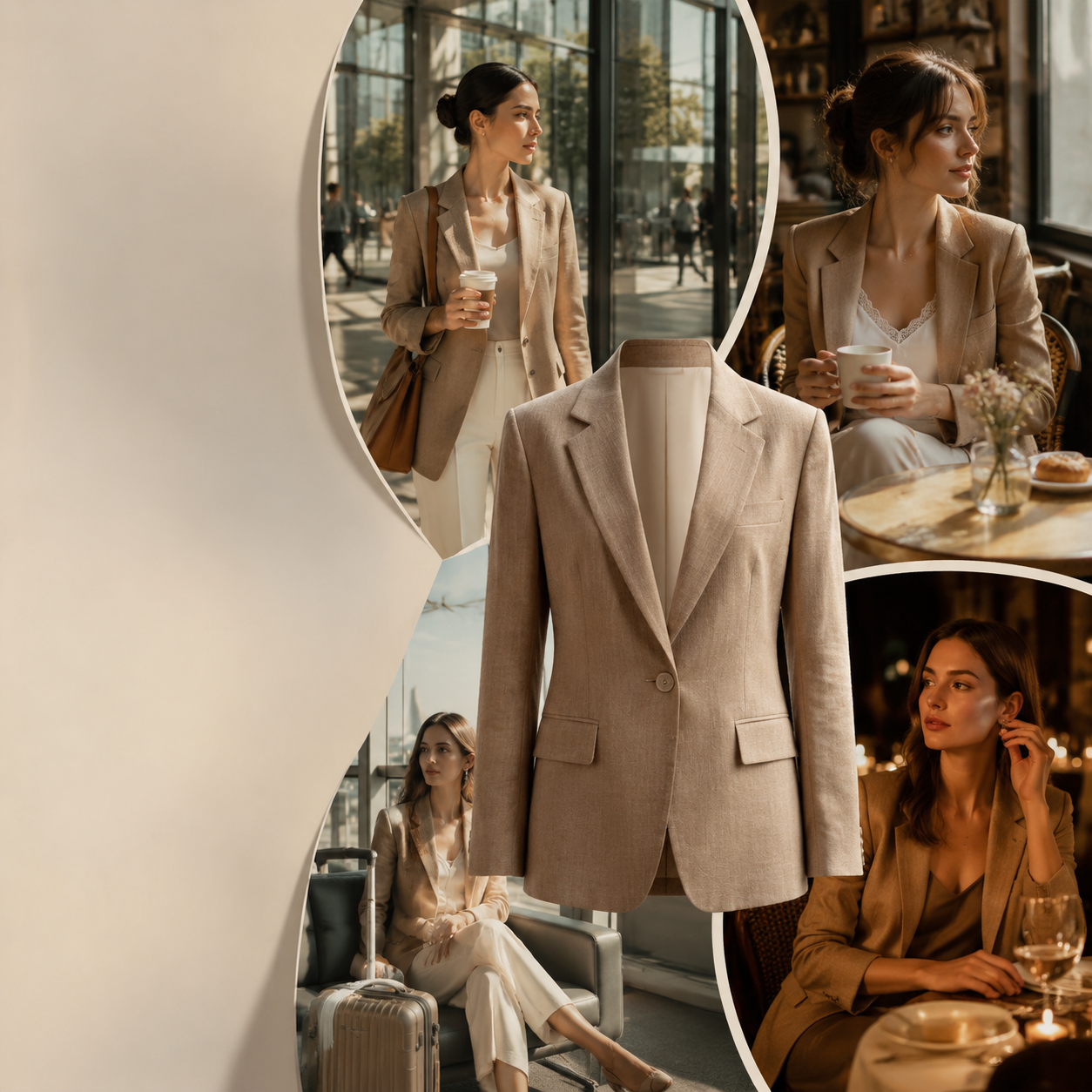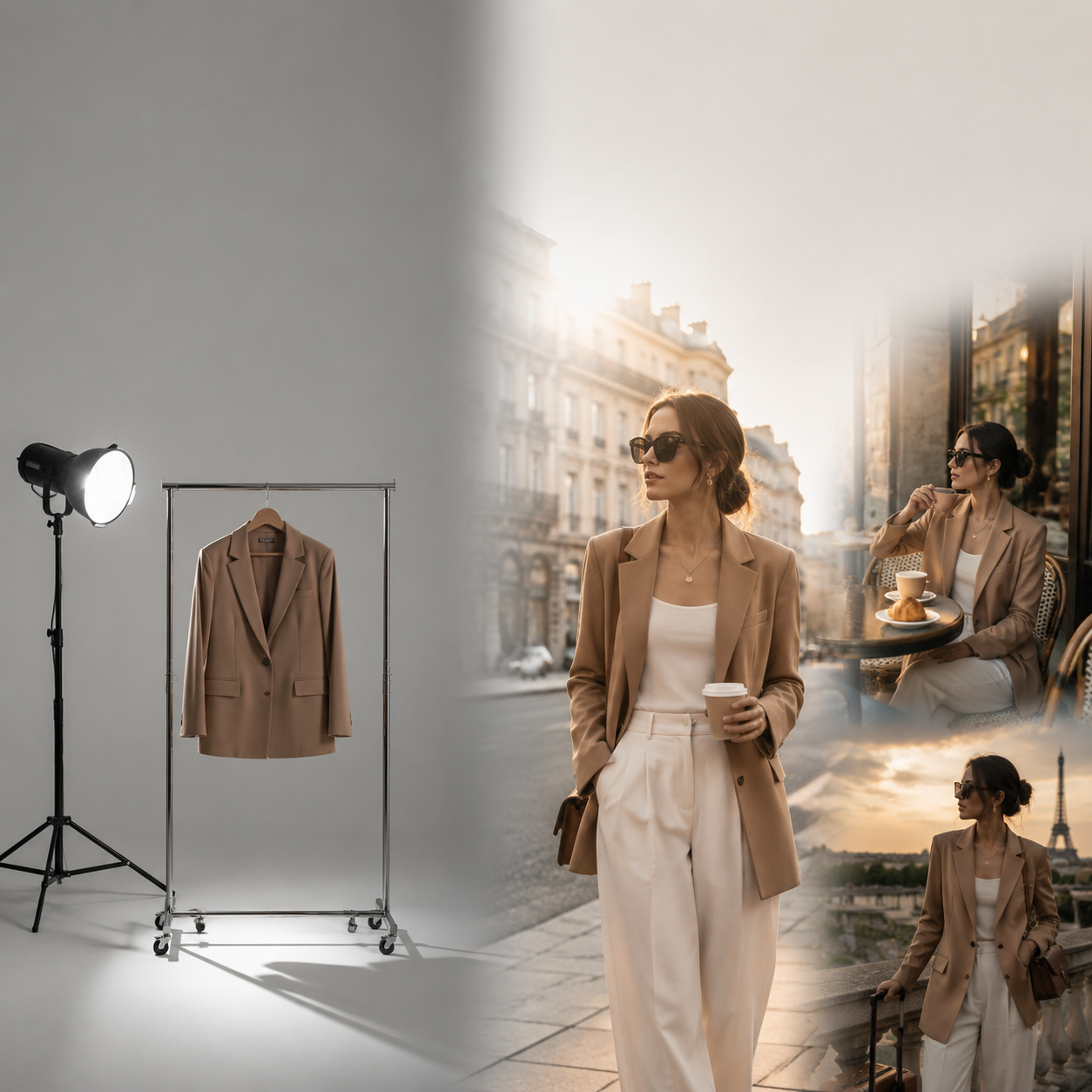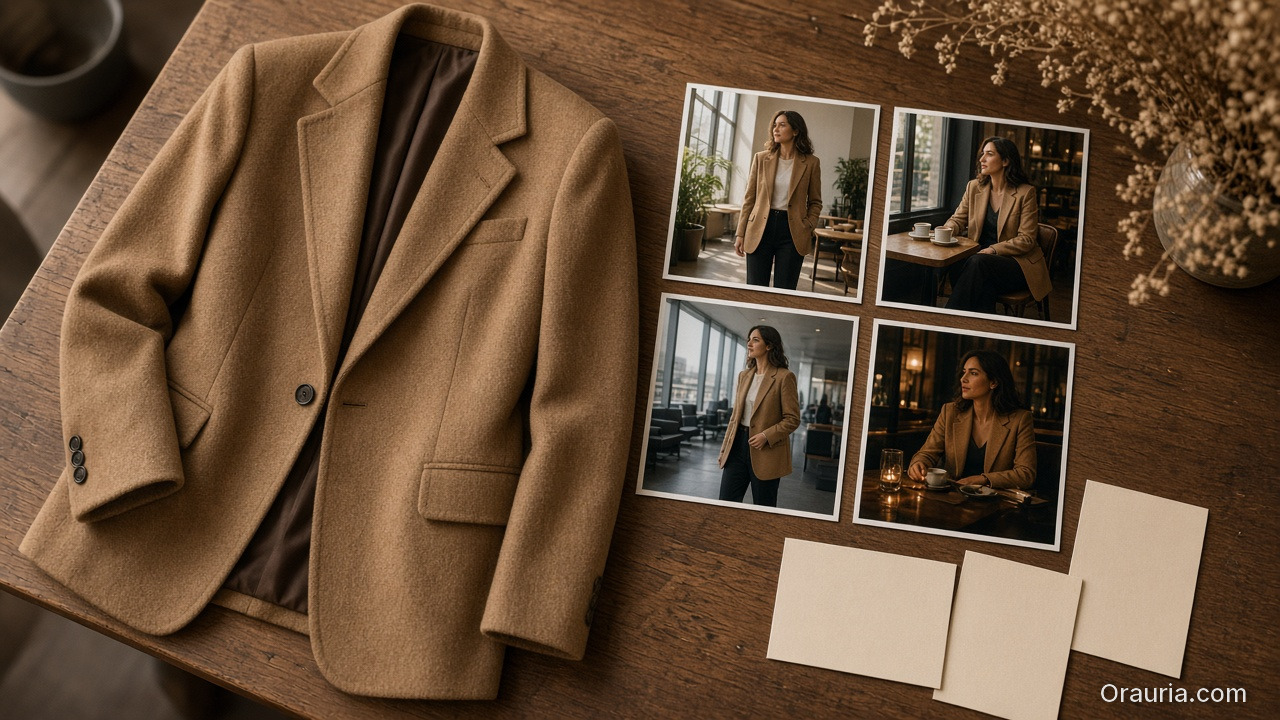
Author: admin

  • Brand Consistency Trap: 5 Times AI Broke Your Visual Identity

    Brand Consistency Trap: 5 Times AI Broke Your Visual Identity

    Every team that scales AI creative hits the same wall. Image four is beautiful. Image seven is beautiful. Image twelve is beautiful. Together they look like three different brands hired three different agencies on three different continents.

    That is the brand consistency trap: AI makes volume easy and coherence hard. The model does not know your palette, your light logic, or your character rules unless you enforce them — and even then, drift finds a way in.

    This article documents five failure patterns we see repeatedly in lookbooks, beauty campaigns, and ecommerce batches. Not to scare you off AI — to give you a diagnostic checklist before the damage ships.

    Creative team reviewing brand assets at desk — consistency audit
    The trap hides in the set — not in any single frame.

    Key Takeaways

    • AI brand consistency fails in predictable places: light, color, character, scene genericity, and curation gaps — not random model bad luck.
    • Adobe's 2026 report found 42% of creators say AI-generated work makes it harder for distinctive voices to surface — volume without guardrails adds to that noise.
    • In 2026, 57% of creators say AI outputs need moderate or extensive editing before publish — editing fixes polish; brand rules fix identity (Adobe Creators' Toolkit Report, 2026).
    • Recovery always returns to brief + moodboard + references — not a better model or longer prompt.

    If you have not read When to Use Reference Images vs Let AI Explore, start there for prevention. This article is the autopsy.

    What Is the Brand Consistency Trap?

    The trap is mistaking output quality for brand coherence.

    SignalHealthy batchTrapped batch
    Individual imagesStrongStrong
    Set togetherSame worldDifferent worlds
    PaletteBrand kitModel defaults
    LightConsistent seasonRandom moods
    CharacterIntentionalAccidentally duplicated or swapped
    Publish set3–5 curated12–20 "all good enough"

    AI ecommerce design treats brand as infrastructure. The consistency trap treats brand as an afterthought — fix it in Photoshop later.
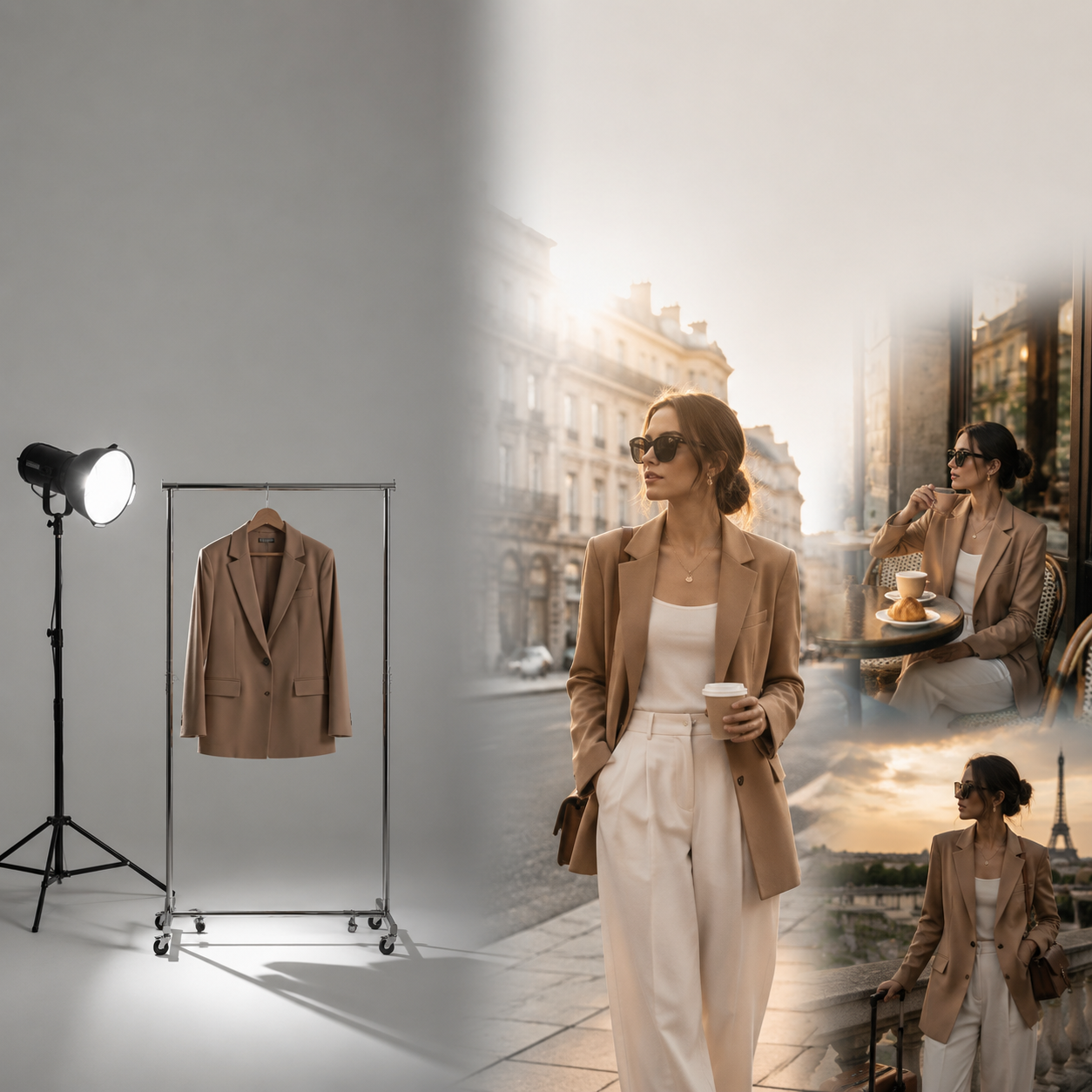
    Studio versus lifestyle split — visual drift versus world coherence
    Coherence is a set property: each frame can pass review while the gallery still breaks identity.

    Failure #1: Light Logic Broke

    What it looked like

    A skincare brand ran eight lifestyle scenes for a serum launch. Scene 1: soft morning window light. Scene 3: cool clinical blue. Scene 5: golden hour warmth. Scene 7: neon bathroom accent from a prompt someone thought sounded "modern."

    Each image alone passed review. The Instagram carousel looked like a mood disorder.

    Root cause

    No light logic rule in the brief. Each prompt described environment without describing time-of-day and temperature. The model defaulted to whatever "looked cinematic" per prompt.

    Diagnostic question

    If these frames were stills from one film, would they be the same day?

    Fix

    1. Write one sentence: "All scenes: late autumn, soft directional daylight, no neon, no clinical blue."
    2. Add to Brand Style rules
    3. Regenerate only the outliers — not the whole batch
    4. Reference SCENE Context + Emotion rows with light attached

    Prevention: Moodboard temperature before render — warm vs cool, soft vs hard — as locked in lookbook thinking.
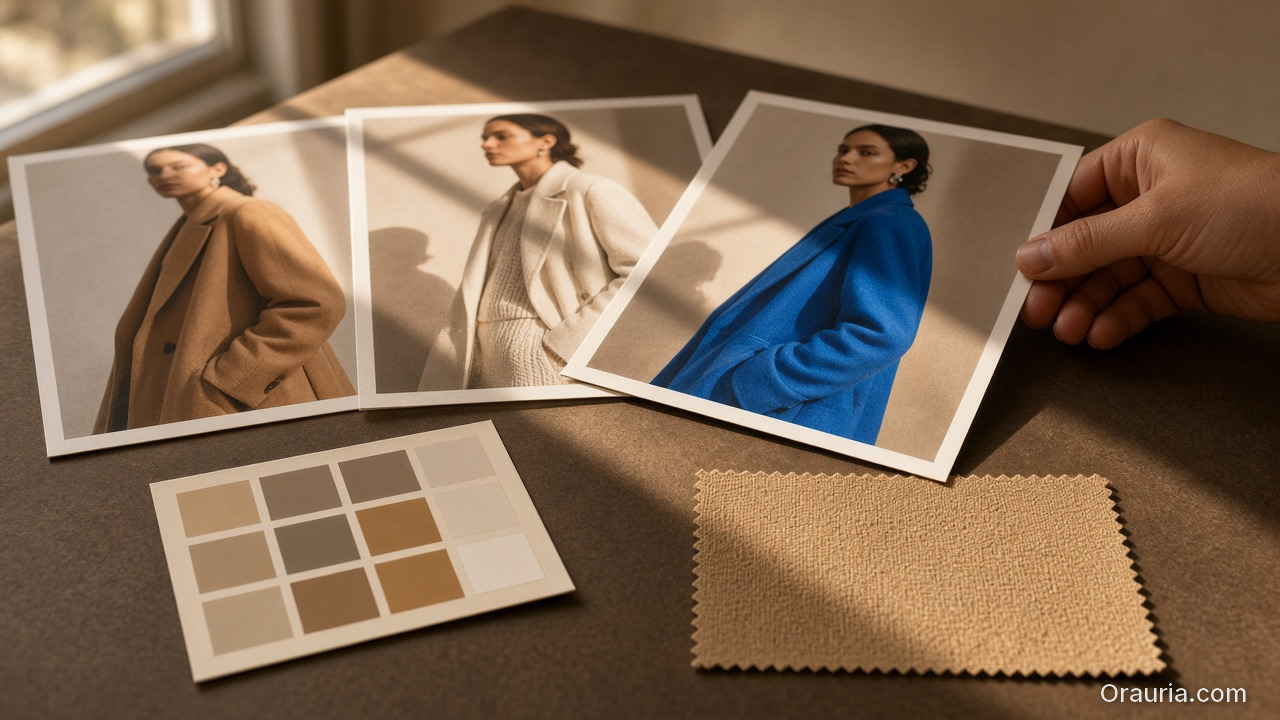
    A fashion desk with camel and cream lookbook prints, an unlabeled warm palette card, and a hand pulling out an electric-blue drifted frame.
    Color discipline fails in the set: one electric-blue frame breaks a camel-and-cream world.

    Failure #2: Color Discipline Drifted

    What it looked like

    A DTC fashion brand with camel, cream, and soft black palette shipped a lookbook where scene 4 introduced burgundy props, scene 6 had teal wall wash, and scene 8 shifted skin tones warmer than brand guidelines allow.

    Nobody chose burgundy or teal. The model did — because prompts mentioned "rich" and "vibrant" without palette constraints.

    Root cause

    Palette not in the generation brief. Brand hex codes lived in a PDF nobody opened during prompting. Reference images covered product, not environment color.

    Diagnostic question

    Squint at the set as thumbnails. Do they feel like one Instagram feed — or a stock site search?

    Fix

    1. Pull palette from brand kit — max 5 colors, name them in every prompt block
    2. Upload moodboard frames that only use approved tones
    3. Kill any scene with unapproved dominant color — do not "fix in post" if hue is wrong in generation
    4. For beauty brands, cross-check lifestyle context mapping rows for environment color

    Adobe's 2025 survey found 85% of creators would consider AI that learns their creative style (Adobe MAX 2025, 2025) — because manual palette policing does not scale without system support.
    Creative desk with color swatches and brand palette planning
    Palette discipline: hex codes and moodboard anchors in every batch — not optional polish.

    Failure #3: Character Face Slipped

    What it looked like

    A character-led campaign for a contemporary apparel line used the same "model" across ten scenes. Scene 2 and scene 9 were clearly different people. Scene 5 had the right face, wrong jawline. Marketing approved each image in isolation.

    Paid social retargeting showed all three in one week. Comments asked if they changed models mid-campaign.

    Root cause

    Face treated as a filter, not an asset. Reference uploads were inconsistent — one front shot, one profile from a different session, no posture rules. Explorer and curator were the same person rushing a deadline.

    Diagnostic question

    Cover the outfit. Can you still name the character?

    Fix

    1. Build a character sheet: 3–4 approved angles, expression range, hair rules
    2. Reference-heavy mode only — no open exploration for face during scale
    3. Reject any frame where geometry slips; do not "almost" approve
    4. For multi-format scale, see upcoming face consistency playbook (HUB 4)

    This failure mode is why the eight-scene experiment held character as a control variable — same face, same posture language.

    Portrait photography session — character consistency as design asset
    Failure #3: treat the face as a locked reference asset — not a filter you hope repeats.

    Failure #4: Scenes Turned Generic

    What it looked like

    A beauty SME generated "luxury bathroom" scenes that looked like every other AI skincare ad: marble, gold fixtures, orchids, fog machine energy. On-brand palette, off-brand world. The product was honest; the context was stock-photo generic.

    Shoppers scrolled past. Nothing signaled this brand's point of view.

    Root cause

    Scene prompts copied category clichés instead of buyer-specific contexts from a context map. No Story row in SCENE — only "beautiful bathroom."

    Diagnostic question

    Could a competitor swap their product into this scene without changing the prompt?

    Fix

    1. Rewrite scenes from buyer moments, not category keywords
    2. Add one non-generic detail per scene tied to brand story (real morning mess, real desk clutter, real travel bag)
    3. Run the competitor swap test before publish
    4. Explore worlds first, lock with references — explore → lock → scale

    Generic is not wrong for marketplace heroes. It is wrong for differentiation — and Adobe notes 53% of creators blame content quantity for harder stand-out (2026).
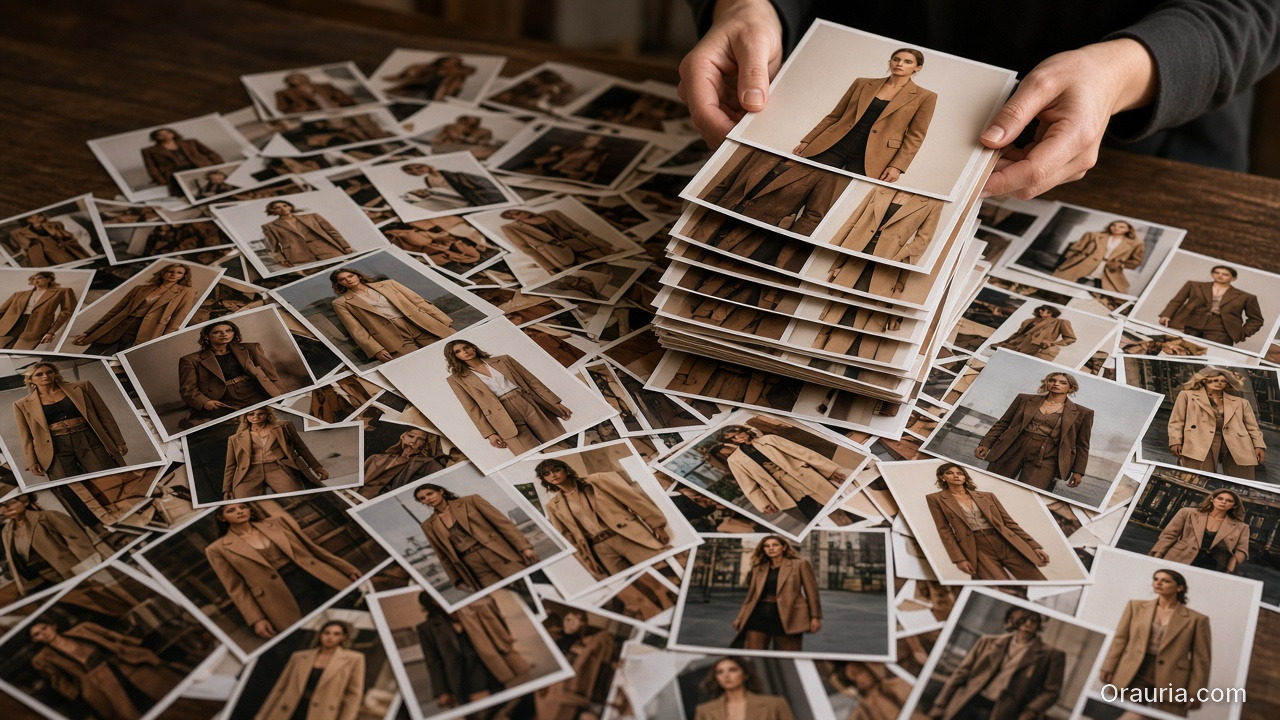
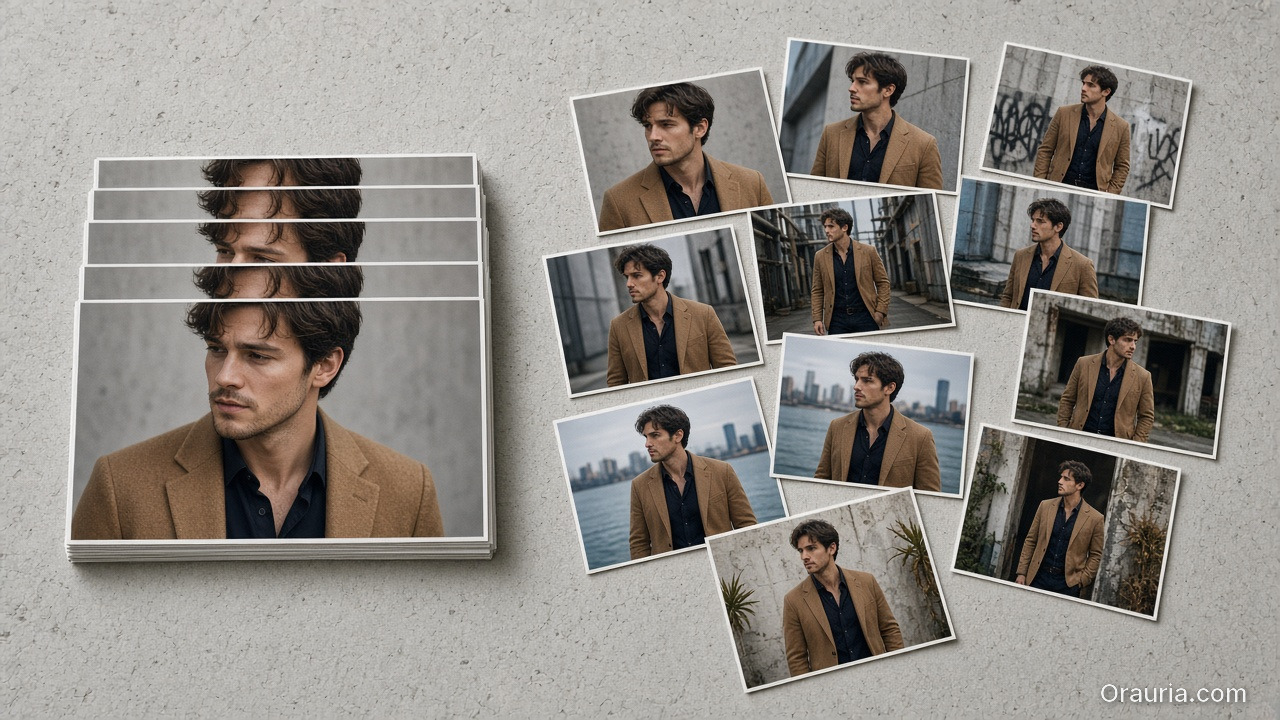
    Hands lift a coherent stack of camel-blazer frames out of a messy table of too many inconsistent prints.
    Volume without a curator: twenty files on the table, only a tight stack should ship.

    Failure #5: Volume Shipped Without a Curator

    What it looked like

    A freelancer delivered twenty AI images to a client "so they have options." The client published fourteen on the website over two weeks — every image technically on brief, collectively incoherent. Light, palette, and scene tone varied across the PDP gallery.

    Conversion flatlined. Return rate crept up — products "looked different" than expected.

    Root cause

    Deliverable confusion. The freelancer sold files, not a curated set. No explorer/curator split. No publish priority table (P0/P1/hold). Client equated more images with more professionalism.

    Diagnostic question

    How many images would you remove if you could only keep five?

    If the answer is more than half, you had a curation problem — not a generation problem.

    Fix

    1. Contract for campaign kit (3–5 images + workflow), not raw folder
    2. Adopt P0/P1/hold publish table from experiment protocol
    3. Adobe: 85% insist final creative decision stays human (2026) — bake that into process
    4. Save phone-to-campaign template so next batch starts from rules, not zero

    Adobe also reports 93% say AI helps them produce faster (2026) — speed without curation is how brands outrun their own identity.
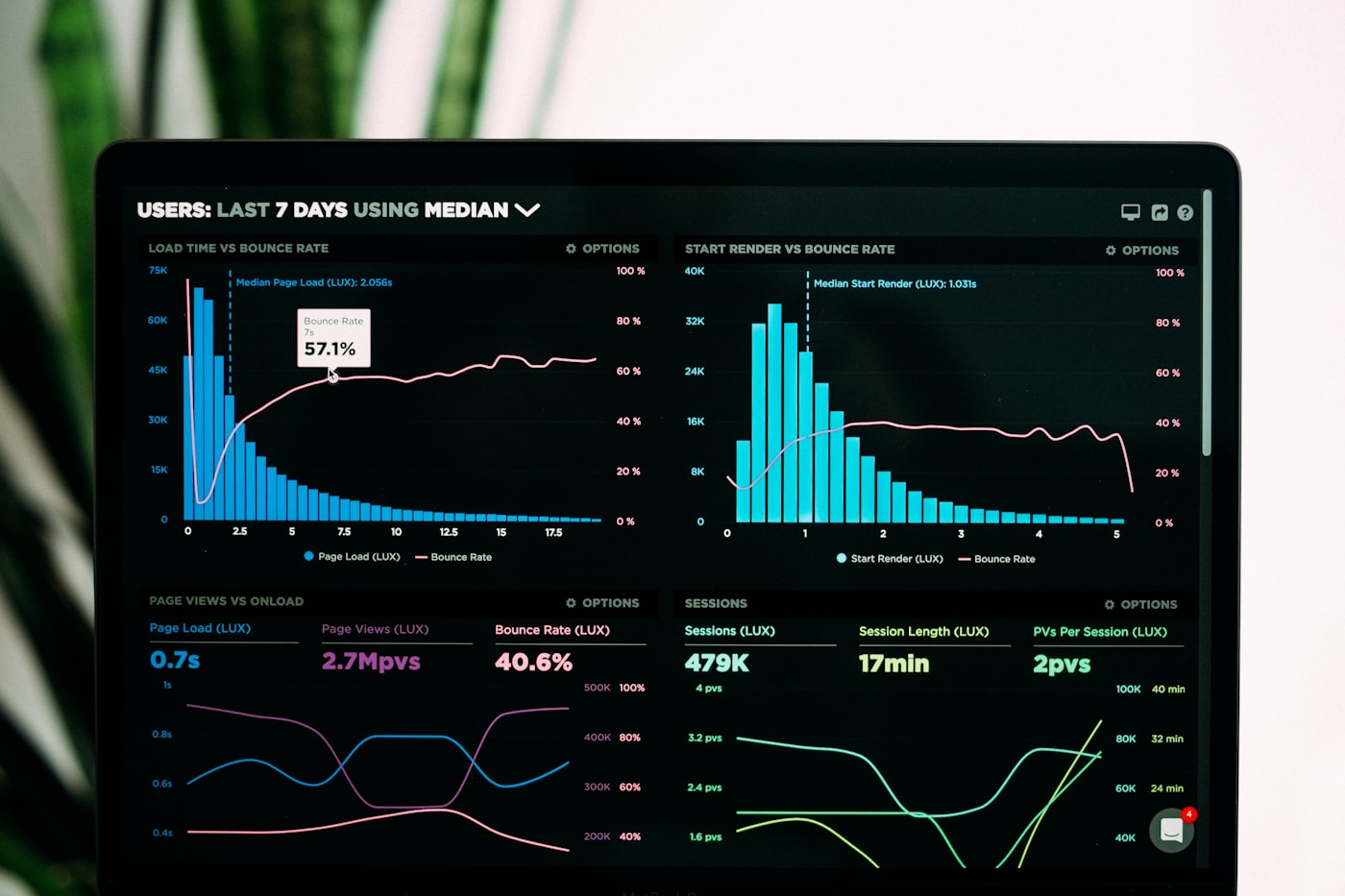
    Analytics dashboard with multiple data streams — volume without curation
    Failure #5: twenty files delivered, fourteen published — coherence lost in volume.

    How Do You Audit a Batch Before Publish?

    Run this five-point check on the full set as thumbnails:

    #CheckPass criteria
    1Light logicSame season / time-of-day feel
    2PaletteNo unapproved dominant colors
    3CharacterSame face geometry if character-led
    4Scene specificityCompetitor swap test fails
    5Set size≤5 publish images from exploration grid

    Fail any check → regenerate affected scenes only. Do not re-brief the entire project unless three or more fail.
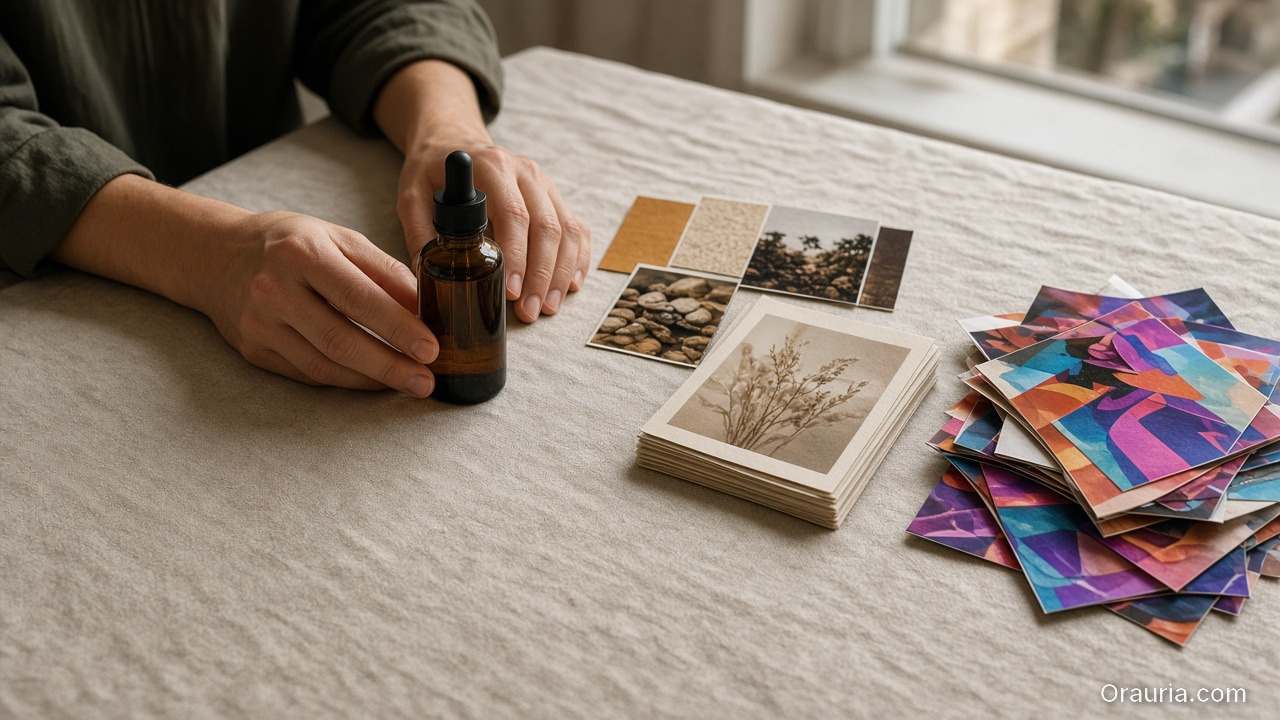
    A designer rebuilds a coherent set around an amber dropper bottle and warm texture references, with a discarded pile of neon abstract prints pushed aside.
    Recovery starts by locking the product and the world again — then leaving the drifted pile behind.

    Recovery Playbook: When Identity Already Broke

    If incoherent assets already shipped:

    1. Pause new posts — stop adding drift to the feed
    2. Pick the 3 strongest that accidentally match each other
    3. Write the world sentence you should have written on Day 1
    4. Rebuild moodboard from those 3 winners only
    5. Regenerate missing slots under reference-heavy mode
    6. Document Brand Style so the mistake is a template fix, not a memory

    Recovery is cheaper before a paid campaign scales. It is still possible after — if you stop publishing first.

    How Does Brand Style Prevent the Next Trap?

    Brand Style is not a logo upload. It is enforceable rules replayed every batch:

    • Palette hex + forbidden tones
    • Light temperature sentence
    • Character reference pack
    • Composition habits (negative space, crop style)
    • Voice and caption tone for cross-channel kits

    In AI ecommerce design, Brand System is Layer 2. The consistency trap is what happens when teams skip Layer 2 and wonder why Layer 3 (scene production) feels chaotic.


    Protect brand identity across AI batches on Orauria: Try Orauria

    Frequently Asked Questions

    Is brand inconsistency always the AI model's fault?

    Rarely. Drift usually traces to missing brief rules, weak references, or no curation gate — not model capability alone.

    Which failure is most common for small brands?

    Failure #5 (volume without curator) and Failure #4 (generic scenes) show up most in SME batches. Enterprise teams more often hit #1 and #2 at scale.

    Can I fix consistency in Photoshop after generation?

    Color grading can help minor drift. Wrong light logic, wrong face geometry, or wrong scene world usually need regeneration with tighter rules — not hours of retouching.

    How many images should a brand publish from one AI batch?

    Three to five for most launches. Eight to twelve generated for exploration; most killed in curation. See eight-scene experiment publish priority table.

    When should I switch models vs fix the brief?

    Switch models after brief, references, and moodboard are locked and outputs still break rules. Otherwise you are randomizing, not directing.

    Does brand consistency matter for AI citation and SEO?

    Coherent visual sets improve dwell time, gallery depth, and brand search recognition — indirect SEO signals. Disjointed sets increase bounce and returns.

    Conclusion

    AI did not break your brand. Process gaps did — light logic skipped, palette unchecked, face unprotected, scenes generic, volume uncured.

    The five failures in this article are predictable. That is good news. Predictable failures have checklists.

    Audit before publish. Curate ruthlessly. Lock Brand Style after the first win. The trap only wins when speed outruns taste.


    References

    1. Adobe, 2026 Creators' Toolkit Report, June 16, 2026. https://news.adobe.com/news/2026/06/creators-toolkit-report-2026
    2. Adobe, Inaugural Creators' Toolkit Report (Adobe MAX 2025), October 28, 2025. https://news.adobe.com/news/2025/10/adobe-max-2025-creators-survey
    3. 9to5Mac, "Adobe survey: AI is helping creators grow, but not without tradeoffs," June 16, 2026. https://9to5mac.com/2026/06/16/adobe-survey-ai-is-helping-creators-grow-but-not-without-tradeoffs/
  • When to Use Reference Images vs Let AI Explore

    When to Use Reference Images vs Let AI Explore

    Every AI creative project starts with the same fork in the road. Lock the references — product geometry, model face, brand palette — and generate variations that stay on brief. Or open the exploration — let the model search for worlds, moods, and scenes you have never visualized before.

    Choose wrong and you waste a week. Reference-heavy when you needed discovery produces safe, boring sameness. Exploration-heavy when you needed continuity produces gorgeous drift — twelve images that do not belong to the same brand.

    This is a decision guide, not a tool tutorial. By the end you will know which mode your brief requires, how to blend both, and where each fits in lookbook thinking and AI ecommerce design.

    Designer desk with laptop and creative workspace — reference versus exploration
    The fork: lock what must stay true, or search for worlds you have not visualized yet.

    Key Takeaways

    • Reference-heavy when continuity is the brief: same face, same product, same brand silhouette across formats.
    • Exploration-heavy when the world is unknown: new season, rebrand, first lookbook, pitch mood discovery.
    • Adobe's 2025 survey found 85% of creators would consider AI that learns their creative style — because consistency is harder than first render (Adobe MAX 2025, 2025).
    • The best pipelines explore first, reference second for new lines — and reference first, explore never for SKU scale.

    What Is the Difference Between Reference Images and Open Exploration?

    Reference images anchor generation. You upload product shots, model faces, moodboard frames, or brand examples — and the AI is constrained to respect them. Shape, color, character, composition habits travel downstream.

    Open exploration removes anchors. You describe worlds, emotions, and contexts — and the AI searches broadly. Discovery is the goal. Consistency is deferred until something worth protecting appears.

    ModePrimary questionRiskReward
    Reference-heavy"Keep this exact truth across scenes"Safe, repetitive if over-constrainedScale without drift
    Exploration-heavy"What world could this product inhabit?"Aesthetic drift, orphansBreakthrough mood, new direction
    Blended"Find the world, then lock it"Process discipline requiredBest of both

    In 2026, Adobe found 85% of creators insist the final creative decision must remain theirs (Adobe Creators' Toolkit Report, 2026). References and exploration are inputs. Curation is still the human job.

    Printed reference anchors of the same amber glass dropper bottle, consistent warm window light and palette, hands pinning the approved hero frame.
    Reference mode starts here: lock the bottle, light, and palette before you generate a batch.

    When Should You Use Reference Images?

    Use references when the brief has a continuity requirement — something that must not change between outputs.

    Reference-heavy scenarios

    ScenarioWhat to referenceWhy
    SKU scalingProduct packshots, label detailsBottle shape cannot drift across 50 SKUs
    Character-led campaignsModel face, posture rulesSame person across 12 formats
    Campaign extensionPrior season hero framesNew scenes must match established world
    Marketplace complianceApproved hero angleMain image must match listed product
    Brand refresh (partial)Logo, palette, typography rulesEvolution, not reinvention

    If your SCENE map has eight contexts for one product, references protect product geometry and character while contexts change around them. That is the core of the eight-scene experiment: explore scenes, reference the outfit.

    What to upload as references

    • Product truth pack — phone or studio shots showing honest shape and color
    • Character sheet — face, hair, posture language (if human-led)
    • Moodboard anchors — 3–5 frames locking light temperature and palette
    • Brand Style rules — hex codes, forbidden tones, composition habits

    References are not for copying. They are for constraining drift.

    Creative workspace moodboard with color swatches and reference frames
    Reference mode: moodboard anchors lock light, palette, and composition before batch generation.

    When Should You Let AI Explore?

    Use open exploration when the brief is discovery — you do not yet know the world, and premature locking would kill the idea.

    Exploration-heavy scenarios

    ScenarioWhat to exploreWhy
    New season / new lineWorlds, contexts, emotional rangeNo established visual language yet
    Rebrand pitch3–5 divergent directionsClient needs options, not one safe path
    First lookbook everBuyer moments, lifestyle contextsLookbook thinking starts here
    Mood discovery deckLight, palette, environmentPre-committed moodboard does not exist
    Creative resetBreak aesthetic rutReferences would reinforce the old world

    Adobe's 2025 data shows 48% of creators use creative AI for ideation and brainstorming, while 52% use it for generating new assets (Adobe MAX 2025, 2025). Exploration and production are different jobs. Assign them explicitly.

    Exploration rules that prevent chaos

    1. Time-box — 90 minutes of open generation, then stop
    2. No approval during exploration — explorer role only
    3. Cluster outputs — group by mood, not by prettiness
    4. Pick one cluster — curator chooses direction
    5. Then switch to references — lock what won

    Exploration without a gate produces folders of orphans. The gate is a moodboard decision, not a model upgrade.

    Analytics dashboard showing multiple creative data variants — exploration phase
    Exploration phase: cluster outputs by mood, not prettiness — then pick one direction.

    What Is the Blended Workflow (Explore → Lock → Scale)?

    Most professional pipelines use three phases:

    Phase 1: EXPLORE (open)
        → Generate 20–40 mood frames, no product yet
        → Curator picks 1 world direction
    Phase 2: LOCK (references + moodboard)
        → Upload winning frames as style anchors
        → Define Brand Style + character rules
        → Write SCENE map for hero SKU
    Phase 3: SCALE (reference-heavy)
        → Generate scene family per SCENE row
        → Adapt per channel
        → Save workflow template

    This is phone-to-campaign logic for teams with studio assets — and AI ecommerce design logic for everyone: find the world, protect it, repeat it.

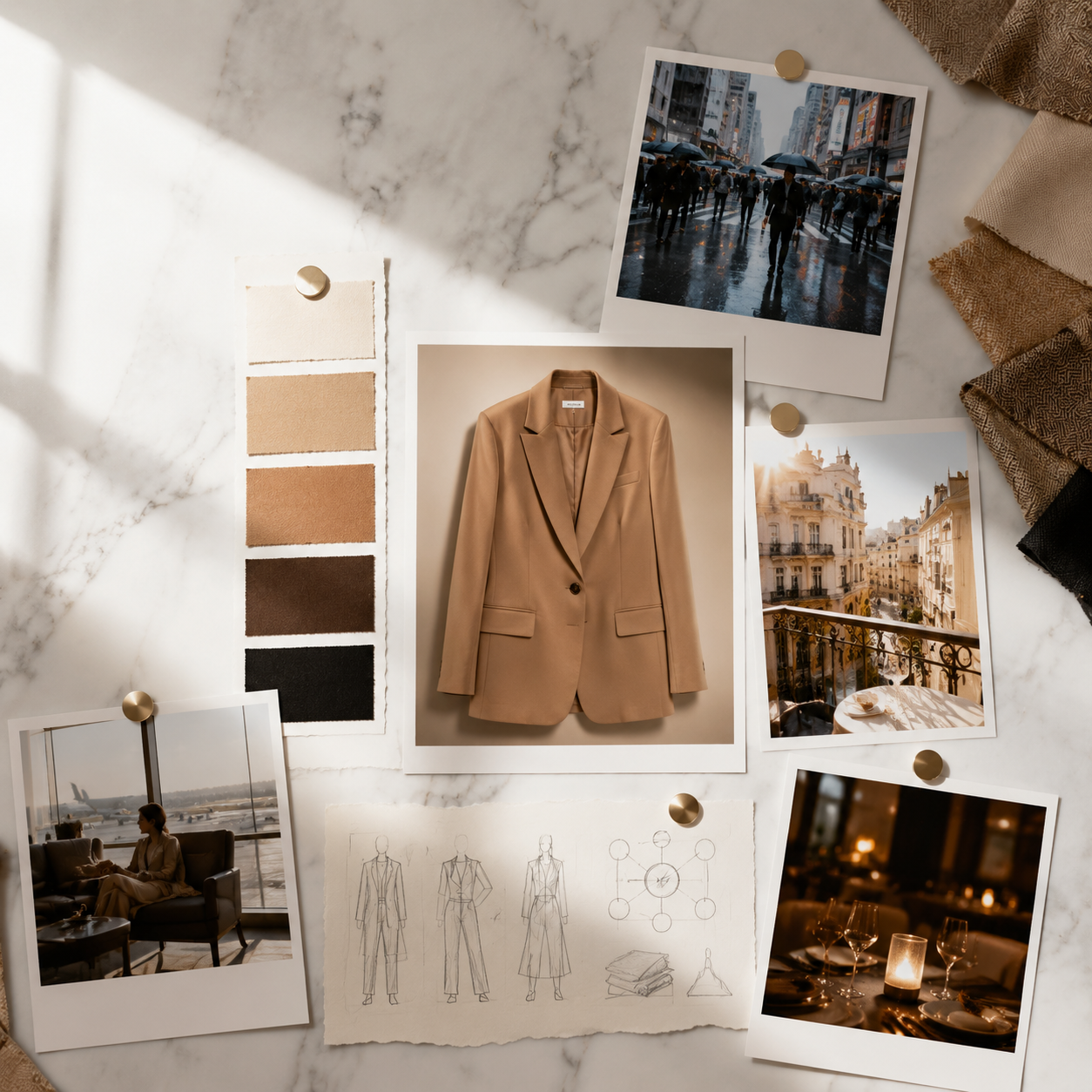
    Fashion moodboard with blazer hero and lifestyle polaroids — brand style lock
    Phase 2 Lock: winning exploration frames become reference anchors for scale.
    Project phaseDominant mode
    Pitch / conceptExploration
    Client approvalExploration → Lock transition
    Launch productionReference-heavy
    Catalog extensionReference-only
    Season refreshBlended (explore accents, reference core)
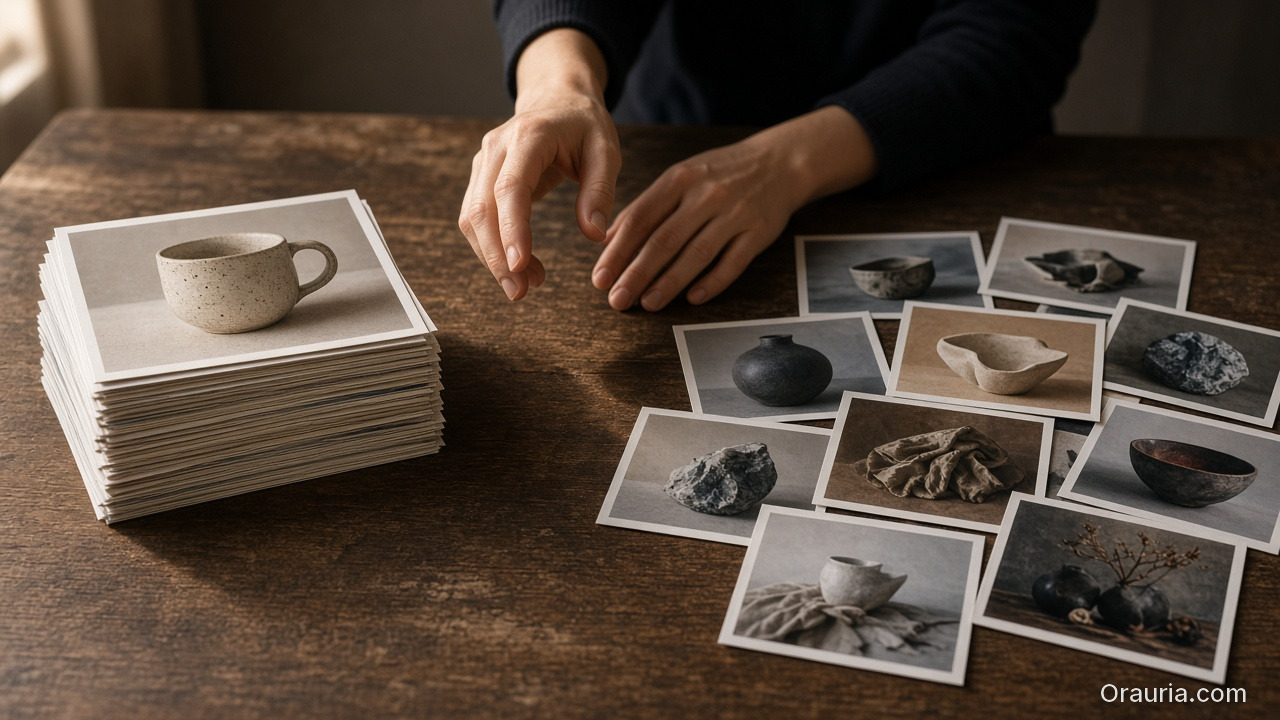
    A curator between a tight stack of consistent ceramic mug references and a loose scatter of exploratory object worlds.
    The brief is a fork: a tight approved stack on one side, open worlds on the other.

    Quick Decision Tree: Which Mode Is Your Brief?

    Answer three questions:

    1. Does the product or face already exist in approved assets? – No → Start with exploration – Yes → Reference the truth pack

    2. Is the commercial world already defined? – No → Exploration for mood and context – Yes → Reference moodboard + SCENE map

    3. Is the deliverable one direction or twelve matching formats? – One direction / pitch → Exploration OK – Twelve matching formats → Reference-heavy required

    Decision matrix

    Brief typeReferenceExploreBlend
    New fashion lookbook (season 1)LowHighMedium
    Campaign extension (season 3)HighLowMedium
    100-SKU beauty catalogHighVery lowLow
    Rebrand pitch (3 directions)LowHigh—
    TikTok ad variant testMediumMediumHigh
    Character-led video seriesHighLowMedium
    Team reviewing creative options at desk — curator decision gate
    The decision tree ends with a human gate — explorer generates, curator locks direction.

    When references fail and drift wins anyway, read Brand Consistency Trap.

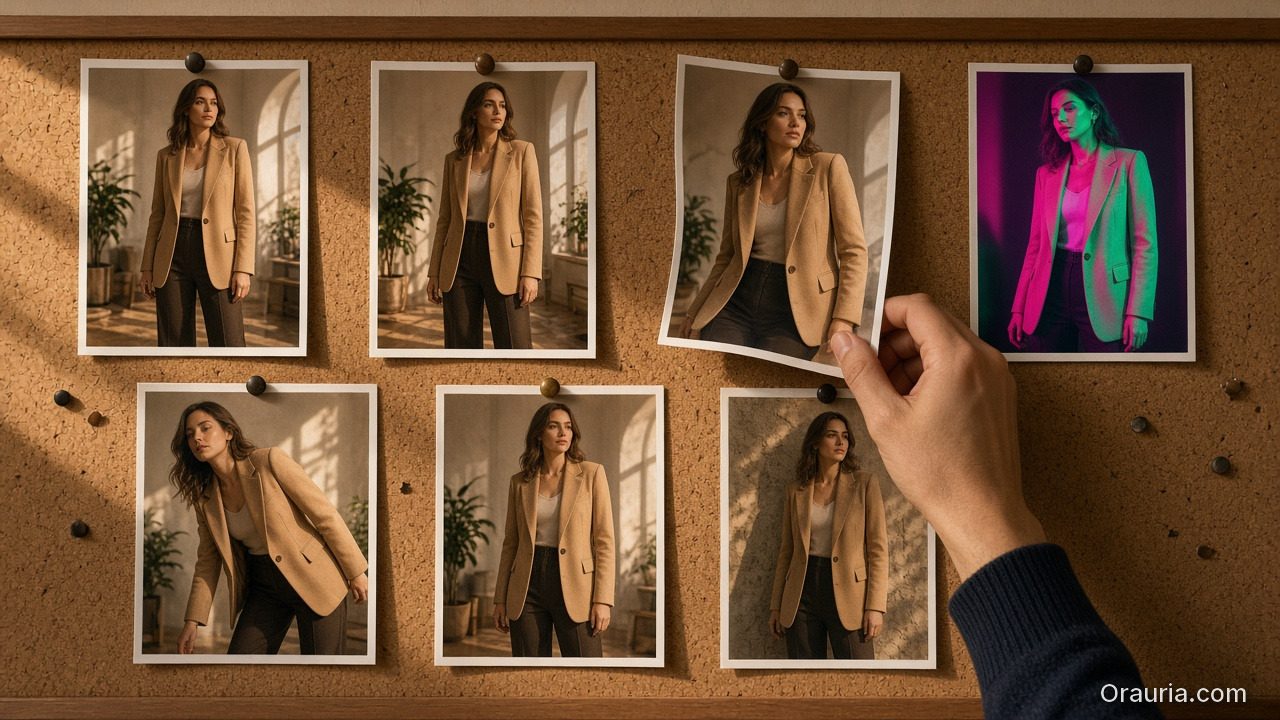
    Cork board of structured camel-blazer frames; a hand pulls a drifted print while a neon-lit outlier remains pinned.
    Mistakes are visible in the set: drifted geometry and a lighting world that does not belong.

    What Are Common Mistakes With References and Exploration?

    MistakeSymptomFix
    Reference too lateProduct shape wrong in all scenesUpload truth pack before scene 1
    Explore too long200 images, no direction90-minute time-box + cluster
    Reference moodboard onlyPretty but wrong productSeparate product refs from style refs
    Explore during scaleDrift across SKU batchSwitch to reference-only for catalog
    Same person explores + approvesNo taste gateSplit explorer / curator roles
    No saved lock pointRe-explore every MondayDocument winning refs in Brand Style

    Adobe reports 57% of creators say AI outputs need moderate or extensive editing before publish (2026). References reduce fundamental failure. Editing handles polish. Do not confuse them.

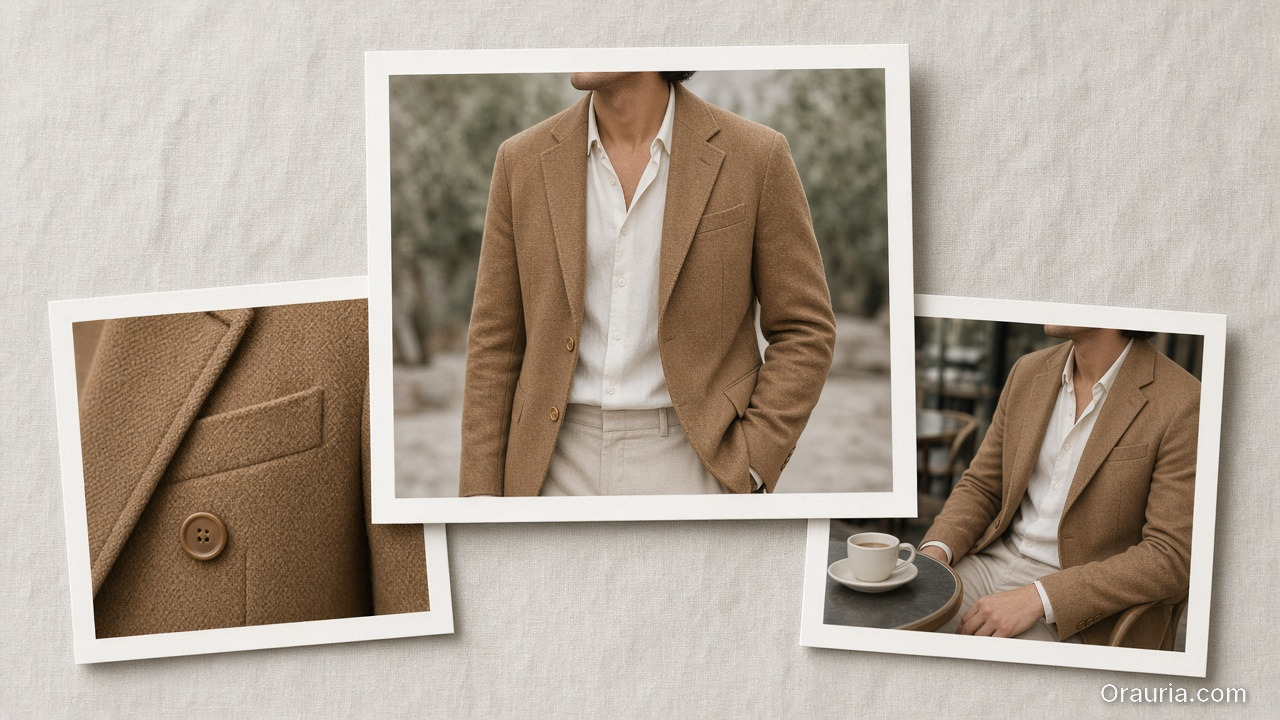
    A small set of hero, glaze-detail, and window-light mug references on linen, unused prints face down to the side.
    A tight set is enough — hero, detail, and one lifestyle frame, not a pile of near-duplicates.

    How Many Reference Images Should You Upload?

    Use caseRecommended countWhat they cover
    Product SKU3–5Angles, label, scale
    Character face2–4Front, 3/4, expression range
    Mood / style5–8Light, palette, composition
    Brand kitRules + 3 anchorsHex, type, photo habits

    More references is not always better. Conflicting references confuse the model — warm moodboard plus cool product shot plus neon brand guideline produces mush. Curate the reference set like you curate outputs.

    How Does This Connect to Brand Style and Workflow?

    References live in three layers:

    1. Asset references — product, face, specific frames
    2. Brand Style — enforceable rules (palette, light, voice)
    3. Workflow template — saved node order for repeat runs

    In workspaces like Orauria, Phase 2 (Lock) maps to Brand Style + reference upload nodes. Phase 3 (Scale) maps to saved workflows per SKU or scene batch.

    Exploration finds what to save. References protect what you saved. Workflows replay what worked.


    Explore and lock creative worlds on Orauria: Try Orauria

    Frequently Asked Questions

    Can I use reference images and exploration in the same session?

    Yes — but sequentially, not simultaneously. Explore first without product references. Once direction wins, upload references and regenerate. Mixing both at minute zero produces muddled briefs.

    Do reference images limit creativity?

    They limit drift, not ideas. You can still place a referenced product in twelve contexts via SCENE. References constrain what must stay true; SCENE defines what may change.

    What if I only have phone photos as references?

    Phone photos are valid truth packs — especially for SMEs. Clean them for reference use (phone-to-campaign), then scale scenes around them.

    When should freelancers default to exploration?

    Pitch decks, first client concepts, and rebrand directions — anywhere the client must choose a world before production locks. Bill exploration as discovery; bill reference workflows as production.

    How do I know exploration is finished?

    When the curator can write a one-sentence world definition and pick 5–8 moodboard frames without hesitation. If you cannot write that sentence, exploration continues.

    Is open exploration risky for brand reputation?

    It is risky to publish exploration outputs without curation. Exploration itself is low risk in private — publishing without a lock phase is where brands break identity.

    Conclusion

    Reference images and open exploration are not rivals. They are phases.

    Explore when the world is unknown. Reference when the world must survive scale. Blend when the season is new but the brand is not.

    The wrong question is "which mode is better?" The right question is "which mode is this brief?" — then run the pipeline that matches.


    References

    1. Adobe, Inaugural Creators' Toolkit Report (Adobe MAX 2025), October 28, 2025. https://news.adobe.com/news/2025/10/adobe-max-2025-creators-survey
    2. Adobe, 2026 Creators' Toolkit Report, June 16, 2026. https://news.adobe.com/news/2026/06/creators-toolkit-report-2026
    3. 9to5Mac, "Adobe survey: AI is helping creators grow, but not without tradeoffs," June 16, 2026. https://9to5mac.com/2026/06/16/adobe-survey-ai-is-helping-creators-grow-but-not-without-tradeoffs/
  • Experiment: 1 Outfit × 8 Lifestyle Scenes — What Actually Sells?

    Experiment: 1 Outfit × 8 Lifestyle Scenes — What Actually Sells?

    Hypothesis: For a single hero outfit, eight deliberate lifestyle scenes will outperform eight random AI variations — not because more images always win, but because scene diversity with narrative coherence covers more buyer moments without breaking brand identity.

    Setup: One structured camel blazer (contemporary urban, ages 28–40). Eight SCENE-mapped contexts. Same light logic, same palette, same character continuity rules. No studio reshoot. AI-assisted scene generation with human curation.

    What we are testing: Not whether AI can make pretty pictures — that is settled. Whether a designed eight-scene grid beats undirected volume for lookbook, PDP, and paid social performance.

    Key Takeaways

    • Eight scenes is not arbitrary — it maps to eight distinct buyer moments without aesthetic drift, if SCENE and brand rules are locked first.
    • Aggregated fashion ecommerce data suggests on-model lifestyle contexts outperform flat product isolation by 20–30% on conversion in apparel categories (industry A/B aggregates, 2025–2026).
    • In 2026, Adobe found 53% of creators blame content quantity for harder stand-out — volume without scene logic adds noise, not sales.
    • The winning set is never all eight. Curate three to five for publish; use the full grid for exploration and testing.

    This experiment extends lookbook thinking and the SCENE method. Read those first if you need the frameworks. This article is the field test.

    Fashion model in urban lifestyle scene — hero outfit experiment
    One outfit, multiple worlds: the experiment starts with a designed scene grid — not random volume.

    What Was the Experiment Design?

    Controls (held constant)

    VariableRule
    Hero garmentStructured camel blazer, single SKU
    Buyer personaUrban professional, 28–40, smart-casual wardrobe
    Brand paletteWarm neutrals, camel + cream + soft black
    Light logicSame season feel — late autumn, soft directional
    CharacterSame face and posture language across scenes
    CurationExplorer generates 15–20 per scene; curator picks 1

    Independent variable

    Scene context — eight predetermined lifestyle moments, not eight prompt variations.

    Dependent variables (how to score your own run)

    MetricWhere to measure
    Thumb-stop ratePaid social (3-second hold)
    CTRAd click-through
    PDP gallery depth% scrolling past image 2
    Add-to-cart from PDPPrimary conversion
    Save / share rateInstagram, TikTok
    Return rate (30-day)Expectation match

    We designed this as a replicable protocol — not a proprietary client case with sealed numbers. Run it on your SKU, your traffic, your channels. The structure is the deliverable.

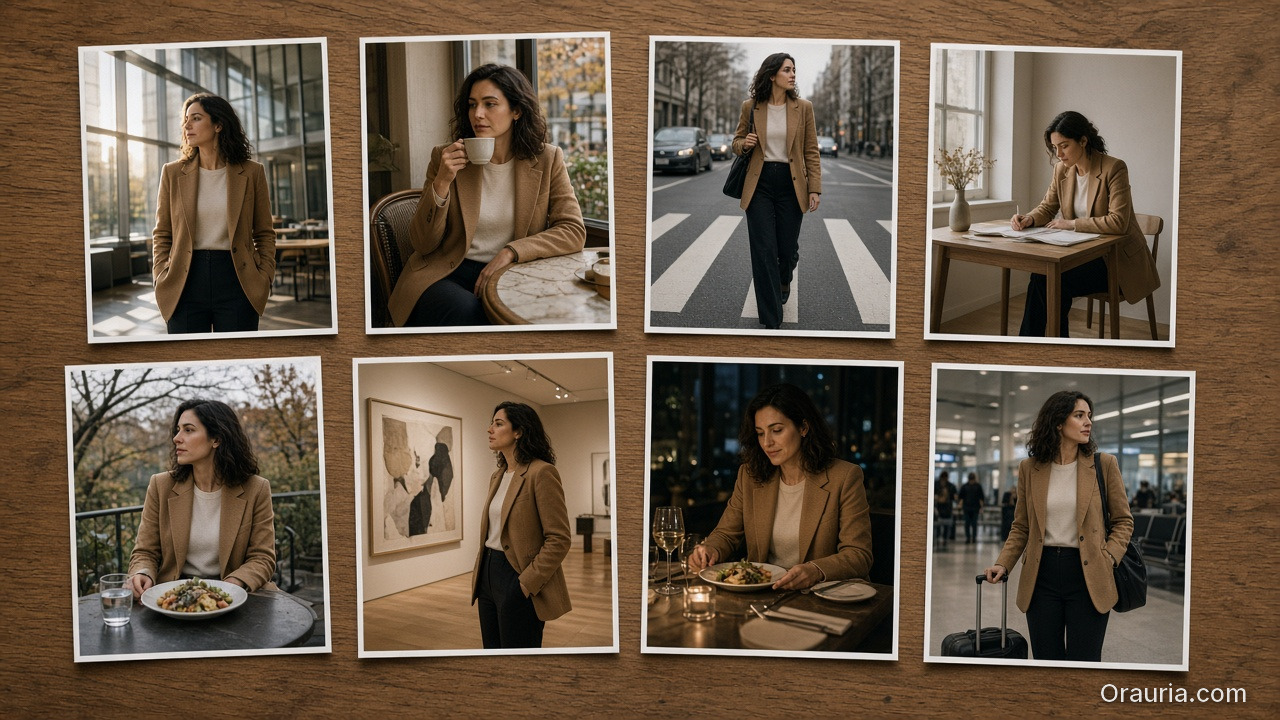
    Eight photo prints of the same camel blazer in office, cafe, commute, desk, terrace, gallery, dinner, and travel scenes
    Eight SCENE-mapped moments for one camel blazer — office, café, commute, desk, terrace, gallery, dinner, travel — before any winner is picked.

    What Were the Eight Lifestyle Scenes?

    Each scene maps to SCENE dimensions. Narrative role explains where it sits in the funnel.

    #Scene nameStoryContextEmotionNarrative role
    1Monday momentumFirst meeting of the weekGlass office lobby, morning lightComposed confidenceOpen — aspiration
    2Coffee pauseMid-morning resetCorner café, ceramic cupUnhurried warmthRelate — humanize
    3Commute strideCity movementCrosswalk, soft overcastCapable, in motionProof — real life
    4Desk minimalWork sessionClean desk, laptop closedFocused eleganceTrust — professional
    5Lunch terraceMidday socialOutdoor table, soft sunApproachable polishDesire — lifestyle upgrade
    6Gallery eveningAfter-work cultureWhite walls, art, dim lightQuiet sophisticationDifferentiate — taste
    7Dinner dateEvening transitionRestaurant candlelightWarm confidenceClose — identity
    8Travel readyWeekend departureAirport lounge, carry-onCapable adventureExtend — versatility

    Same blazer. Eight chapters. One lookbook experiment — not eight unrelated renders.

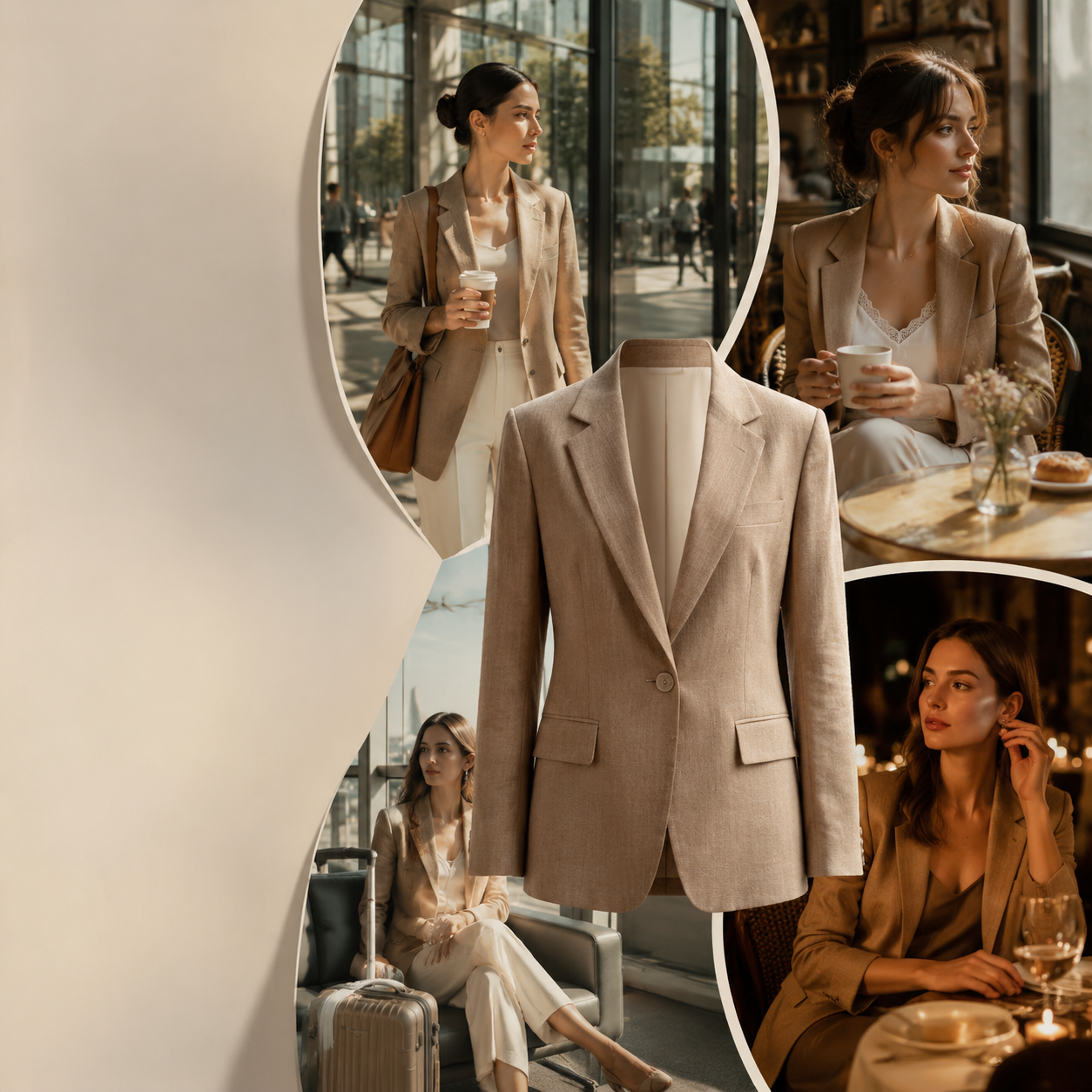
    One blazer across four lifestyle worlds — lookbook scene collage
    Scene diversity with narrative coherence: the grid covers buyer moments without aesthetic drift.

    What Did Each Scene Type Hypothesize?

    Before looking at category data, we assigned commercial jobs to each scene:

    Scene typeHypothesized jobRisk if overused
    Office / commuteProfessional identityFeels corporate-only
    Café / socialRelatabilityToo generic "lifestyle stock"
    Evening / diningAspiration closeWrong if brand is casual
    TravelVersatility proofIrrelevant for desk-only buyers
    Gallery / cultureTaste signalingNiche — not for mass market

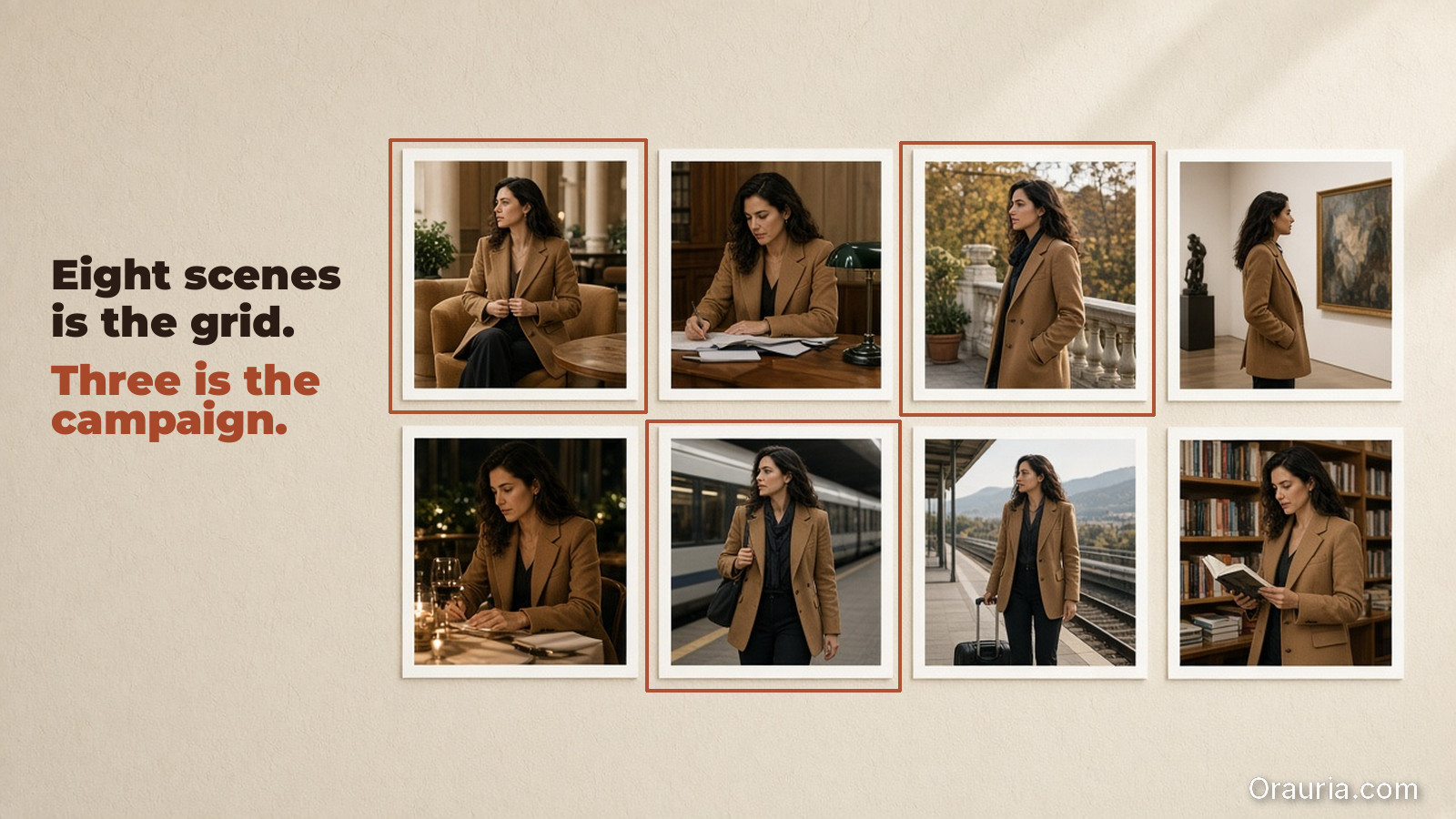
    Design insight: Scenes 1, 3, and 7 form a minimum viable trilogy — work, movement, evening. Scenes 2, 5, 6, 8 expand reach for paid social and email. Scene 4 anchors PDP professionalism.

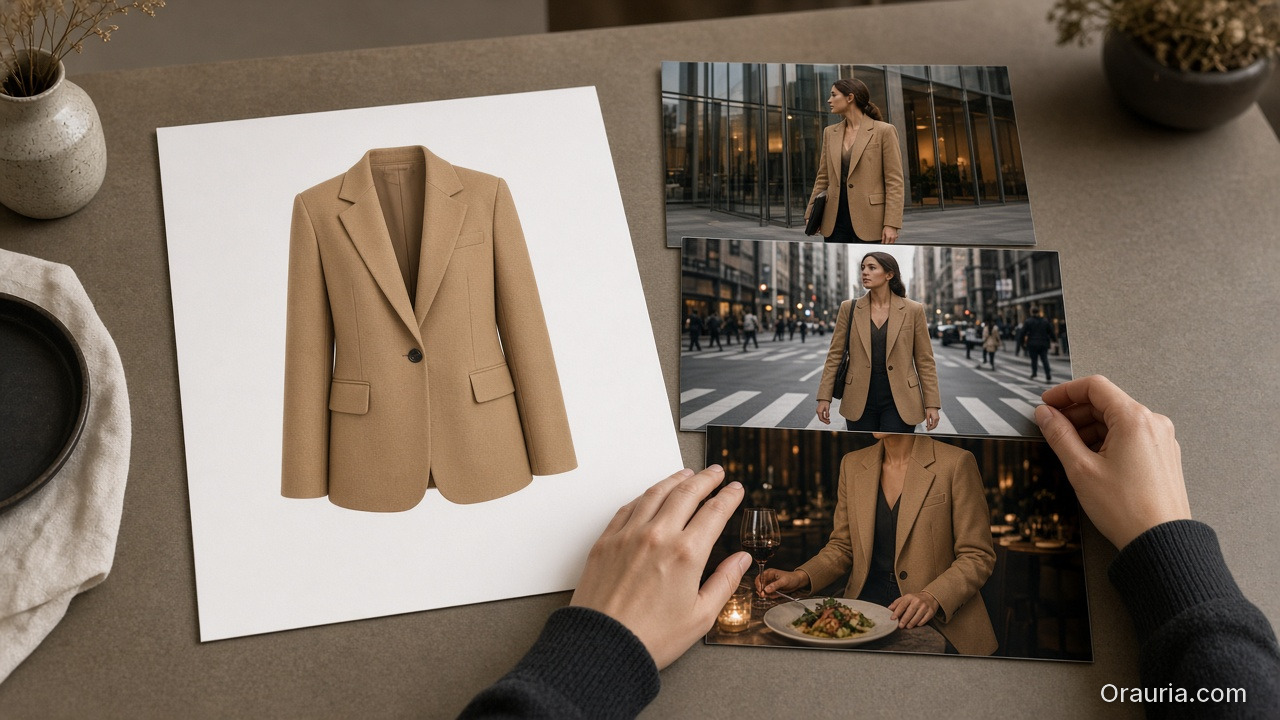
    Hands arranging lifestyle prints of a camel blazer beside a sterile white packshot
    Apparel feeds reward identity in context. A white packshot is catalog infrastructure; lifestyle scenes are what category data says actually sells.

    What Does Category Data Suggest Actually Sells?

    We cross-referenced the eight-scene grid against published fashion and ecommerce benchmarks. No invented experiment CTRs — these are category signals to inform which scenes to weight.

    Lifestyle beats isolation (apparel)

    Aggregated Shopify merchant data cited in industry analyses shows on-model lifestyle imagery outperforming flat lay by roughly 20–30% on conversion across most apparel categories. Lifestyle creates identity recognition; flat lay creates specification clarity. You need both — not one alone.

    Implication for our grid: Scenes 1–7 (lifestyle-led) drive desire. You still need a clarity frame — often a cropped detail or compliant hero — for marketplace and comparison shoppers. That is scene 4's desk minimal or a separate packshot, not scene 8.

    Volume without coherence fails

    Adobe's 2026 Creators' Toolkit Report found 53% of creators who find it harder to stand out blame sheer content quantity online, and 42% say AI-generated work makes distinctive voices harder to surface (Adobe, 2026).

    Implication: Publishing all eight scenes everywhere is not a strategy. It is noise. Test two on paid social. Put three in PDP gallery. One in email. Kill the rest.

    Mobile-first discovery

    Adobe's 2025 survey found 72% of creators frequently create content on mobile (Adobe MAX 2025, 2025). Fashion discovery happens in feed — not gallery.

    Implication: Scenes with immediate context (commute stride, coffee pause) likely outperform slow-burn scenes (gallery evening) in cold traffic. Save gallery for retargeting and email.

    Professional in blazer walking through office lobby — Monday momentum scene
    Scene 1 + 3 (office, commute): strongest cold-traffic candidates in our publish priority table.
    Woman in fashion apparel on city street — lifestyle commute context
    Movement + context: identity recognition beats flat isolation in apparel feeds.

    Curation still mandatory

    Adobe reports 57% of creators say AI outputs need moderate or extensive editing before publish, and 85% insist final creative decisions remain theirs (2026).

    Implication: The experiment is not "generate eight and post." It is "generate eight candidates, publish three curated."

    Curated prints of a camel blazer in office lobby, commute, cafe, dinner, and travel scenes
    From eight generated scenes, curate a publish set: P0 for PDP, cold traffic, and email; P1 and P2 wait their turn.

    What Would We Publish From the Eight?

    Based on scene job + category signals, our recommended publish set from this experiment:

    PriorityScenePrimary use
    P0Monday momentum (1)PDP gallery opener, brand homepage
    P0Commute stride (3)Paid social cold traffic
    P0Dinner date (7)Email hero, retargeting
    P1Coffee pause (2)Instagram organic
    P1Travel ready (8)Versatility story, TikTok
    P2Desk minimal (4)LinkedIn, B2B-leaning brands
    P2Lunch terrace (5)Seasonal campaign
    HoldGallery evening (6)Test on small budget — niche taste

    Your SKU may invert this. A weekend-first brand might lead with scene 5 or 8, not scene 1. The grid is fixed; the priority order is brand-specific.

    Evening dining lifestyle fashion scene — dinner date context
    Scene 7 (dinner date): P0 for email hero and retargeting — aspiration close.
    Travel lifestyle scene with carry-on — airport lounge context
    Scene 8 (travel ready): versatility proof for TikTok and seasonal campaigns.

    How Do You Run This Experiment on Your Own SKU?

    Week 1: Design

    1. Lock hero garment and buyer persona (one sentence each)
    2. Copy the eight-scene table; rewrite rows for your brand
    3. Moodboard: light, palette, character rules
    4. List channels and metrics (from dependent variables table)

    Week 2: Produce

    1. Generate 15–20 variations per scene (explorer role)
    2. Curate one winner per scene (curator role)
    3. Hold consistency review — kill any scene that broke light or palette

    Week 3: Test

    1. Run paid social A/B: scene 3 vs scene 7 vs packshot-only control
    2. Swap PDP gallery image 2: scene 1 vs scene 2
    3. Track 14 days minimum before calling winners

    Week 4: Systemize

    1. Document winning three scenes in brand playbook
    2. Save workflow template for next SKU (phone-to-campaign pattern applies)
    3. Archive losers — do not delete; they inform next season
    A hand removing a neon-lit drifted blazer print from a board of otherwise consistent warm scenes
    Drift is the experiment’s real risk: one moody-neon gallery or a slipped face and the family falls apart.

    What Broke During the Experiment?

    Honest failure modes we designed against — and you will hit at least two:

    FailureWhat happenedFix
    Scene 6 driftGallery lighting went moody-neon vs warm brandReturn to moodboard; regenerate only scene 6
    Character slipFace subtly different in scene 8Stricter reference images; same seed rules
    Over-publish urgeTeam wanted all eight live Day 1Enforce P0/P1/P2 publish table
    Packshot missingMarketplace rejected lifestyle-only mainAdd compliant hero — not in lifestyle grid

    When identity drift spreads across scenes, see Brand Consistency Trap.

    How Does This Connect to AI Ecommerce Design?

    This experiment is one spoke in AI ecommerce design: one creative direction, multiple commercial assets, human curation, saved workflow.

    The outfit is not the campaign. The scene selection is the campaign. Eight is the exploration grid. Three to five is the commercial kit.

    Fashion teams without studios already proved the worldview in Your Lookbook Doesn't Need a Studio. This experiment asks the harder question: which worlds actually move product — and gives you a protocol to find out on your own traffic.


    Run your eight-scene experiment on Orauria: Try Orauria

    Frequently Asked Questions

    Do I need exactly eight scenes?

    No. Eight is a useful exploration grid for one hero SKU — enough coverage, not infinite drift. Four scenes may be enough for a tight launch; six for seasonal drops. The method matters more than the count.

    Can I run this without paid ads budget?

    Yes. Use organic posting order (scene 3 vs 7 on alternate days), email A/B heroes, or PDP gallery swap tests. Slower signal, same logic.

    Which scene usually wins for cold traffic?

    Category data points to movement + immediate context — commute, street, café — over slow atmospheric scenes for thumb-stop. Your brand may differ; test beats theory.

    Is this only for blazers and fashion?

    The eight-scene structure applies to any hero garment. For beauty or F&B, swap scenes using lifestyle context mapping rows instead of outfit moments.

    How long should I test before picking winners?

    Minimum 14 days for paid social; 30 days if measuring returns and repeat purchase. Do not call winners on 48 hours of data unless spend is very high.

    What if all eight scenes look good but feel unrelated?

    You skipped moodboard and consistency rules. Regenerate as a set, not eight separate prompts. Coherence is a brief problem, not a model problem.

    Conclusion

    One outfit. Eight lifestyle scenes. Not eight random AI outputs — eight designed buyer moments with narrative roles, curation gates, and a publish priority table.

    What actually sells is not the biggest grid. It is the smallest curated set that covers aspiration, proof, and identity — drawn from a scene map you built before the first render.

    Run the experiment. Measure your traffic. Publish three. Save the workflow. Next SKU starts faster.


    References

    1. Adobe, 2026 Creators' Toolkit Report, June 16, 2026. https://news.adobe.com/news/2026/06/creators-toolkit-report-2026
    2. Adobe, Inaugural Creators' Toolkit Report (Adobe MAX 2025), October 28, 2025. https://news.adobe.com/news/2025/10/adobe-max-2025-creators-survey
    3. Industry apparel lifestyle vs flat lay conversion aggregates (Shopify merchant analyses cited in ecommerce photography literature, 2025–2026).
  • From Phone Photo to Campaign: A Workflow Mindset for Small Brands

    From Phone Photo to Campaign: A Workflow Mindset for Small Brands

    The most common excuse in small-brand ecommerce is also the least true: "We can't shoot a campaign — we only have phone photos." The phone is not the bottleneck. The workflow is.

    A founder snaps a product on a kitchen table. It is slightly crooked, the light is mixed, the background is busy. Most teams do one of two things: post it anyway and hope, or open an AI tool, generate something prettier, and discover marketing needs six more formats by Friday. Both paths treat the image as a one-off. Neither treats it as the first node in a pipeline.

    AI product photo workflow for small brands is not about fixing a single file. It is about turning a rough reference into a campaign system — hero, lifestyle scenes, social crops, email header — with creative direction that survives every step.

    Key Takeaways

    • Your phone photo is a reference asset, not a final deliverable. The workflow starts with what you have, not what you wish you had.
    • In 2026, Adobe found 72% of creators frequently create content on mobile — and 60% used more than one creative AI tool in three months to match the right tool to each task (Adobe, 2025–2026).
    • The Phone → Campaign pipeline has five stages: Capture, Clean, Direct, Extend, Adapt. Skip a stage and you rebuild from scratch next launch.
    • Workflow mindset beats better prompts: save the creative logic, not just the pixels.

    If you have read AI Ecommerce Design Is Not AI Image, you know commercial creative is a system — not a single render. This article is the SME entry point: how to run that system when your only studio is a windowsill and your only camera is in your pocket.

    Hand holding smartphone photographing product for ecommerce reference
    Your phone is node one — not a dead end.

    Why Do Small Brands Treat Phone Photos as Dead Ends?

    Three beliefs block the pipeline before it starts:

    1. "Professional means professional camera." Buyers care about clarity, context, and trust — not EXIF data. A well-directed phone reference processed through a consistent workflow often outperforms a random DSLR shot with no brief.

    2. "AI will fix everything in one click." Adobe's 2026 Creators' Toolkit Report found 57% of creators say AI outputs need moderate or extensive editing before publish. AI accelerates production; it does not replace creative direction.

    3. "We will redo it properly later." "Later" becomes never. Meanwhile every channel gets a different ad hoc image — and the brand drifts before it scales.

    Smartphone showing a ceramic mug product photo beside printed campaign crops of the same mug
    One phone capture becomes a campaign set — hero, lifestyle, social, and email — when the workflow is directed.

    What Is the Phone → Campaign Workflow?

    A campaign is not one image. It is a coordinated set: marketplace hero, PDP gallery, paid social, email, maybe short video. The Phone → Campaign workflow maps how one capture becomes that set without reinventing the brief each time.

    StageJobQuestion it answers
    1. CaptureDocument the real productWhat does truth look like?
    2. CleanNormalize the referenceCan AI read shape, label, color accurately?
    3. DirectApply SCENE / context mapWhat story and scenes does this SKU need?
    4. ExtendGenerate scene familyWhat images belong in the same world?
    5. AdaptExport per channelWhat does each platform require?

    This is AI ecommerce design at SME scale — five layers compressed into a pipeline a two-person team can run in an afternoon.

    Five-stage phone to campaign workflow pipeline on analytics dashboard
    Capture → Clean → Direct → Extend → Adapt: five stages, one pipeline.

    Stage 1: Capture — What Phone Photos Actually Need

    You do not need a light tent. You need repeatable capture rules:

    • One hero angle that shows label, shape, and true color
    • Even, indirect light — window light beats overhead kitchen LED
    • Simple background — white poster board, neutral table, plain wall
    • Scale reference — hand, coin, or known object so size is honest
    • Detail shot — texture, cap, ingredient panel if relevant

    Capture three to five phone frames. That is your truth pack — the anchor every generated scene must respect.

    Phone product photo capture on desk with natural window light
    Capture rules beat camera price: indirect light, simple background, honest scale.

    Adobe's 2025 inaugural Creators' Toolkit Report noted 72% of creators frequently create content on mobile (Adobe MAX 2025, 2025). Small brands are not behind the curve. They are often native to how content is actually made.

    Hands normalizing a dark glass bottle photo from a cluttered table onto a clean white board
    Stage 2 is not Instagram polish. It is a machine-readable reference: honest color, clear edges, usable geometry.

    Stage 2: Clean — Turn Noise into Reference

    Before scene generation, normalize the phone file:

    • Crop to product with breathing room
    • Correct white balance — phone auto-WB lies
    • Remove distracting background if needed (not beauty-filter the product)
    • Upscale only after composition is locked

    The goal is not Instagram polish. The goal is a machine-readable reference: clear edges, honest color, readable label. AI scene tools need truth more than glamour at this stage.

    If the product geometry is wrong here, every downstream scene inherits the lie.

    Open notebook with four empty frames beside a ceramic mug and lifestyle reference prints
    Direct before you generate: a SCENE or context map turns one mug into four intended scenes.

    Stage 3: Direct — SCENE Before Generate

    This is where most phone-to-AI workflows fail. Teams jump from Clean straight to Extend — "make it look professional."

    Stop. Open a SCENE brief or context map first:

    • Who buys this?
    • What four moments do they live in?
    • What emotion closes each moment?
    • What formats ship this month?

    Example for a handmade ceramic mug sold on Shopify:

    SceneStoryContextChannel
    1Slow morningKitchen window, steam risingPDP lifestyle
    2ClarityStudio-style hero on neutralMarketplace
    3GiftWrapped, ribbon, soft lightEmail hero
    4Desk companionLaptop, notebook, afternoonInstagram

    Same mug. Phone reference. Four directed scenes — not four random prompts.

    Four coordinated photo prints of the same ceramic mug in morning, hero, gift, and desk scenes
    Extend as a family: one winner per scene, same product geometry, same light logic, same palette.

    Stage 4: Extend — Build the Scene Family

    With reference images uploaded and SCENE rows defined, generate one winner per scene. Explore freely; curate ruthlessly.

    Rules for extension:

    • Lock product geometry from the phone reference — do not let the model redesign the SKU
    • Lock light logic across scenes — same season, same time-of-day feel
    • Lock palette from brand kit — not model defaults
    • Separate explorer from curator — whoever generates should not be the only approver

    Adobe found in 2026 that 85% of creators insist the final creative decision must remain theirs (Adobe Creators' Toolkit Report, 2026). Phone-to-campaign workflows respect that: AI proposes scenes; humans protect the brand.

    Fashion brands extend this logic through lookbook thinking. The phone photo of a garment on a hanger is still a valid reference — the world-building happens in Stage 3, not Stage 1.

    Stage 5: Adapt — Channel Is Design Work

    A campaign dies in adaptation if nobody planned formats upfront.

    ChannelTypical needAdaptation job
    MarketplaceCompliant hero, white or neutralCrop, compliance check
    PDP galleryClarity + lifestyle mix4–6 image sequence
    Instagram4:5 or 1:1, thumb-stopCrop, contrast bump
    TikTok ShopVertical, native feelReframe, motion extract
    EmailWide banner, text-safe zonesCrop with overlay room

    Adaptation is not resize-and-pray. It is intentional reframing — planned in Stage 3 when you listed formats in the Extension column.

    Laptop and phone showing multi-channel ecommerce campaign assets
    Stage 5: each channel gets intentional adaptation — not emergency cropping on Friday.

    What Does a One-Afternoon Phone → Campaign Run Look Like?

    For a two-person SME team launching one hero SKU:

    Time blockTaskOutput
    0:00–0:30Capture truth pack (phone)3–5 reference frames
    0:30–0:45Clean + upload referencesNormalized anchor files
    0:45–1:15SCENE / context map (4 rows)Written brief
    1:15–2:30Generate + curate (4 scenes)4 approved images
    2:30–3:00Adapt per channel8–12 publishable files
    3:00–3:15Save workflow templateRepeatable pipeline

    Three hours. One product. One campaign skeleton — not a single pretty picture and a panic attack.

    Small team collaborating on creative workflow in modern office
    A two-person SME team can run the full pipeline in one afternoon — with a saved template for next SKU.

    Phone Photo vs Studio Shoot: When Does Each Win?

    SituationPhone + workflowStudio shoot
    Pre-launch, no budget✅ Best option❌ Delayed
    1–10 hero SKUs✅ Fast iterationOptional
    100+ SKU catalogHybrid — phone truth + batch workflowScale studio for heroes
    Character-led fashionPhone for product truth; AI for worldsModel shoot if budget allows
    Marketplace compliancePhone hero + AI lifestyleStudio for main if required

    The workflow mindset does not claim phone beats studio forever. It claims waiting for studio is a worse strategy than shipping a directed campaign now.

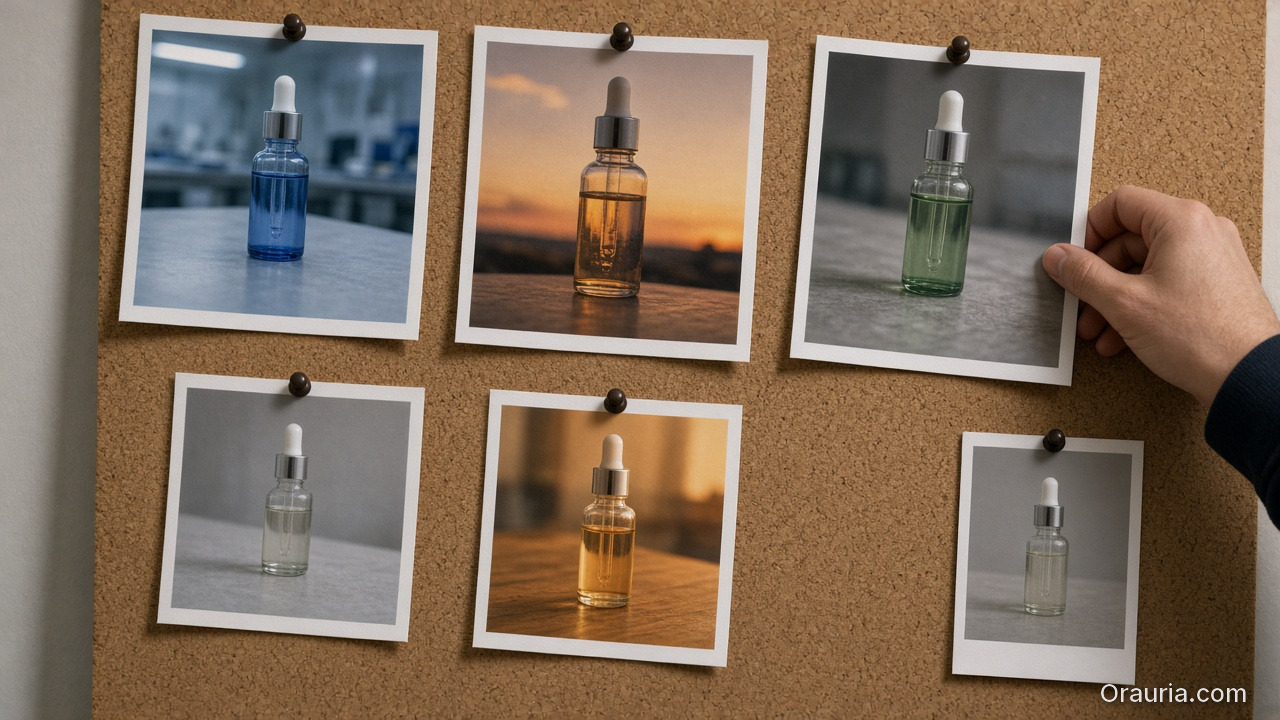
    Cork board of inconsistent bottle photos with a hand removing a drifted shot
    What breaks the pipeline: skipped briefs, drifted geometry, and no one protecting the brand.

    What Breaks Phone → Campaign Workflows?

    FailureSymptomFix
    Skip SCENEPretty orphansWrite brief before generate
    Over-trust AI cleanupProduct shape driftsLock geometry from phone ref
    No saved templateReinvent every launchSave workflow after first SKU
    One person generates + approvesBrand drift, no tasteSplit explorer / curator roles
    No adaptation planFriday crop panicList channels in Stage 3

    When consistency breaks across scenes, read Brand Consistency Trap — the failure modes are the same whether your reference came from a phone or a Phase One.

    How Does This Connect to Workflow Builder Thinking?

    Phone → Campaign is the mindset. Node thinking is the infrastructure — Upload → Brand Style → Generate → Upscale → Crop as reusable nodes.

    In platforms like Orauria, the pattern is explicit:

    1. Upload phone reference pack
    2. Apply Brand Style guardrails
    3. Run SCENE scene nodes per context row
    4. Upscale and channel-crop outputs
    5. Save as template: "Phone SKU Launch v1"

    Next SKU swaps the reference images. The creative logic stays.

    That is the difference between an AI product photo workflow and a one-time AI image — the topic of AI Ecommerce Design Is Not AI Image.


    Turn phone photos into campaigns on Orauria: Try Orauria

    Frequently Asked Questions

    Can a phone photo really be good enough for a professional campaign?

    For many small brands, yes — as a reference, not always as a final hero. The workflow uses the phone capture for truth (shape, color, label), then builds directed scenes around it. Marketplace-compliant heroes may still need a clean packshot pass.

    Do I need expensive AI tools for each stage?

    Adobe's 2025 data shows 60% of creators used more than one creative AI tool in a three-month window — but that is a choice for flexibility, not a requirement. An integrated workspace reduces handoffs; scattered tools work if your brief and file naming are disciplined.

    How is this different from "enhance my photo with AI"?

    Enhancement fixes one file. Phone → Campaign builds a scene family + channel set from one reference, with SCENE direction and saved workflow. Enhancement is Stage 2. Campaign is Stages 1–5.

    What phone settings matter most?

    Indirect light, tap-to-expose on the product (not the background), avoid digital zoom, shoot more frames than you think you need. Consistency across captures matters more than megapixels.

    Can freelancers sell this as a service?

    Yes. The deliverable is not "10 AI images." It is a campaign kit + saved workflow template the client can rerun. That is a higher-value offer than per-image generation.

    What is the first step if I only have one bad phone photo today?

    Clean it, write a four-row SCENE map, and generate one lifestyle scene that matches your buyer's real morning — not a generic luxury backdrop. Prove the pipeline with one scene before scaling to four.

    Conclusion

    Small brands do not fail because they lack studios. They fail because they treat a phone photo as a dead end instead of node one in a campaign pipeline.

    Capture with honesty. Clean for reference truth. Direct with SCENE. Extend with curation. Adapt with channel intent. Save the workflow so next month's drop starts at minute zero — not at panic o'clock.

    Your phone is already a camera. The only missing piece is the mindset that connects it to a campaign.


    References

    1. Adobe, 2026 Creators' Toolkit Report, June 16, 2026. https://news.adobe.com/news/2026/06/creators-toolkit-report-2026
    2. Adobe, Inaugural Creators' Toolkit Report (Adobe MAX 2025), October 28, 2025. https://news.adobe.com/news/2025/10/adobe-max-2025-creators-survey
    3. 9to5Mac, "Adobe survey: AI is helping creators grow, but not without tradeoffs," June 16, 2026. https://9to5mac.com/2026/06/16/adobe-survey-ai-is-helping-creators-grow-but-not-without-tradeoffs/
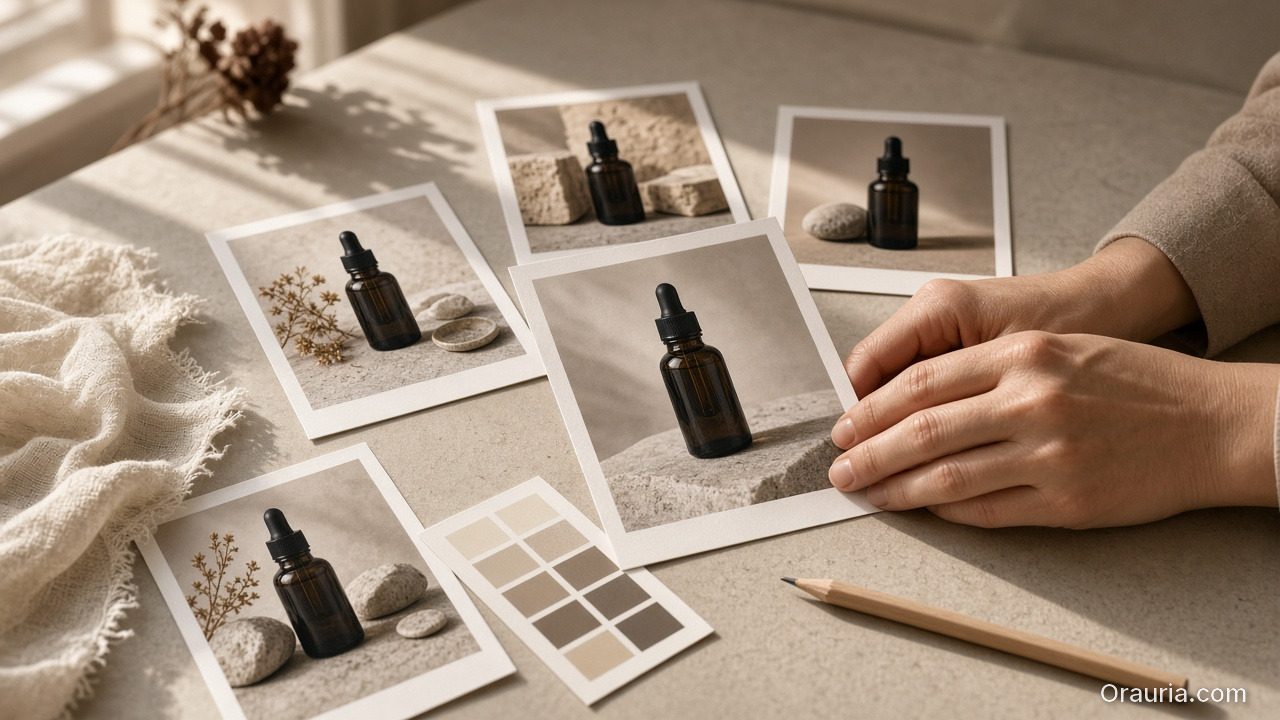
  • Lifestyle Context Mapping: Why Beauty Ads Need Scenes, Not White Backgrounds

    Lifestyle Context Mapping: Why Beauty Ads Need Scenes, Not White Backgrounds

    A serum bottle on white tells a shopper what the product looks like. It does not tell them whether it belongs in their morning, their skin concern, their bathroom shelf beside the things they already trust. Beauty is not sold through isolation. It is sold through recognition — the moment a viewer thinks, that looks like my routine.

    That is why the most effective AI beauty ads are not prettier packshots. They are lifestyle context maps: deliberate grids of scenes that place the same product inside believable moments — morning light, gym bag, hotel sink, pre-event mirror — without breaking brand coherence.

    Key Takeaways

    • Beauty shoppers convert on context and proof, not white-background clarity alone. Aggregated Shopify beauty benchmarks put median DTC conversion around 3.2%, with top performers using mixed visual strategies above 3.5% (acceleroi, 2026).
    • Lifestyle context mapping is the pre-render step: list every life moment your buyer inhabits, then assign one scene per context before any AI image generates.
    • Pair studio clarity (texture, shade, scale) with lifestyle scenes (ritual, application, environment). Hybrid PDP layouts routinely outperform single-style galleries.
    • The SCENE method turns context maps into repeatable briefs — Story, Context, Emotion, Narrative, Extension — for every SKU.

    This is an industry playbook, not a software tutorial. If you need the parent framework, read AI Ecommerce Design Is Not AI Image first. If you need the storytelling structure, read The SCENE Method. This article answers the beauty-specific question: which scenes matter, and in what order?

    Skincare and beauty products in warm lifestyle bathroom setting
    Beauty converts in context — bathroom light, ritual, and recognition beat sterile isolation.

    Why Do White-Background Beauty Ads Underperform?

    White backgrounds solve a logistics problem. They satisfy marketplace rules, show true color, and scale cleanly across catalogs. They do not solve a psychology problem.

    Beauty buyers ask three silent questions in the first two seconds:

    1. Will this work for someone like me?
    2. Where does this fit in my routine?
    3. Does this brand feel credible or generic?

    A floating bottle on seamless white answers none of them. It is catalog infrastructure — necessary, but not persuasive.

    In 2026, aggregated beauty ecommerce data shows that customer before-after results and authentic social proof on product pages can lift conversion 40–70% compared to lifestyle imagery alone (acceleroi beauty benchmark, 2026). Lifestyle scenes alone are not enough either. The winning structure is layered: clarity shots for trust, lifestyle scenes for desire, proof for friction removal.

    Bathroom shelf skincare morning ritual lifestyle scene
    Morning ritual is the highest-frequency context for skincare — map it before you render.

    What Is Lifestyle Context Mapping?

    Lifestyle context mapping is a pre-production grid. For each hero SKU, you list the physical and emotional environments your buyer actually inhabits — then assign one visual scene per context before generating anything.

    StepActionOutput
    1Define buyer persona + primary concernOne sentence: who, skin type, main worry
    2List 5–7 real-life contextsMorning, commute, gym, office, travel, evening, event
    3Assign emotion per contextCalm, confidence, recovery, glamour, etc.
    4Map narrative orderWhich scene opens, which proves, which closes
    5Plan format extensionPDP, Reels, TikTok Shop, email, marketplace

    This is SCENE applied as a category playbook. Story and Context become rows in the grid. Emotion becomes the column that keeps scenes from feeling interchangeable.

    Six beauty lifestyle scenes: morning bathroom serum, evening vanity, gym locker kit, office desk pouch, hotel sink, and a gift box on linen
    Start with the high-frequency moments your buyer repeats weekly — not every context deserves a render.

    Which Lifestyle Contexts Matter Most for Beauty?

    Not every context deserves a render. Start with the high-frequency moments your buyer repeats weekly.

    Core context library (beauty & skincare)

    ContextPhysical settingBuyer mindsetBest for
    Morning ritualBathroom shelf, window lightReset, preparationSerums, SPF, cleansers
    Pre-event prepVanity mirror, evening glowConfidence, transformationMakeup, highlight, fragrance
    Gym / activeLocker, minimal kitPerformance, simplicitySweat-proof, minimal skincare
    Workday deskOffice bathroom, compact bagDiscretion, refreshLip tint, hand cream, mist
    TravelHotel sink, carry-onContinuity, TSA-friendlyTravel sizes, multi-use
    Wind-downNightstand, soft lampRecovery, careRetinol, night cream, masks
    Social / giftWrapped box, linen surfaceGenerosity, discoverySets, limited editions

    You do not need all seven for every SKU. A vitamin C serum might own morning ritual, travel, and pre-event prep. A lip product might own workday desk, pre-event, and social gift.

    Vanity mirror makeup preparation pre-event lifestyle context
    Pre-event prep: confidence and transformation — a core context row for makeup and fragrance.

    The 4-scene minimum for a beauty launch

    For a hero SKU launch week, map at least four contexts:

    1. Clarity — texture swatch, shade, or dropper macro (studio logic)
    2. Ritual — product in use inside a believable routine
    3. Proof — application sequence or result implication (not fake clinical)
    4. Extension — travel, gift, or second routine moment

    Four scenes. One product story. Enough range for PDP gallery, paid social, and email — without aesthetic drift.

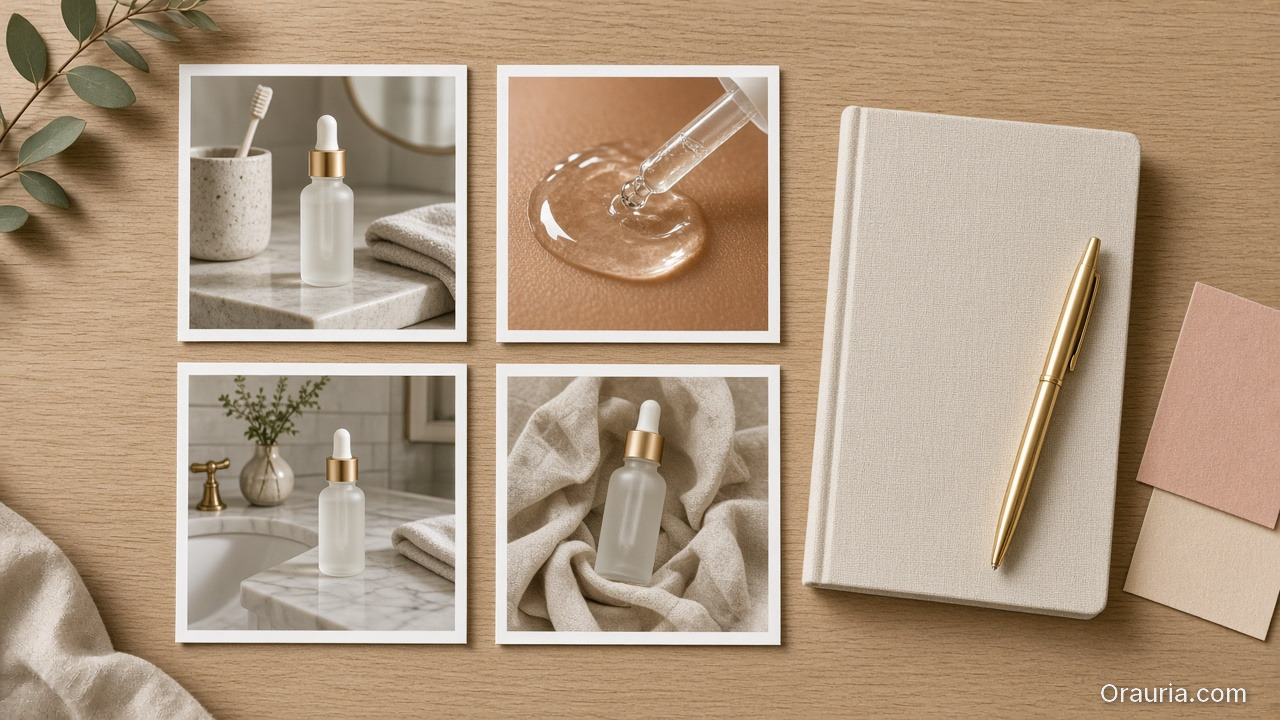
    Four prints of the same frosted vitamin C serum in bathroom, skin texture, hotel, and linen gift contexts, arranged on an oak desk with a linen notebook and color swatches
    A context map for a hero SKU is a grid, not a pile of pretty lifestyle prompts.

    How Do You Build a Context Map for a Hero SKU?

    Walk through a vitamin C brightening serum for urban women 25–40, primary concern: dullness and uneven tone.

    Context map example

    #ContextStory (one sentence)EmotionChannel
    1Morning ritualFirst light on the shelf; she reaches for serum before sunscreenCalm renewalPDP gallery slot 2
    2Texture proofDropper mid-application, skin close-up, honest lightTrust, clarityPDP macro + marketplace
    3Pre-event prepMirror glow before dinner; serum already absorbedConfident radianceInstagram Reels
    4Travel essentialHotel bathroom, compact bag, same bottleCapable, cared-forTikTok Shop, email

    Notice: scene 2 is not “lifestyle” in the aspirational sense. It is proof context — still a scene, still a story, still emotion (trust). Beauty context maps include studio-adjacent moments. They are not only living rooms and cafés.

    Skincare serum texture and application close-up proof shot
    Proof context: texture and application build trust — not every scene needs a full lifestyle set.

    Mapping makeup differently

    A soft matte lipstick might shift contexts:

    ContextWhy it matters
    Morning coffeeEveryday identity — “my default face”
    Office elevator mirrorQuick refresh, professional polish
    Evening restaurantColor depth under warm light
    Gift unboxingDiscovery, shareability

    Same SCENE logic. Different rows because the buyer moment changes.

    A hand with natural skin texture holding a dropper of golden serum above a frosted bottle on a sunlit bathroom vanity, with a beige towel in the background
    Credibility is a rule set: honest skin, consistent scale, light that matches the moment.

    What Visual Rules Keep Beauty Scenes Credible?

    Beauty AI ads fail when scenes feel like stock photo agencies — too perfect, too generic, wrong skin logic. Guard with four rules:

    1. Light logic must match the context. Morning bathroom = soft directional window light. Pre-event = warmer, lower angle. Gym = flatter, cooler overhead. Break light logic and the set feels pasted together.

    2. Skin texture stays honest. In 2026, Adobe found 75% of creators believe audiences can detect meaningful AI involvement in creative work (Adobe Creators’ Toolkit Report, 2026). Over-smoothed skin reads as fake faster than any watermark. Aim for credible texture — not clinical sterility, not plastic perfection.

    3. Product scale stays consistent. A serum bottle should not change size between scenes. Use reference images for bottle geometry across the map.

    4. Palette pulls from brand kit. Bathroom tile, towel, and background tones should echo brand colors — not model defaults. This is where AI ecommerce design meets beauty: Brand Style guardrails stop drift across a 20-image batch.

    When drift appears, read Brand Consistency Trap: 5 Times AI Broke Your Visual Identity.

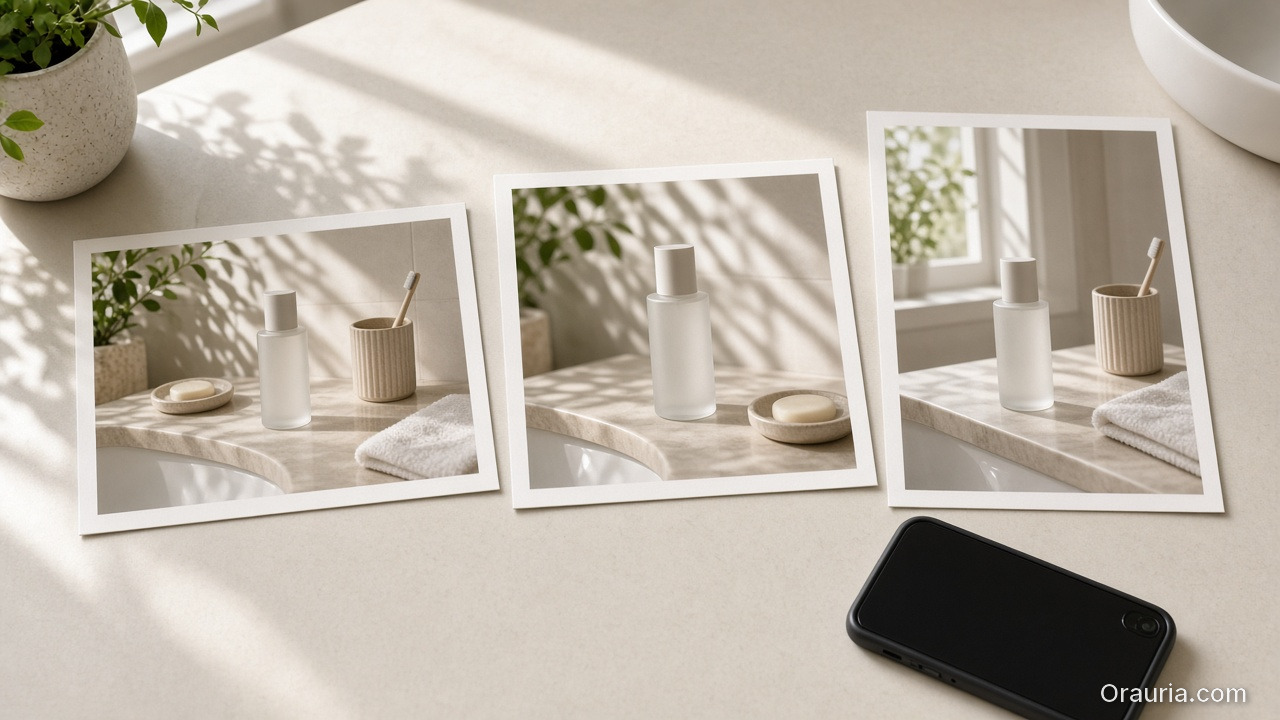
    Three physical prints of the same sunlit vanity serum scene in slightly different crops, with a blank-screen smartphone nearby
    Each context row should ship with a format intention — the same scene must survive every crop.

    How Does Context Mapping Connect to Channel Strategy?

    Each context row should ship with a format intention — not just a pretty picture.

    ChannelContext types that winFormat note
    PDP galleryClarity + ritual + proofHero often stays white/compliant; scenes fill slots 2–6
    Instagram / ReelsRitual, pre-event, applicationVertical, motion-friendly, 3-second hook
    TikTok ShopHonest routine, texture, result hintNative, not overly polished
    Email heroSingle strongest emotion sceneOne frame, one feeling
    Marketplace mainClarity / compliance firstLifestyle in secondary slots only

    Adobe’s 2025 survey found 72% of creators frequently create content on mobile (Adobe MAX 2025, 2025). Map contexts for thumb-stop moments — not only desktop gallery browsing.

    Woman applying makeup on mobile social beauty content
    Channel column matters: the same context must survive vertical crop and thumb-stop scroll.

    What Is the Difference Between Context Mapping and Random Lifestyle Prompts?

    Random prompting: “serum in a luxury bathroom,” “serum on marble,” “serum with plants.” Three pretty images. Zero narrative.

    Context mapping: predefined rows tied to buyer frequency, emotion, and channel job. Every scene answers why it exists.

    Random lifestyleContext mapping
    Aesthetic varietyBuyer-moment coverage
    Each prompt standaloneRows connect as chapters
    No format planChannel assigned per row
    Drift likelyBrand rules enforced upfront

    The SCENE method Extension dimension is where you list formats before rendering — preventing the Friday panic when paid social needs a vertical crop nobody planned.

    A Playbook Workflow (Thinking, Not Clicking)

    For beauty SMEs and creators running AI-assisted production:

    1. Persona + concern — one sentence buyer definition
    2. Context library — pick 4–6 rows from the core table
    3. SCENE brief per row — story, context, emotion, narrative role
    4. Moodboard gate — lock light temperature and palette before batch
    5. Generate per row — explore freely, curate one winner per context
    6. Adapt per channel — crop, resize, motion extract where needed
    7. Save map as template — next SKU swaps product, keeps contexts

    Fashion teams use a parallel playbook in lookbook thinking. F&B brands will get theirs in From Shelf Photo to Hero Shot. Beauty’s difference is ritual frequency — the same face, the same mirror, the same concern, repeated daily.

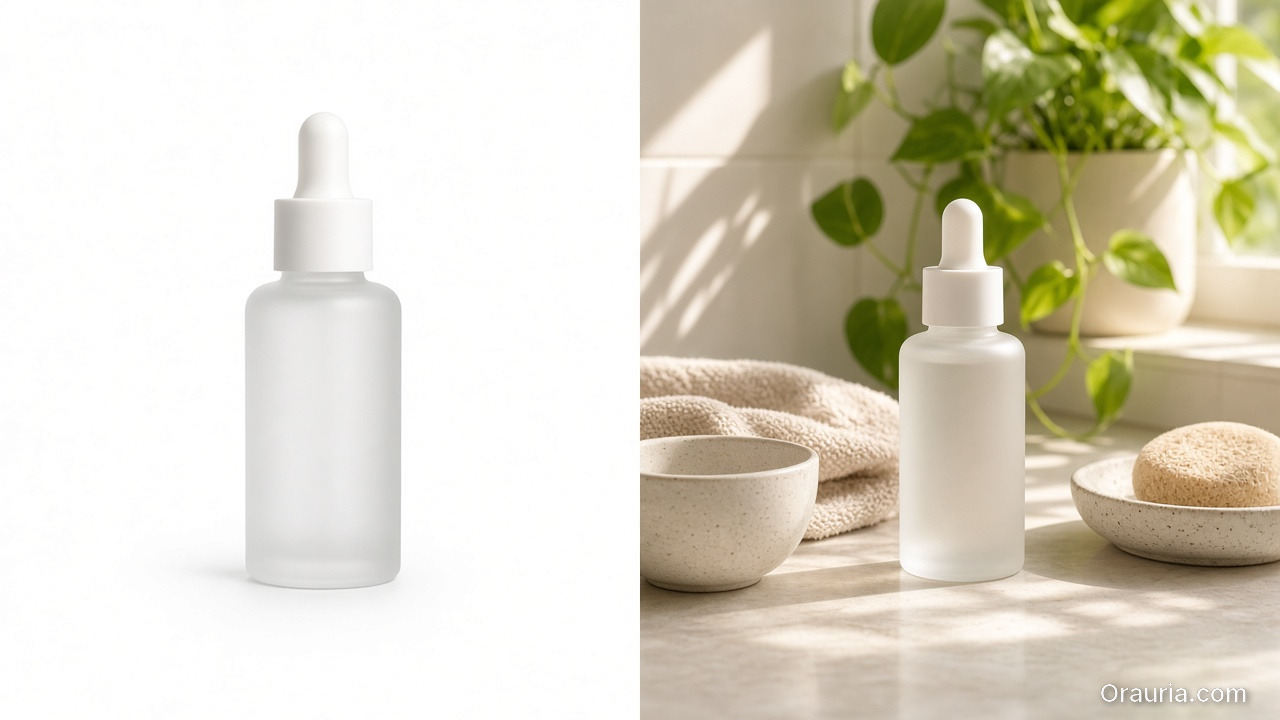
    Left, a frosted serum bottle isolated on a white background; right, the same bottle in a sunlit bathroom with a towel, bowl, and plant
    White backgrounds still belong in the map — for catalog clarity — beside the scenes that sell the ritual.

    When Should Beauty Brands Still Use White Backgrounds?

    Always — for clarity jobs:

    • Marketplace main image compliance
    • Shade matching and color accuracy
    • Texture macro and ingredient implication
    • Comparison layouts (shade range, size reference)

    White is not the enemy. White-only is the trap. The playbook is deliberate alternation: clarity establishes trust, lifestyle establishes desire, proof removes doubt.

    Aggregated ecommerce photography data consistently shows hybrid galleries — studio plus lifestyle — outperforming single-style pages, with uplifts commonly cited in the 15–30% range for lifestyle additions over packshot-only layouts (industry A/B aggregates, 2025–2026).


    Map your next beauty campaign on Orauria: Try Orauria

    Frequently Asked Questions

    How many lifestyle scenes does a skincare PDP need?

    Start with four: one clarity/texture shot, one morning ritual, one proof/application moment, and one extension context (travel or gift). Expand to six only after brand rules and light logic are locked.

    Can AI beauty ads replace UGC and before-after content?

    No — and they should not try. Lifestyle context maps handle aspiration and routine. Customer proof handles “will it work for me?” The strongest beauty PDPs layer both. Data from beauty DTC benchmarks consistently ranks authentic customer results among the highest conversion levers in the category.

    Which AI beauty ad contexts work best for TikTok Shop?

    Honest routine moments outperform luxury fantasy on TikTok: real bathroom light, application texture, compact desk refresh. Contexts that feel native to how users film themselves — not catalog reshoots.

    Do I need a model in every beauty scene?

    No. Hands, bathroom environments, vanity surfaces, and product-in-context still tell strong stories. Use faces when identity and aspiration are the sell; skip them when texture, shade, or ritual is the sell.

    How does context mapping work with the SCENE method?

    Context mapping is the grid. SCENE is the brief per row. Map contexts first, then write Story, Context, Emotion, Narrative role, and Extension for each line before generating.

    What is the biggest mistake in AI beauty lifestyle ads?

    Generating “luxury bathroom” prompts without defining which buyer moment the scene represents. Without a moment, you get generic spa imagery that converts like wallpaper.

    Conclusion

    Beauty ads do not need more marble counters. They need mapped moments — the morning reach, the pre-event mirror, the hotel sink, the gym bag zip.

    Lifestyle context mapping turns those moments into a production grid before AI opens. Pair clarity with ritual. Assign emotion per scene. Plan the channel. Enforce brand rules across the batch.

    White backgrounds are still necessary. They are no longer sufficient. The brands that win in AI-assisted beauty creative are not the ones with the prettiest single render. They are the ones who mapped the life first — then filled it with scenes that feel true.


    References

    1. acceleroi, Shopify Beauty & Skincare Conversion Rate Benchmark 2026. https://www.acceleroi.com/posts/benchmarks/shopify-beauty-skincare-conversion-rate
    2. Adobe, 2026 Creators’ Toolkit Report, June 16, 2026. https://news.adobe.com/news/2026/06/creators-toolkit-report-2026
    3. Adobe, Inaugural Creators’ Toolkit Report (Adobe MAX 2025), October 28, 2025. https://news.adobe.com/news/2025/10/adobe-max-2025-creators-survey
    4. Idukki, UGC Statistics 2026 — Beauty + Cosmetics Vertical, Q1 2026. https://www.idukki.io/resources/ugc-statistics
  • The SCENE Method for AI Product Storytelling

    The SCENE Method for AI Product Storytelling

    Most AI product images fail for a boring reason: the prompt describes the object, not the story. “A serum bottle on a marble counter” is not creative direction. It is inventory. The shopper does not buy marble. They buy the morning ritual, the skin confidence, the version of themselves that appears in the mirror before a hard day.

    AI product storytelling is the discipline of placing a product inside believable commercial narratives — then generating images that prove the product belongs there. The SCENE method is the framework that makes those narratives repeatable across SKUs, seasons, and channels without aesthetic drift.

    Key Takeaways

    • SCENE stands for Story, Context, Emotion, Narrative, and Extension — five questions to answer before any AI render.
    • In 2026, Adobe found 57% of creators say AI outputs need moderate or extensive editing before publish. SCENE front-loads the brief so editing fixes polish, not fundamental story failure.
    • One hero product mapped through four to six SCENE contexts beats twelve random angles on a grey background — for conversion and for brand coherence.
    • SCENE works beyond fashion: beauty, F&B, home, and electronics all sell through context and emotion, not isolation.

    If you arrived from lookbook thinking, you have already seen SCENE applied to a camel blazer across four worlds. This article generalizes the method for any product category — and connects it to the larger discipline of AI ecommerce design.

    Storyboard planning for multi-scene product storytelling
    SCENE starts on paper — or in a brief doc — before any AI model opens.

    What Is the SCENE Method?

    SCENE is a pre-render framework. Before you open any image model, you answer five dimensions for each product or hero SKU:

    LetterDimensionCore question
    SStoryWhat micro-story does this single frame tell?
    CContextWhere is the product — physically and in the buyer’s life?
    EEmotionWhat should the viewer feel in under two seconds?
    NNarrativeHow does this frame connect to the frames before and after it?
    EExtensionWhat other scenes could this product inhabit without breaking character?

    In 2026, Adobe’s Creators’ Toolkit Report found that 87% of creators using creative AI say it has accelerated business or audience growth — yet 85% insist the final creative decision must remain theirs (Adobe Creators’ Toolkit Report, 2026). SCENE is built for that reality: AI explores the scenes; humans define the story and approve what ships.

    Skincare products in bathroom morning ritual lifestyle context
    Beauty SCENE in practice: context and ritual, not sterile product isolation.

    Why Do AI Product Images Fail Without a Story Framework?

    They fail because teams confuse catalog clarity with commercial persuasion.

    Catalog clarity answers: What is this product? What are its dimensions? What color is it? Commercial persuasion answers: Why does this product belong in my life right now?

    Three failure modes repeat across categories:

    1. Object-first prompting. “Generate a photo of a coffee bag” produces a bag. It does not produce desire, ritual, or morning warmth.
    2. Scene without sequence. Each image is individually fine. Together they feel like a stock photo mood board — not a brand chapter.
    3. No extension plan. The team renders one hero and stops. Marketing later asks for ads, email headers, and marketplace crops — and every new prompt drifts from the original.

    Adobe’s 2025 inaugural survey found 48% of creators use creative AI for ideation and brainstorming, while 52% use it for generating new assets (Adobe MAX 2025 survey, 2025). SCENE sits upstream of both: it is the ideation structure that makes generation intentional.

    Five Polaroid prints of the same frosted serum bottle in morning bathroom, evening vanity, hotel sink, linen wrap, and travel pouch contexts, arranged on an oak desk with a linen notebook and color swatches
    SCENE is applied letter by letter — the same product, five distinct moments, one story system.

    How Do You Apply Each Letter of SCENE?

    S — Story: One frame, one moment

    Every product image is a frozen scene from a longer film. Name that scene in one sentence.

    • Weak: “Skincare serum product shot.”
    • Strong: “First light hits the bathroom shelf; she reaches for the serum before the city wakes up.”

    The story does not need drama. It needs specificity. Vague stories produce vague images.

    C — Context: Physical place + social meaning

    Context has two layers:

    • Physical: kitchen counter, gym locker, office desk, hotel bathroom
    • Social: alone, with partner, at work, preparing for an event

    A protein powder on a gym bench and the same powder on a Sunday kitchen island tell different stories — even if the product is identical.

    E — Emotion: The feeling that closes the gap

    Name one primary emotion per frame. Not three. One.

    EmotionWhen it works
    CalmWellness, skincare, home
    AmbitionProfessional tools, fashion, tech
    WarmthFood, family products, gifts
    PlayfulnessCreator tools, youth brands
    ConfidenceBeauty, fitness, career products

    Emotion is the bridge between scroll and stop. If you cannot name it, the image will not carry it.

    N — Narrative: How frames connect

    Narrative is sequence logic. Ask: if these images were a carousel, would they feel like chapters or like shuffle mode?

    Example sequence for a reusable water bottle:

    1. Morning fill at home (hydration habit)
    2. Gym floor beside mat (performance context)
    3. Desk beside laptop (workday companion)
    4. Evening park bench (recovery wind-down)

    Same bottle. Four chapters. One product story.

    Laptop and team collaboration representing connected narrative sequence across scenes
    Narrative is sequence logic — each frame should feel like the next chapter, not shuffle mode.

    E — Extension: Plan the family before you render

    Extension prevents the “we need five more images by Friday” panic. Before the first render, list every scene the product must inhabit this quarter: PDP gallery, paid social, email hero, marketplace, seasonal campaign.

    Extension is where AI ecommerce design meets SCENE: one creative direction, many formats.

    A long oak table with a frosted serum bottle, a specialty coffee bag and pour-over, a minimal desk lamp over a notebook, and a camel blazer on a wooden chair
    The same method travels across categories: beauty, food, home, and fashion all sell through context and emotion.

    What Does SCENE Look Like Across Product Categories?

    Beauty: Vitamin C serum

    SceneStoryContextEmotion
    1Morning ritualBathroom shelf, soft window lightCalm renewal
    2Pre-event prepVanity mirror, evening glowConfident glow
    3Travel essentialHotel bathroom, compact bagCapable, cared-for
    4Gift momentWrapped box on linen, natural lightWarm generosity

    We explore beauty-specific scene mapping in Lifestyle Context Mapping for Beauty Ads.

    Pour-over coffee on kitchen island — Sunday morning lifestyle scene
    F&B SCENE: the story is ritual and warmth, not just the bag on white.

    Food & Beverage: Specialty coffee bag

    SceneStoryContextEmotion
    1Slow SundayKitchen island, pour-over setupUnhurried warmth
    2Work-from-homeDesk beside laptop, ceramic mugFocused comfort
    3Friends overDining table, shared potSocial connection
    4Gift shelfPantry display, handwritten tagThoughtful giving

    Home: Minimal desk lamp

    SceneStoryContextEmotion
    1Late work sessionHome office, blue hour through windowQuiet focus
    2Reading hourArmchair, book, warm pool of lightRestful intimacy
    3Student setupCompact desk, notebook stackAmbitious clarity

    Fashion: (recap from lookbook thinking)

    The camel blazer example from Your Lookbook Doesn’t Need a Studio — Monday momentum, Saturday slow, red-eye ready, after hours — is SCENE applied to apparel. Fashion is not a separate method. It is SCENE with a human character at center frame.

    Six prints of the same matte coffee bag in kitchen, desk, friends, pantry, windowsill, and cafe contexts, with the physical bag standing beside them on linen
    Four to six planned contexts for one hero SKU beat a pile of random angles.

    How Many SCENE Contexts Should One Product Have?

    Start with four to six scenes per hero SKU. That is enough narrative range for a launch week without drowning in production.

    Product stageRecommended SCENE count
    New launch / hero SKU4–6 scenes
    Catalog extension2–3 new scenes per seasonal refresh
    Marketplace-only SKU3 scenes minimum (hero clarity + 2 context)
    Full campaign drop6–8 scenes across channels

    Adobe reports that 93% of creators say AI helps them produce content faster (Adobe Creators’ Toolkit Report, 2026). SCENE channels that speed: you are not generating twenty random variations. You are filling a predetermined scene grid.

    Team planning SCENE brief at desk with laptop and notes
    A SCENE brief takes 15–30 minutes. Re-prompting orphans takes days.

    What Is a SCENE Brief Template You Can Use Today?

    Copy this before your next render session:

    PRODUCT: [name + category]
    BUYER: [who, age range, life moment]
    BRAND EMOTION: [one word — calm, ambition, warmth, etc.]
    
    SCENE 1
      Story:
      Context:
      Emotion:
      Narrative role: [opening / proof / desire / close]
    
    SCENE 2
      Story:
      Context:
      Emotion:
      Narrative role:
    
    [repeat for scenes 3–4]
    
    EXTENSION (formats needed this month):
      - PDP hero:
      - PDP gallery:
      - Paid social:
      - Email:
      - Marketplace:
    
    CONSISTENCY RULES:
      - Light logic:
      - Palette:
      - Character/product continuity:

    This is not bureaucracy. It is the three-line brief expanded into a commercial map — the difference between prompting and directing.

    Left, a controlled packshot setup of a frosted serum bottle with swatches and references; right, the same bottle in a sunlit bathroom lifestyle scene
    SCENE works in both modes: references protect continuity; exploration finds the world.

    When Should SCENE Use Reference Images vs Open Exploration?

    • Open exploration when you are discovering the world: new product line, rebrand, first-season lookbook, pitch deck mood.
    • Reference-heavy when you are scaling: same bottle shape, same label details, same model face across twelve formats.

    The full decision tree lives in When to Use Reference Images vs Let AI Explore. SCENE works in both modes — it defines what to explore or what to protect.

    A messy pile of mismatched serum-bottle photos on the left, contrasted with a tidy row of four consistent warm lifestyle prints on the right
    The common failure is not a bad model — it is a set of frames that do not belong together.

    What Are the Most Common SCENE Mistakes?

    MistakeSymptomFix
    Skipping ExtensionFriday panic for “more assets”List formats before first render
    Emotion stackingMuddy, confused framesOne emotion per scene
    Context without storyPretty location, no momentName the micro-story in one sentence
    Narrative shuffleCarousel feels randomAssign narrative role per scene
    No consistency rulesBeautiful set, wrong brandLock light + palette before batch

    When drift appears across a SCENE set, return to the brief — not the model. Read Brand Consistency Trap: 5 Times AI Broke Your Visual Identity for recovery patterns.

    How Does SCENE Connect to Workflow and Tools?

    SCENE is thinking, not clicking. In practice, the method maps to a repeatable pipeline:

    1. Write SCENE brief for hero SKU
    2. Build moodboard from references (temperature, palette, emotion)
    3. Generate scene variations per SCENE row
    4. Curate 1 winner per scene — kill the rest
    5. Adapt winners per channel format
    6. Save brief + workflow as template for next SKU

    For teams starting with phone photos instead of studio assets, see From Phone Photo to Campaign. SCENE still applies — the reference image is just noisier at the start.

    In workspaces like Orauria, SCENE rows become workflow nodes: reference upload → Brand Style → scene generation → upscale/crop per format → template save. The framework survives the toolchain change.


    Map your next product story on Orauria: Try Orauria

    Frequently Asked Questions

    Is SCENE only for fashion and lookbooks?

    No. SCENE originated in lookbook thinking but applies to any product sold through context: beauty, food, home, electronics, wellness. If your buyer imagines a life around the product, SCENE applies.

    How long should a SCENE brief take to write?

    Fifteen to thirty minutes for a hero SKU with four scenes. That is less time than re-prompting twenty orphaned images and trying to make them feel related afterward.

    Can I use SCENE with only text-to-image tools?

    Yes. SCENE is model-agnostic. It defines the brief before the tool. Whether you use Flux, Midjourney, or a multi-model workspace, the five questions stay the same.

    What is the difference between SCENE and a creative brief?

    A traditional creative brief is often a document. SCENE is a grid — one row per scene, five columns, built for batch production. It is brief structure designed for AI iteration speed.

    How does SCENE help with AI product storytelling for SEO?

    Search engines and AI assistants reward content that answers buyer questions clearly. SCENE-based galleries naturally produce image sets with descriptive alt text, coherent narratives, and FAQ-friendly context — which supports both PDP engagement and topical authority posts.

    Should every scene include a person?

    Not always. Some products — food, objects, decor — tell stories through environment alone. SCENE still applies: the “character” can be the room, the table, the hands, or the light — not necessarily a full model.

    Conclusion

    AI product storytelling is not about prettier packshots. It is about evidence — proof that a product belongs in a life the buyer recognizes.

    SCENE makes that evidence systematic. Define the story before the object. Place the product in context. Name the emotion. Connect the frames. Plan the extension before the first render.

    Stop prompting products. Start directing scenes.


    References

    1. Adobe, 2026 Creators’ Toolkit Report, June 16, 2026. https://news.adobe.com/news/2026/06/creators-toolkit-report-2026
    2. Adobe, Inaugural Creators’ Toolkit Report (Adobe MAX 2025), October 28, 2025. https://news.adobe.com/news/2025/10/adobe-max-2025-creators-survey
    3. 9to5Mac, “Adobe survey: AI is helping creators grow, but not without tradeoffs,” June 16, 2026. https://9to5mac.com/2026/06/16/adobe-survey-ai-is-helping-creators-grow-but-not-without-tradeoffs/
  • AI Ecommerce Design Is Not AI Image — Here Is the Difference

    AI Ecommerce Design Is Not AI Image — Here Is the Difference

    Open any ecommerce team’s Slack channel after they “try AI,” and the pattern repeats. Someone generates a stunning product shot. Everyone reacts. Then marketing asks for the TikTok version. Then the marketplace crop. Then the same model face on a banner. Then a video loop. Then someone notices the color drifted from the brand kit.

    The team did not fail at AI. They failed at category confusion. They bought an AI image outcome when the business needed AI ecommerce design — a system that turns one creative direction into publishable commercial assets across channels without breaking brand coherence.

    Key Takeaways

    • AI image answers: What does this product look like in one frame? AI ecommerce design answers: What commercial story does this product tell — and how does that story survive every format?
    • In 2026, Adobe’s Creators’ Toolkit Report found that 75% of creators describe creative AI as integrated or essential — yet 57% say outputs still need moderate or extensive editing before publish. Speed without a design system creates rework, not revenue.
    • Adobe’s 2025 inaugural survey found 60% of creators use more than one creative AI tool in a three-month window — a signal that image generation alone rarely closes the commercial loop.
    • The shift from image to design is not more prompts. It is creative direction + brand guardrails + channel adaptation + reusable workflow.

    If you have read Your Lookbook Doesn’t Need a Studio. It Needs a World, you already know one piece of this puzzle: world-building beats studio thinking for fashion and lifestyle brands. AI ecommerce design is the larger frame — the discipline that connects lookbook thinking, product pages, paid social, marketplace listings, and campaign extensions into one coherent commercial language.

    Modern retail checkout representing a full commercial ecommerce creative system
    AI ecommerce design is not one render — it is the commercial system behind every touchpoint.

    What Is the Difference Between AI Image and AI Ecommerce Design?

    AI image is output. You describe a scene, select a model, render variations, pick a winner. The deliverable is a file.

    AI ecommerce design is infrastructure. You define a commercial world — who buys this product, where they encounter it, what emotion closes the gap between scroll and cart — then produce a family of assets that all obey the same creative rules. The deliverable is a system: hero shot, lifestyle context, detail crop, social format, video still, voice-over script, all traceable to one brief.

    In 2026, Adobe reported that 87% of creators using creative AI say it has accelerated business or audience growth, while 93% say it helps them produce content faster (Adobe Creators’ Toolkit Report, 2026). Those numbers describe opportunity — not automatic quality. The same report found 57% of outputs need moderate or extensive editing before they are ready to share. In ecommerce, “editing” is not polish. It is fixing off-brand color, wrong aspect ratio, inconsistent model faces, and scenes that sell aspiration but fail to answer practical buyer questions.

    Isolated product on white background — single AI image output
    One file, one frame: the AI image mindset stops here. Ecommerce design starts with the asset family.

    Why Do Ecommerce Teams Confuse the Two?

    Three habits cause the confusion — and all three feel productive in the moment.

    1. Tool-first buying. A team licenses an image model, runs a workshop on prompting, declares victory. Nobody owns creative direction, brand rules, or channel specs. The tool becomes the strategy.

    2. Channel-last thinking. Assets are generated in isolation: one hero for the website, another prompt for Instagram, a third tool for video. Each channel looks fine alone. Together, they look like three different brands.

    3. Speed mistaken for scale. Adobe’s 2026 report shows creators produce faster with AI — but faster single images do not equal faster catalogs, seasons, or campaigns. Scale in ecommerce means repeating a coherent visual language across hundreds of SKUs and dozens of formats without aesthetic drift.

    Adobe’s 2025 inaugural Creators’ Toolkit Report offers a telling detail: 60% of creators used more than one creative generative AI tool in the prior three months to improve quality, experiment with capabilities, or match the right tool to the task (Adobe MAX 2025 survey, 2025). That is not failure. That is evidence that commercial creative work spans ideation, generation, editing, upscaling, adaptation, and distribution. Image generation is one station on the line — not the whole factory.

    Lifestyle, texture, and square crops of a frosted serum bottle with color swatches and a linen notebook on an oak desk

    What Are the Five Layers of AI Ecommerce Design?

    Before you evaluate tools, map the stack. AI ecommerce design has five layers. Skip one, and the system collapses back into random pretty images.

    LayerQuestion it answersWhat breaks if you skip it
    1. Creative DirectionWhat world does this product belong to?Gorgeous orphans — images that do not belong together
    2. Brand SystemWhat must stay constant across every asset?Color drift, typography chaos, wrong tone
    3. Scene ProductionWhat evidence proves the product fits a life?Flat persuasion — no context, no desire
    4. Channel AdaptationWhat does each platform require?Right image, wrong crop, wrong file, wrong moment
    5. Workflow & ReuseHow does next week’s batch start faster?Reinventing the brief every Monday
    Designer workspace with color swatches and screens for brand system planning
    The five layers live in practice: direction, brand, scenes, formats, and reusable workflow.

    Layer 1: Creative Direction

    This is where lookbook thinking and the SCENE method live. You are not prompting “a photo of a serum bottle.” You are defining Story, Context, Emotion, Narrative, and Extension for a buyer who discovers the product on a phone, compares alternatives in three tabs, and decides in under eight seconds.

    Layer 2: Brand System

    Brand is not a logo file. It is enforceable rules: palette, light temperature, composition habits, voice, character continuity. Adobe’s 2025 survey found 85% of creators would consider using AI that learns their creative style — because consistency is the hard part, not the first render.

    Layer 3: Scene Production

    Ecommerce creative is moving from white-background clarity to scene-based persuasion. Fashion needs lifestyle contexts. Beauty needs bathroom counters and morning light, not sterile isolation — a pattern we explore in Lifestyle Context Mapping for Beauty Ads. The scene is not decoration. It is the argument for why this product fits a real life.

    Layer 4: Channel Adaptation

    A hero image is not a TikTok Shop thumbnail. A lookbook frame is not an Amazon main image. AI ecommerce design plans formats up front: aspect ratios, safe zones, text overlay zones, motion crops. Adaptation is design work — not an afterthought resize.

    Smartphone with social app icons representing multi-channel ecommerce asset formats
    Channel adaptation is design work: each platform needs its own crop, safe zone, and context.

    Layer 5: Workflow and Reuse

    The test of maturity: can you run next month’s drop without rewriting the creative logic from scratch? Saved workflows, brand presets, reference libraries, and batch templates turn one season’s thinking into next season’s head start. See From Phone Photo to Campaign: A Workflow Mindset for Small Brands for how this mindset applies when you start with almost nothing.

    A central print of a frosted serum bottle surrounded by packshot, lifestyle, texture, and vertical crops on linen

    When Does a Single AI Image Become a Commercial Creative System?

    The transition happens when three conditions are true:

    1. The brief is commercial, not descriptive. “Generate a red dress” is an image brief. “Show this dress in three contexts our buyer actually inhabits — commute, dinner, weekend travel — with the same light logic and palette” is an ecommerce design brief.
    2. Outputs are planned as a set, not a single winner. You know in advance you need a marketplace hero, two gallery lifestyle frames, one detail macro, one paid-social crop, and one video loop source. The set is the unit of work — not the one image that tested well in Discord.
    3. A human curator signs the system, not just the file. Adobe found in 2026 that 85% of creators insist the final creative decision must remain theirs, whether the tool is generative or agentic. AI ecommerce design respects that: explore widely, decide deliberately, publish only what belongs in the same commercial world.
    A scattered pile of mismatched prints of a dropper bottle in neon, beach, kitchen, and white-studio styles

    What Breaks When You Treat AI Like a Photo Booth?

    Treating AI as a photo booth — insert prompt, receive image, move on — produces predictable commercial failures:

    Photo booth habitCommercial consequence
    New prompt every assetBrand drift across PDP, ads, and email
    No reference systemDifferent model face on every format
    No channel planConstant rework for crops and specs
    No saved workflowEvery launch week starts at zero
    No curator roleVolume without point of view

    Adobe’s 2026 report notes that 53% of creators who find it harder to stand out blame the sheer quantity of content online, while 42% say AI-generated work makes it harder for distinctive voices to surface. In ecommerce, that translates directly: more product images do not automatically mean more conversion. Coherent commercial storytelling does.

    When drift appears, the fix is rarely “a better model.” Read Brand Consistency Trap: 5 Times AI Broke Your Visual Identity for the failure modes — and how teams recover by returning to brand system and creative direction, not prompt tweaking.

    A frosted serum bottle on a pale bathroom vanity in morning light, with a closed laptop and a ceramic cup

    How Does AI Ecommerce Design Connect to Conversion?

    AI ecommerce design is not abstract theory. It maps to how shoppers actually decide.

    Product pages need clarity and context in deliberate order: a clean hero for trust and comparison, lifestyle frames deeper in the gallery for desire and scale. Teams that plan only one AI image often optimize for the wrong slot — a beautiful lifestyle render where the marketplace requires a compliant packshot, or a sterile white background where the ad feed needed emotion.

    The design question is not “which image is prettier?” It is which image does which job in the funnel — and can your system produce the full set without breaking character?

    That is why world-building from lookbook thinking scales down to SKU pages and up to campaigns. One creative direction propagates:

    • Hero lookbook scenes → cropped for product detail pages
    • Lifestyle frames → adapted for paid social and short video
    • Character continuity → reused in voice and motion later
    • Brand Style rules → enforced across the next 100 SKUs

    If you treat AI as image generation, you rebuild every asset from scratch for each channel. If you treat it as ecommerce design, one direction becomes a commercial kit.

    Woman shopping online on laptop — lifestyle context in the ecommerce funnel
    Conversion happens when clarity and context work together — not when one pretty image does every job.

    AI Image vs AI Ecommerce Design: A Side-by-Side View

    DimensionAI ImageAI Ecommerce Design
    Unit of workOne fileOne asset family
    Brief typeDescriptive promptCommercial creative direction
    Brand roleOptionalEnforced (palette, style, character)
    Channel awarenessRareBuilt in (crop, format, placement)
    ReuseLow — start over next timeHigh — workflows and templates
    Success metric“Does it look good?”“Does the set convert and stay on-brand?”
    Human rolePrompt writerCurator + art director
    Tool countOften oneOften several — by design

    Adobe’s 2025 data supports the last row: 55% of creators use creative AI for editing, upscaling, and enhancement; 52% for generating new assets; 48% for ideation and brainstorming. Ecommerce design uses all three modes — not just generation.

    A neat row of matching frosted bottles on the left and a looser scatter of the same bottle in varied settings on the right

    When Should You Use Reference Images vs Open Exploration?

    Use reference-heavy workflows when continuity is the brief: same product details, same model face, same brand silhouette across formats. Use exploration-heavy workflows when you are discovering the commercial world for a new line, rebrand, or first-season lookbook.

    We unpack the full decision tree in When to Use Reference Images vs Let AI Explore. The short version for ecommerce teams: exploration finds the world; references protect it during scale.

    A Brief Note on Tools (Not a Tutorial)

    This article is about category clarity, not button clicks. Still, teams ask where ecommerce design lives in practice.

    In workspaces built for commercial creative — including Orauria — the five layers map to a repeatable pattern:

    1. Upload product and reference images
    2. Define Brand Style (palette, photography rules, voice)
    3. Map scenes with creative direction (SCENE, lifestyle contexts)
    4. Generate variations across image — and extend to video, voice, copy when needed
    5. Upscale, crop, and export per channel
    6. Save the workflow as a template for the next drop

    The value is not that one model makes one beautiful image. The value is that the creative direction survives the whole pipeline — from first scene to fiftieth SKU.

    For a deeper comparison of scattered tools versus integrated workspaces, see Orauria vs Scattered AI Stack: When All-in-One Actually Wins.


    Build commercial creative systems on Orauria: Try Orauria

    Frequently Asked Questions

    Is AI ecommerce design just a fancy name for AI product photography?

    No. Product photography is one output type inside a larger system. AI ecommerce design includes creative direction, brand enforcement, multi-format adaptation, and reusable workflows — so teams do not regenerate the same commercial logic for every channel and every SKU.

    Do I need AI ecommerce design if I only sell on one marketplace?

    Even single-channel sellers need more than one image type: hero, angles, lifestyle context, detail shots. AI ecommerce design plans that asset family up front. One marketplace does not mean one image — it means one coherent visual argument with multiple proofs.

    Can I start with AI image tools and upgrade to ecommerce design later?

    Yes — most teams do. The upgrade happens when you add brand rules, scene mapping, channel specs, and saved workflows. The risk is waiting too long: every orphaned image becomes debt you must redo when you scale to ads, email, or new SKUs.

    What is the first step if my team only generates one-off AI images today?

    Write a three-line commercial brief before the next prompt: who buys, where they see the product, what feeling should close the gap. Then list every format you need this week. That shift from “make a picture” to “design a set” is the practical start of AI ecommerce design.

    How does this relate to AI lookbook thinking for fashion brands?

    Lookbook thinking is a spoke inside AI ecommerce design — the world-building layer for fashion and lifestyle. A lookbook defines aspiration; ecommerce design ensures that aspiration survives product pages, ads, and catalog scale. Start with lookbook thinking if fashion is your entry point.

    Will AI replace my designer or agency?

    Adobe’s 2026 report found 85% of creators insist the final creative decision must remain theirs. AI ecommerce design does not remove designers — it changes their job from manual production to direction, system design, and curation. The scarce asset is taste, not generation speed.

    Conclusion

    The ecommerce industry does not need more random AI images. It needs commercial creative systems — briefs that start with buyers, brand rules that survive every format, scenes that persuade in context, and workflows that make next month faster than this one.

    AI image tools are excellent at the render. AI ecommerce design is accountable for the outcome: a coherent visual language that turns attention into trust, and trust into cart.

    Stop asking whether AI can make your product look good. Start asking whether your team can design the whole commercial story — and publish it everywhere without the brand falling apart.


    References

    1. Adobe, 2026 Creators’ Toolkit Report, June 16, 2026. https://news.adobe.com/news/2026/06/creators-toolkit-report-2026
    2. Adobe, Inaugural Creators’ Toolkit Report (Adobe MAX 2025), October 28, 2025. https://news.adobe.com/news/2025/10/adobe-max-2025-creators-survey
    3. 9to5Mac, “Adobe survey: AI is helping creators grow, but not without tradeoffs,” June 16, 2026. https://9to5mac.com/2026/06/16/adobe-survey-ai-is-helping-creators-grow-but-not-without-tradeoffs/
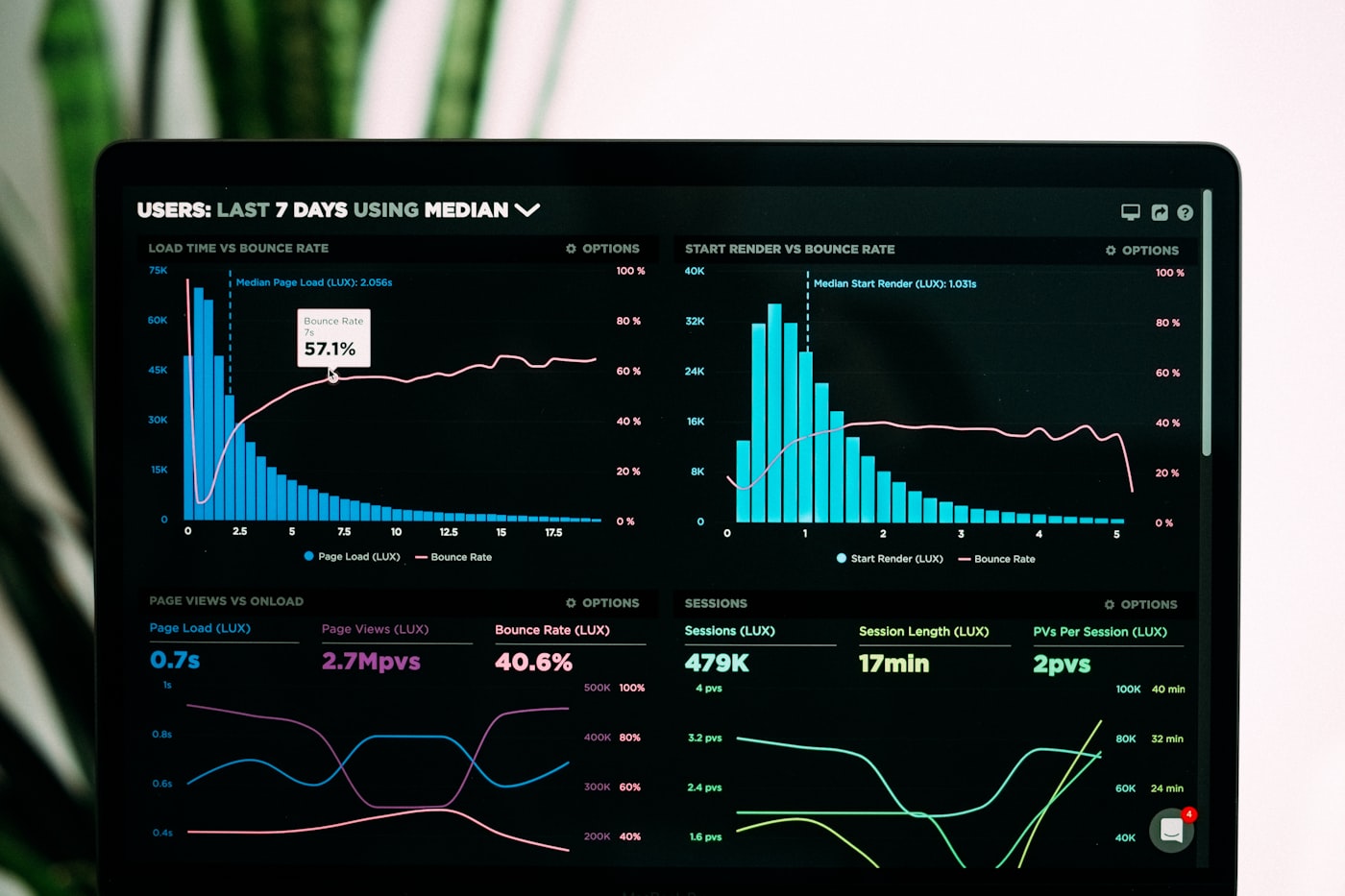
  • Your Lookbook Doesn’t Need a Studio. It Needs a World.

    Your Lookbook Doesn’t Need a Studio. It Needs a World.

    The old lookbook formula was simple: rent a studio, hire a stylist, bring a photographer, shoot twelve looks, pray the weather holds. That model still works — if you have the budget, the crew, and the calendar.

    Most independent designers, freelance art directors, and small fashion brands have none of those. What they have is one strong collection, a phone full of reference images, and a launch date that will not move. The question is not whether AI can replace a photographer. The question is whether you can think like an art director when AI is your only crew.

    Key Takeaways

    • A traditional lookbook documents clothing. An AI lookbook builds a world around it — and that shift changes every creative decision you make.
    • Adobe’s 2026 Creators’ Toolkit Report found that 58% of creators say their ability to compete with larger studios feels stronger since using creative AI — but 57% still need moderate or extensive editing before publishing.
    • The SCENE framework (Story, Context, Emotion, Narrative, Extension) turns one outfit into multiple publishable scenes without losing brand coherence.
    • Your new role is not “prompt operator.” It is curator: let AI explore widely, then choose the five images that belong in the same world.

    An AI fashion lookbook is not a faster reshoot of last season’s campaign. It is world-building: placing a garment inside believable contexts — office commute, weekend café, travel layover, date night — so the audience sees not just fabric, but a life they want to step into. According to Adobe’s 2026 Creators’ Toolkit Report, which surveyed more than 16,000 creators globally, 87% of those using creative AI say it has accelerated business or audience growth, while 75% now describe AI as integrated or essential to how they work. Adobe also found that 58% of creators feel better equipped to compete with larger studios since adopting creative AI — yet 57% say outputs still need moderate or extensive editing before publish. The opportunity for small brands is real. The risk is producing twenty beautiful images that do not belong to the same brand universe — which is why creative direction, moodboarding, and curation matter more than ever, not less.

    AI lookbook collage — one camel blazer across office, café, travel, and evening lifestyle scenes
    One garment, four worlds: the core idea of AI lookbook thinking.

    What Is the Difference Between a Traditional Lookbook and an AI Lookbook?

    A traditional lookbook answers one question: What does this piece look like on a body, in controlled light, from three angles?

    An AI lookbook answers a different question: What world does this piece belong to — and can the audience imagine themselves inside it?

    That distinction matters for SEO, for conversion, and for creative quality. When shoppers scroll TikTok Shop or Instagram, they are not comparing hem lengths. They are comparing narratives. The brand that shows a linen blazer in a morning commute, a rooftop aperitivo, and a rainy taxi ride is not just showing a blazer. It is showing a personality.

    Adobe’s report also notes that 53% of creators who find it harder to stand out blame the sheer quantity of content online, while 42% say AI-generated work makes it harder for distinctive voices to surface. Volume is no longer a competitive advantage. Point of view is.

    Studio vs world — empty photo studio compared with lifestyle fashion scenes
    Left: studio clarity. Right: world context. Most AI lookbooks should aim for the right — without renting the left.

    Why Do Most AI Lookbooks Fail Before the First Render?

    They fail at the brief — not the model.

    Most teams jump straight to generation: write a prompt, pick Flux or Seedream, render ten variations, pick the prettiest. The result is a folder of gorgeous orphans. Image four feels like a Scandinavian minimal brand. Image seven feels like a streetwear drop. Image nine looks like a stock photo agency. None of them wrong. None of them together.

    Three failure patterns show up repeatedly:

    1. Outfit-first thinking. The team describes the garment in the prompt but never defines the world around it.
    2. No moodboard gate. AI exploration starts before anyone agrees on light, palette, or emotional temperature.
    3. No curator at the end. Whoever generates the images also approves them — with no separation between exploration and selection.

    Adobe found that 85% of creators insist the final creative decision must remain theirs, whether the tool is generative or agentic. AI lookbook thinking respects that instinct. Generate freely. Decide deliberately.

    A camel blazer on a wooden table beside four lifestyle prints of the same jacket in office, cafe, lounge, and evening scenes

    What Is the SCENE Framework for AI Lookbooks?

    Before you write a single prompt, map five dimensions for each look or hero piece:

    LetterDimensionQuestion to answer
    SStoryWhat micro-story is this image telling in one frame?
    CContextWhere is the person, physically and socially?
    EEmotionWhat should the viewer feel — calm, ambition, romance, rebellion?
    NNarrativeHow does this frame connect to the frames before and after it?
    EExtensionWhat other scenes could this same outfit inhabit without breaking character?

    Example: One jacket, four worlds

    Imagine a structured camel blazer for a small contemporary brand targeting urban professionals aged 28–40.

    SceneStoryContextEmotion
    1Monday momentumGlass office lobby, soft morning lightComposed confidence
    2Saturday slowCorner café, newspaper, ceramic cupUnhurried warmth
    3Red-eye readyAirport lounge, carry-on, muted tonesCapable, in motion
    4After hoursDim restaurant, candlelight, laugh mid-conversationApproachable elegance

    Same garment. Four narratives. One lookbook chapter — not four random outputs.

    Monday momentum — professional in camel blazer, sunlit office lobby commute scene
    SCENE 1 in practice: Monday momentum, composed confidence, glass office lobby.

    This is the core of AI lookbook thinking: you are not generating “a photo of a jacket.” You are generating evidence that a jacket belongs in a life.

    For a deeper breakdown of SCENE applied beyond fashion, see our guide on the SCENE method for AI product storytelling.

    A camel blazer on a hanger beside a moodboard, fabric swatches, and five blank direction cards on a pale wood desk

    What Are Five Creative Directions When You Have No Studio?

    These are not button-click tutorials. They are art-direction decisions that hold whether you use Orauria, Midjourney, or any multi-model workspace.

    Direction 1: World before wardrobe

    Start with environment and emotion, then introduce the garment. Ask: If this brand were a film, what is the opening shot? Is it rain on a Tokyo crosswalk? Sun on a Lisbon balcony? An empty gallery with one figure?

    Only after the world is defined do you specify cut, fabric, and fit. Designers who reverse this order produce technically accurate images that feel like product cutouts pasted onto backgrounds.

    Direction 2: Moodboard before render

    Skilled designers still moodboard — even when AI is the camera.

    Collect 8–12 references: not for copying, but for locking temperature. Warm vs cool. Soft vs hard shadow. Documentary vs editorial. Share this board with anyone generating images. It becomes your Brand Style guardrail before a single pixel renders.

    If your team uses a workflow tool with a Brand Style node, this is where it earns its keep: reference images plus palette rules stop drift across a 20-image batch.

    Fashion art director moodboard with blazer hero, lifestyle polaroids, and color swatches
    Moodboard before render: lock temperature, palette, and emotional direction before AI exploration.

    Direction 3: Lifestyle context mapping

    Ecommerce creative is moving from white-background clarity to scene-based persuasion. For fashion, map contexts your buyer actually inhabits:

    • Commute / work
    • Social / dining
    • Fitness / wellness
    • Travel / transit
    • Home / leisure

    One outfit per context beats five angles on a grey seamless. Shoppers on TikTok Shop and Instagram do not save flat lays. They save identities they recognize.

    Blazer on hanger vs styled in outdoor café — product isolation vs lifestyle context
    Scene-based persuasion: the same blazer reads differently in isolation versus in a world.

    Beauty and FMCG brands use the same logic — lifestyle scenes instead of sterile product isolation. We explore that pattern in Lifestyle Context Mapping for Beauty Ads.

    Direction 4: The consistency trap

    The most common AI lookbook failure is aesthetic drift: each image beautiful, the set incoherent.

    Fix it with three non-negotiables across every scene:

    • Light logic — same season, same time-of-day feel
    • Color discipline — palette pulled from brand kit, not model defaults
    • Character continuity — same face, posture language, or silhouette when using reference images

    When drift appears, do not tweak prompts randomly. Return to the moodboard and ask which dimension broke: Story, Context, Emotion, Narrative, or Extension.

    Our experiment post Brand Consistency Trap: 5 Times AI Broke Your Visual Identity walks through real failure modes.

    Direction 5: Curator beats generator

    Adobe reports that 93% of creators say AI helps them produce content faster — but 57% say outputs need moderate or extensive editing before they are ready to share. Speed without curation creates noise.

    Adopt a two-role habit, even if one person wears both hats:

    RoleJob
    ExplorerGenerate 15–20 variations per scene. No judgment during exploration.
    CuratorSelect 3–5 that belong in the same world. Kill the rest without sentiment.

    The lookbook is not the folder. The lookbook is the selection.

    A neat stack of matching reference portraits on the left and a looser scatter of fashion scenes on the right

    When Should You Use Reference Images vs Let AI Explore?

    Use reference images when continuity is the brief: same model face, same product details, same brand silhouette across twelve formats. Use open exploration when you are searching for the world itself — the first chapter of a new season, a rebrand, a collection you have never visualized before.

    Rule of thumb:

    • Reference-heavy → campaign extension, SKU scaling, character-led brands
    • Exploration-heavy → mood discovery, pitch decks, first lookbook for a new line

    We cover the decision tree in detail in When to Use Reference Images vs Let AI Explore.

    A camel blazer lookbook print in the center with a fabric-detail crop and a cafe-lifestyle crop beside it on linen

    How Does This Connect to AI Ecommerce Design?

    Fashion lookbooks are not a separate discipline from ecommerce creative. They are the top of the same funnel: aspiration first, product second, cart third.

    An AI lookbook thinking approach scales down cleanly:

    • Hero lookbook scenes → cropped for product detail pages
    • Lifestyle frames → adapted for paid social
    • Character continuity → reused in video and voice content later

    If you treat AI image generation as “make pretty pictures,” you will rebuild every asset from scratch for each channel. If you treat it as world-building, one creative direction propagates across image, video, and campaign copy.

    That is the difference between AI image tools and AI ecommerce design — a topic we unpack in AI Ecommerce Design Is Not AI Image.

    A Brief Note on Tools (Not a Tutorial)

    This article is about thinking, not clicking. Still, teams often ask where world-building lives in practice.

    In workspaces like Orauria, the pattern maps naturally: Upload reference images → define Brand Style → generate scene variations → upscale and crop for channel formats → save the workflow as a template for next season. Fashion teams on the platform often reuse workflows labeled for lookbook, thumbnail, or editorial batches — because the creative direction is what gets saved, not just the pixels.

    If you want to see how phone-to-campaign thinking works for non-fashion products, read From Phone Photo to Campaign: A Workflow Mindset for Small Brands.


    Explore creative workflows on Orauria: Try Orauria

    Frequently Asked Questions

    Can an AI lookbook replace a professional fashion shoot entirely?

    For many small brands and pre-launch collections, yes — with caveats. AI lookbooks excel at context, volume, and iteration speed. They still require human curation: 57% of creators in Adobe’s 2026 report say AI outputs need moderate or extensive editing before publication. Use AI for world-building and exploration; use human judgment for final selection and brand alignment.

    How many scenes should a seasonal AI lookbook include?

    Start with one hero garment or look and map four to six SCENE contexts. That yields enough narrative range for a launch week without aesthetic drift. Expand only after the moodboard and consistency rules are locked — not before.

    Do I need a photographer on retainer to publish a credible lookbook?

    No. You need a point of view. Adobe found that 58% of creators feel better equipped to compete with larger studios since adopting creative AI. Credibility comes from coherent storytelling, not from proving you rented a cyclorama.

    What is the biggest mistake brands make with AI fashion imagery?

    Generating outfit descriptions without defining the world first. The fix is simple and unglamorous: moodboard, SCENE map, then render. Skipping straight to prompts is how brands end up with twenty unrelated beautiful images.

    How do I keep the same model face across multiple AI lookbook scenes?

    Use reference-image workflows and character consistency tools — treat the face as a design asset, not a filter. Define posture and expression rules in your brief so the character feels intentional across scenes, not accidentally duplicated.

    Is AI lookbook content acceptable for ecommerce and advertising platforms?

    Policies vary by platform and region. Many brands disclose AI-assisted creative where required. Adobe reports that 75% of creators believe audiences can detect meaningful AI involvement — transparency and authentic brand voice matter more than hiding the toolchain.

    Conclusion

    The lookbook is not dead. The studio-only lookbook is.

    When you cannot rent the crew, you can still publish work that feels authored — if you stop asking AI for “photos of clothes” and start asking for worlds that clothes belong to. Define the story before the outfit. Moodboard before render. Map lifestyle contexts. Guard against consistency drift. Curate ruthlessly.

    Your lookbook does not need a studio. It needs a world — and someone willing to protect it.


    References

    1. Adobe, 2026 Creators’ Toolkit Report, June 16, 2026. https://news.adobe.com/news/2026/06/creators-toolkit-report-2026
    2. Kerr, M., “AI Made Content Abundant. For Creators, Voice Is Now The Scarce Asset,” Forbes, June 16, 2026. https://www.forbes.com/sites/maureenkerr/2026/06/16/ai-made-content-abundant-for-creators-voice-is-now-the-scarce-asset/
    3. 9to5Mac, “Adobe survey: AI is helping creators grow, but not without tradeoffs,” June 16, 2026. https://9to5mac.com/2026/06/16/adobe-survey-ai-is-helping-creators-grow-but-not-without-tradeoffs/
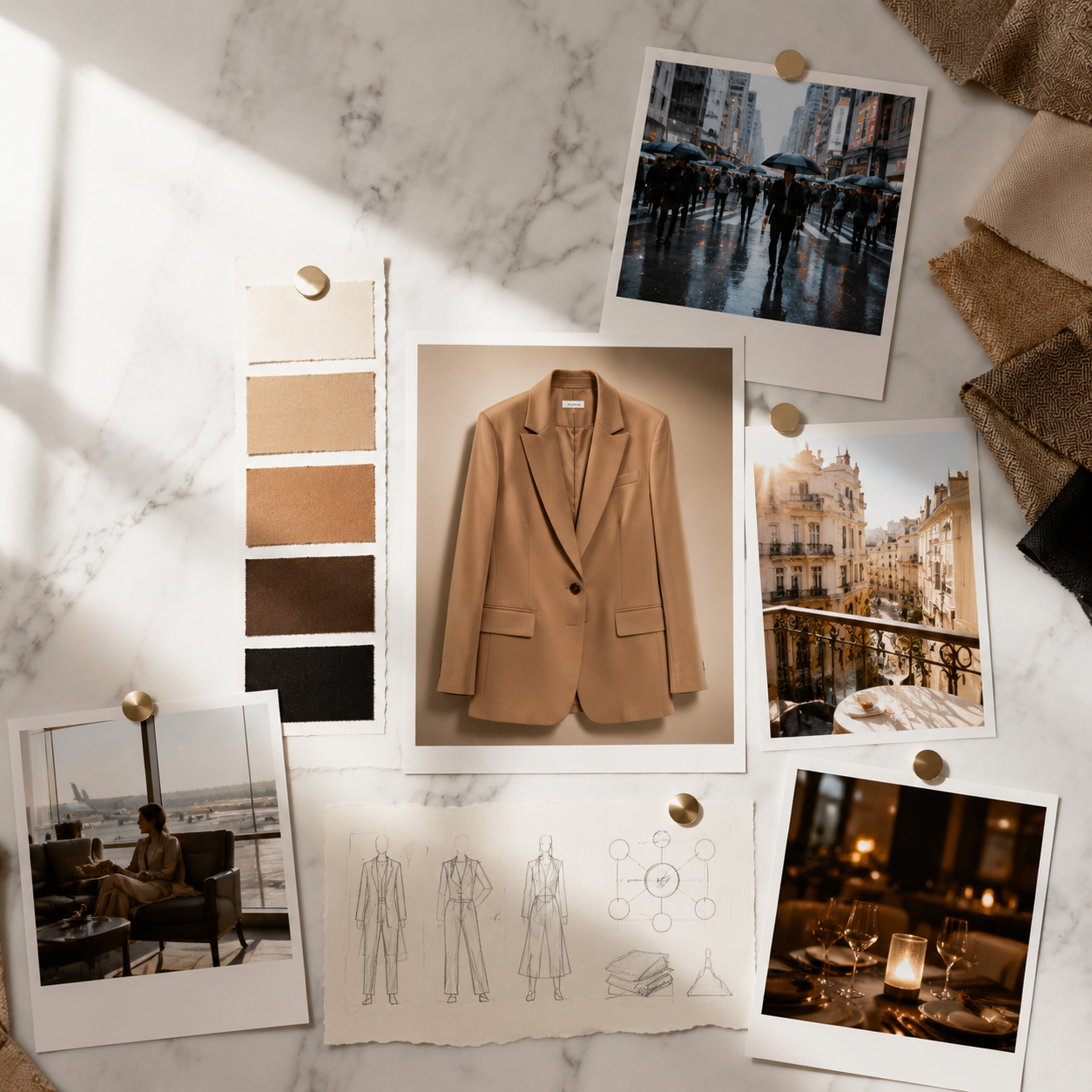
  • What is Orauria? The All-in-One AI Platform for Marketers and Creators

    What is Orauria? The All-in-One AI Platform for Marketers and Creators

    Are you bouncing across five to seven tools just to finish one content campaign? One tab for images, another for video, then voice, OCR, saved prompts, and a last round of copy-paste to publish. That is exactly the problem Orauria is built to solve.

    Key Takeaways

    • McKinsey estimates that GenAI can raise marketing productivity by about 5–15% of marketing spend when it is deployed well.
    • Orauria brings multiple AI capabilities into one platform: image, video, voice, OCR, workflows, plus prompt, brand, and character libraries.
    • The real advantage is not the number of tools. It is a continuous workflow from idea to publish-ready content.

    In 2026, the question is no longer whether to use AI. It is how to use it so a team can move faster without losing quality or brand consistency.

    A single monitor on a pale oak desk showing a tidy product-photo dashboard, with a dropper bottle and ceramic cup beside a closed notebook

    What is Orauria, and how is it different from a pile of separate AI tools?

    According to McKinsey’s report The Economic Potential of Generative AI, GenAI can create the most value in four functional areas, including marketing and sales. AI is not only a faster writing assistant. It can be the operating layer that actually lifts a marketing team’s output.

    Orauria is an all-in-one AI platform that lets you run the full content-creation process in one place, instead of stitching together separate apps. Instead of opening a new tab for every task, most of the process can live in a single workspace.

    • AI Image Generation
    • AI Video Generation
    • AI Voice (TTS, voice clone, podcast, narrator)
    • AI OCR (documents, photos, invoices, PDFs)
    • AI Workflow (automation from idea to publish)
    • Prompt Library
    • Brand Style Management
    • Character Management

    The important difference is that Orauria does not stop at making isolated assets. It is built for real production volume, where images, video, voice, source material, and brand standards have to travel together in one continuous workflow.

    If a standalone AI tool is one link in the chain, Orauria is meant to work like a content studio: connecting those links in one system and keeping brand standards intact.

    Three teammates reviewing printed product photos and a tablet storyboard at a bright studio table

    Why do marketers and creators need an all-in-one AI platform?

    McKinsey notes that marketing productivity can rise by 5–15% of total marketing spend when GenAI is applied in the right context. Many teams leak that benefit in operations: disconnected tools, broken processes, and internal knowledge that is hard to reuse.

    When a team works across separate tools, four bottlenecks show up again and again:

    ol class=”wp-block-list”>
  • Context keeps dropping: the brief lives in tool A, the image in tool B, the caption in tool C.
  • Brand drifts: everyone uses a different prompt, every channel has a different style.
  • Output is hard to scale: more content means more manual steps.
  • New teammates are hard to onboard: there is no system, only personal shortcuts.
  • Orauria solves this by bringing the full process into one workspace:

    Idea -> create assets -> refine to brand -> build video/voice -> export -> publish

    Flat-lay of a serum bottle, a compact microphone, a color swatch fan, and a contact sheet of still-life photos on linen

    Which Orauria features actually matter in a content workflow?

    According to Adobe’s Creators’ Toolkit Report 2026, 87% of creators who use creative AI say it is helping their business or audience grow, and 75% see AI as an integrated or essential part of their workflow. That finding is close to what creative teams in Vietnam actually need: they are not short on tools. They are short on a system coherent enough to make those tools work together.

    1) AI Image for real marketing work

    Not just art for art’s sake. Marketing teams usually need purposeful assets: product photos, posters, social creatives, mockups. Orauria focuses on those outputs so the path from concept to a usable asset is shorter.

    2) AI Video for social-first content

    Generating video from text, an image, or a storyboard makes it easier to recycle an idea into a reel, a short, a teaser, or a short ad without jumping through several editing tools.

    3) AI Voice + OCR to widen production capacity

    • OCR turns raw documents into data you can actually use.
    • Voice turns written content into audio, a podcast, or narration.

    Together, a small team can still produce multiple formats without a sharp increase in headcount. That is a clear advantage for startups, lean in-house teams, and agencies juggling many workstreams.

    4) Prompt Library + Brand Style + Character Library

    These are the modules many platforms skip, and they are the ones that decide long-term quality:

    • Prompt Library: save and reuse prompts that already work.
    • Brand Style: keep the brand voice consistent.
    • Character Library: keep an AI character stable across campaigns.

    In day-to-day content operations, this system memory is what reduces errors and revision cost over time.

    A shared studio where a photographer, an ecommerce seller, a designer, and a teacher work side by side

    Who is Orauria for?

    HubSpot reported in 2024 that 74% of marketers were already using at least one AI tool at work. The market has left the experiment phase and entered the phase of operating for performance.

    • Content creators: need steady output without dropping quality.
    • Digital marketers: need to launch multi-channel campaigns quickly.
    • Designers: need a faster loop from concept to asset.
    • Agencies: need a standardized process across many clients.
    • Ecommerce teams: need product content at scale.
    • Startups and businesses: want lean marketing without a tangled tool stack.
    • Teachers and trainers: need to process documents, lectures, and voice quickly.
    An open weekly planner with a short checklist, a pencil, a small plant, and a glass dropper bottle on white marble

    How to get started with Orauria in 7 days

    Many teams stall with AI because they try to do too much in week one. A better approach is a small pilot that still covers the full cycle.

    Days 1–2: Lay the foundation

    • Pick 2–3 priority use cases, such as social posts, landing copy, or short video.
    • Standardize a Prompt Library for each use case.
    • Set a minimum Brand Style: voice, banned words, colors, and visual tone.

    Days 3–4: Run a complete workflow

    • From one topic, run the full pipeline: brief -> image -> video -> caption or voice.
    • Measure time before and after using Orauria.

    Days 5–6: Refine and standardize

    • Lock the best prompt templates.
    • Build a Character Library if you use a recurring character.
    • Set a review checklist before publish.

    Day 7: Review and expand

    • Compare output and time across the week.
    • Add one more workflow to scale up.

    You can invent simple internal KPIs such as time per asset, revision rounds, and the share of content approved on the first pass. Those numbers say more about real efficiency than post volume alone.

    Frequently asked questions about Orauria

    Will Orauria replace a content team?

    No. Adobe’s Creators’ Toolkit Report 2026 found that 57% of creators say AI content still needs moderate to heavy editing before it can be published. AI speeds up drafts and asset production. Final quality still depends on human judgment.

    What is the benefit of using one all-in-one platform?

    HubSpot’s 2024 data showed AI use in marketing rising quickly, with 74% of marketers using at least one AI tool at work. As the number of tasks grows, putting content production in one place cuts context-switching, reduces copy-paste between apps, and makes it easier to standardize the process for the whole team.

    Is Orauria better for individuals or for teams?

    Both. Individuals gain speed. Teams gain consistency. For teams, Prompt Library, Brand Style, and Character Library usually have the clearest impact because they reduce quality drift across multiple writers.

    How do you keep AI content from all sounding the same?

    Adobe’s 2026 report found that 85% of creators want to keep final creative control. The effective approach is to use AI for drafts and fast production, then add an editorial layer for brand voice, real data, and the company’s own point of view.

    Can Orauria be used for ecommerce?

    Yes. Ecommerce usually needs several formats at once: product photos, short video, captions, descriptions, and voice. Orauria fits because it connects those steps into one continuous workflow instead of leaving them in separate tools.

    Conclusion

    Orauria is a strong fit if you are dealing with one or more of these: a scattered tool stack, slow publishing, inconsistent content, and a team worn down by repetitive work. Orauria’s core value is not “one more AI tool.” It is turning AI into a content operating system you can repeat and scale.

    If your goal is to speed up production without losing brand standards, an all-in-one model like Orauria is a practical way to start this quarter. Instead of patching one gap with one tool and the next gap with another, begin with one small workflow and grow it on the same system.


    Sources

    ol class=”wp-block-list”>
  • McKinsey, How generative AI can boost consumer marketing, retrieved 2026-07-08, https://www.mckinsey.com/capabilities/growth-marketing-and-sales/our-insights/how-generative-ai-can-boost-consumer-marketing
  • McKinsey, The economic potential of generative AI: The next productivity frontier, retrieved 2026-07-08, https://www.mckinsey.com/capabilities/tech-and-ai/our-insights/the-economic-potential-of-generative-ai-the-next-productivity-frontier
  • Adobe News, 87 Percent of Creators Say Creative AI Is Growing Their Business and Audience, According to Adobe’s 2026 Creators’ Toolkit Report, retrieved 2026-07-08, https://news.adobe.com/news/2026/06/creators-toolkit-report-2026
  • HubSpot News, Marketers double AI usage in 2024, retrieved 2026-07-08, https://www.hubspot.com/company-news/marketers-double-ai-usage-in-2024