Danh mục: Creative Thinking & Frameworks

Mental models, art direction, and creative strategy with AI — frameworks for lookbooks, brand consistency, and new ways to think about visual production.

  • AI Ecommerce Design Is Not AI Image — Here Is the Difference

    AI Ecommerce Design Is Not AI Image — Here Is the Difference

    AI Ecommerce Design Is Not AI Image — Here Is the Difference

    Open any ecommerce team's Slack channel after they "try AI," and the pattern repeats. Someone generates a stunning product shot. Everyone reacts. Then marketing asks for the TikTok version. Then the marketplace crop. Then the same model face on a banner. Then a video loop. Then someone notices the color drifted from the brand kit.

    The team did not fail at AI. They failed at category confusion. They bought an AI image outcome when the business needed AI ecommerce design — a system that turns one creative direction into publishable commercial assets across channels without breaking brand coherence.

    Key Takeaways

    • AI image answers: What does this product look like in one frame? AI ecommerce design answers: What commercial story does this product tell — and how does that story survive every format?
    • In 2026, Adobe's Creators' Toolkit Report found that 75% of creators describe creative AI as integrated or essential — yet 57% say outputs still need moderate or extensive editing before publish. Speed without a design system creates rework, not revenue.
    • Adobe's 2025 inaugural survey found 60% of creators use more than one creative AI tool in a three-month window — a signal that image generation alone rarely closes the commercial loop.
    • The shift from image to design is not more prompts. It is creative direction + brand guardrails + channel adaptation + reusable workflow.

    If you have read Your Lookbook Doesn't Need a Studio. It Needs a World, you already know one piece of this puzzle: world-building beats studio thinking for fashion and lifestyle brands. AI ecommerce design is the larger frame — the discipline that connects lookbook thinking, product pages, paid social, marketplace listings, and campaign extensions into one coherent commercial language.
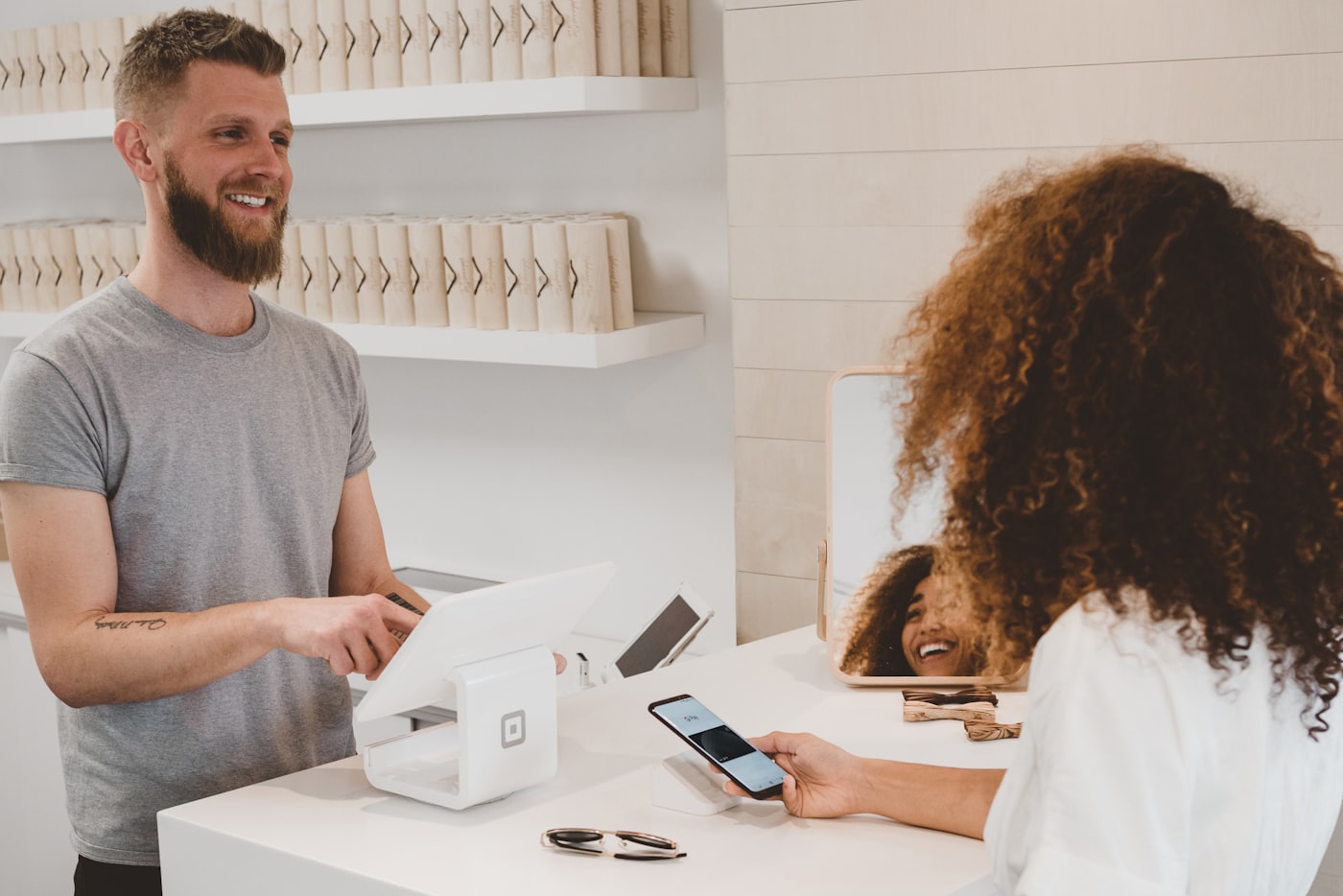
    Modern retail checkout representing a full commercial ecommerce creative system
    AI ecommerce design is not one render — it is the commercial system behind every touchpoint.

    What Is the Difference Between AI Image and AI Ecommerce Design?

    AI image is output. You describe a scene, select a model, render variations, pick a winner. The deliverable is a file.

    AI ecommerce design is infrastructure. You define a commercial world — who buys this product, where they encounter it, what emotion closes the gap between scroll and cart — then produce a family of assets that all obey the same creative rules. The deliverable is a system: hero shot, lifestyle context, detail crop, social format, video still, voice-over script, all traceable to one brief.

    In 2026, Adobe reported that 87% of creators using creative AI say it has accelerated business or audience growth, while 93% say it helps them produce content faster (Adobe Creators' Toolkit Report, 2026). Those numbers describe opportunity — not automatic quality. The same report found 57% of outputs need moderate or extensive editing before they are ready to share. In ecommerce, "editing" is not polish. It is fixing off-brand color, wrong aspect ratio, inconsistent model faces, and scenes that sell aspiration but fail to answer practical buyer questions.
    Isolated product on white background — single AI image output
    One file, one frame: the AI image mindset stops here. Ecommerce design starts with the asset family.

    Why Do Ecommerce Teams Confuse the Two?

    Three habits cause the confusion — and all three feel productive in the moment.

    1. Tool-first buying. A team licenses an image model, runs a workshop on prompting, declares victory. Nobody owns creative direction, brand rules, or channel specs. The tool becomes the strategy.

    2. Channel-last thinking. Assets are generated in isolation: one hero for the website, another prompt for Instagram, a third tool for video. Each channel looks fine alone. Together, they look like three different brands.

    3. Speed mistaken for scale. Adobe's 2026 report shows creators produce faster with AI — but faster single images do not equal faster catalogs, seasons, or campaigns. Scale in ecommerce means repeating a coherent visual language across hundreds of SKUs and dozens of formats without aesthetic drift.

    Adobe's 2025 inaugural Creators' Toolkit Report offers a telling detail: 60% of creators used more than one creative generative AI tool in the prior three months to improve quality, experiment with capabilities, or match the right tool to the task (Adobe MAX 2025 survey, 2025). That is not failure. That is evidence that commercial creative work spans ideation, generation, editing, upscaling, adaptation, and distribution. Image generation is one station on the line — not the whole factory.

    What Are the Five Layers of AI Ecommerce Design?

    Before you evaluate tools, map the stack. AI ecommerce design has five layers. Skip one, and the system collapses back into random pretty images.

    Layer Question it answers What breaks if you skip it
    1. Creative Direction What world does this product belong to? Gorgeous orphans — images that do not belong together
    2. Brand System What must stay constant across every asset? Color drift, typography chaos, wrong tone
    3. Scene Production What evidence proves the product fits a life? Flat persuasion — no context, no desire
    4. Channel Adaptation What does each platform require? Right image, wrong crop, wrong file, wrong moment
    5. Workflow & Reuse How does next week's batch start faster? Reinventing the brief every Monday
    Designer workspace with color swatches and screens for brand system planning
    The five layers live in practice: direction, brand, scenes, formats, and reusable workflow.

    Layer 1: Creative Direction

    This is where lookbook thinking and the SCENE method (publishing soon) live. You are not prompting "a photo of a serum bottle." You are defining Story, Context, Emotion, Narrative, and Extension for a buyer who discovers the product on a phone, compares alternatives in three tabs, and decides in under eight seconds.

    Layer 2: Brand System

    Brand is not a logo file. It is enforceable rules: palette, light temperature, composition habits, voice, character continuity. Adobe's 2025 survey found 85% of creators would consider using AI that learns their creative style — because consistency is the hard part, not the first render.

    Layer 3: Scene Production

    Ecommerce creative is moving from white-background clarity to scene-based persuasion. Fashion needs lifestyle contexts. Beauty needs bathroom counters and morning light, not sterile isolation — a pattern we explore in Lifestyle Context Mapping for Beauty Ads (coming soon). The scene is not decoration. It is the argument for why this product fits a real life.

    Layer 4: Channel Adaptation

    A hero image is not a TikTok Shop thumbnail. A lookbook frame is not an Amazon main image. AI ecommerce design plans formats up front: aspect ratios, safe zones, text overlay zones, motion crops. Adaptation is design work — not an afterthought resize.
    Smartphone with social app icons representing multi-channel ecommerce asset formats
    Channel adaptation is design work: each platform needs its own crop, safe zone, and context.

    Layer 5: Workflow and Reuse

    The test of maturity: can you run next month's drop without rewriting the creative logic from scratch? Saved workflows, brand presets, reference libraries, and batch templates turn one season's thinking into next season's head start. See From Phone Photo to Campaign: A Workflow Mindset for Small Brands (coming soon) for how this mindset applies when you start with almost nothing.

    When Does a Single AI Image Become a Commercial Creative System?

    The transition happens when three conditions are true:

    1. The brief is commercial, not descriptive. "Generate a red dress" is an image brief. "Show this dress in three contexts our buyer actually inhabits — commute, dinner, weekend travel — with the same light logic and palette" is an ecommerce design brief.
    1. Outputs are planned as a set, not a single winner. You know in advance you need a marketplace hero, two gallery lifestyle frames, one detail macro, one paid-social crop, and one video loop source. The set is the unit of work — not the one image that tested well in Discord.
    1. A human curator signs the system, not just the file. Adobe found in 2026 that 85% of creators insist the final creative decision must remain theirs, whether the tool is generative or agentic. AI ecommerce design respects that: explore widely, decide deliberately, publish only what belongs in the same commercial world.

    What Breaks When You Treat AI Like a Photo Booth?

    Treating AI as a photo booth — insert prompt, receive image, move on — produces predictable commercial failures:

    Photo booth habit Commercial consequence
    New prompt every asset Brand drift across PDP, ads, and email
    No reference system Different model face on every format
    No channel plan Constant rework for crops and specs
    No saved workflow Every launch week starts at zero
    No curator role Volume without point of view

    Adobe's 2026 report notes that 53% of creators who find it harder to stand out blame the sheer quantity of content online, while 42% say AI-generated work makes it harder for distinctive voices to surface. In ecommerce, that translates directly: more product images do not automatically mean more conversion. Coherent commercial storytelling does.

    When drift appears, the fix is rarely "a better model." Read Brand Consistency Trap: 5 Times AI Broke Your Visual Identity (coming soon) for the failure modes — and how teams recover by returning to brand system and creative direction, not prompt tweaking.

    How Does AI Ecommerce Design Connect to Conversion?

    AI ecommerce design is not abstract theory. It maps to how shoppers actually decide.

    Product pages need clarity and context in deliberate order: a clean hero for trust and comparison, lifestyle frames deeper in the gallery for desire and scale. Teams that plan only one AI image often optimize for the wrong slot — a beautiful lifestyle render where the marketplace requires a compliant packshot, or a sterile white background where the ad feed needed emotion.

    The design question is not "which image is prettier?" It is which image does which job in the funnel — and can your system produce the full set without breaking character?

    That is why world-building from lookbook thinking scales down to SKU pages and up to campaigns. One creative direction propagates:

    • Hero lookbook scenes → cropped for product detail pages
    • Lifestyle frames → adapted for paid social and short video
    • Character continuity → reused in voice and motion later
    • Brand Style rules → enforced across the next 100 SKUs

    If you treat AI as image generation, you rebuild every asset from scratch for each channel. If you treat it as ecommerce design, one direction becomes a commercial kit.

    Woman shopping online on laptop — lifestyle context in the ecommerce funnel
    Conversion happens when clarity and context work together — not when one pretty image does every job.

    AI Image vs AI Ecommerce Design: A Side-by-Side View

    Dimension AI Image AI Ecommerce Design
    Unit of work One file One asset family
    Brief type Descriptive prompt Commercial creative direction
    Brand role Optional Enforced (palette, style, character)
    Channel awareness Rare Built in (crop, format, placement)
    Reuse Low — start over next time High — workflows and templates
    Success metric "Does it look good?" "Does the set convert and stay on-brand?"
    Human role Prompt writer Curator + art director
    Tool count Often one Often several — by design

    Adobe's 2025 data supports the last row: 55% of creators use creative AI for editing, upscaling, and enhancement; 52% for generating new assets; 48% for ideation and brainstorming. Ecommerce design uses all three modes — not just generation.

    When Should You Use Reference Images vs Open Exploration?

    Use reference-heavy workflows when continuity is the brief: same product details, same model face, same brand silhouette across formats. Use exploration-heavy workflows when you are discovering the commercial world for a new line, rebrand, or first-season lookbook.

    We unpack the full decision tree in When to Use Reference Images vs Let AI Explore (coming soon). The short version for ecommerce teams: exploration finds the world; references protect it during scale.

    A Brief Note on Tools (Not a Tutorial)

    This article is about category clarity, not button clicks. Still, teams ask where ecommerce design lives in practice.

    In workspaces built for commercial creative — including Orauria — the five layers map to a repeatable pattern:

    1. Upload product and reference images
    2. Define Brand Style (palette, photography rules, voice)
    3. Map scenes with creative direction (SCENE, lifestyle contexts)
    4. Generate variations across image — and extend to video, voice, copy when needed
    5. Upscale, crop, and export per channel
    6. Save the workflow as a template for the next drop

    The value is not that one model makes one beautiful image. The value is that the creative direction survives the whole pipeline — from first scene to fiftieth SKU.

    For a deeper comparison of scattered tools versus integrated workspaces, see Orauria vs Scattered AI Stack: When All-in-One Actually Wins (coming soon).


    Build commercial creative systems on Orauria: Try Orauria

    Frequently Asked Questions

    Is AI ecommerce design just a fancy name for AI product photography?

    No. Product photography is one output type inside a larger system. AI ecommerce design includes creative direction, brand enforcement, multi-format adaptation, and reusable workflows — so teams do not regenerate the same commercial logic for every channel and every SKU.

    Do I need AI ecommerce design if I only sell on one marketplace?

    Even single-channel sellers need more than one image type: hero, angles, lifestyle context, detail shots. AI ecommerce design plans that asset family up front. One marketplace does not mean one image — it means one coherent visual argument with multiple proofs.

    Can I start with AI image tools and upgrade to ecommerce design later?

    Yes — most teams do. The upgrade happens when you add brand rules, scene mapping, channel specs, and saved workflows. The risk is waiting too long: every orphaned image becomes debt you must redo when you scale to ads, email, or new SKUs.

    What is the first step if my team only generates one-off AI images today?

    Write a three-line commercial brief before the next prompt: who buys, where they see the product, what feeling should close the gap. Then list every format you need this week. That shift from "make a picture" to "design a set" is the practical start of AI ecommerce design.

    How does this relate to AI lookbook thinking for fashion brands?

    Lookbook thinking is a spoke inside AI ecommerce design — the world-building layer for fashion and lifestyle. A lookbook defines aspiration; ecommerce design ensures that aspiration survives product pages, ads, and catalog scale. Start with lookbook thinking if fashion is your entry point.

    Will AI replace my designer or agency?

    Adobe's 2026 report found 85% of creators insist the final creative decision must remain theirs. AI ecommerce design does not remove designers — it changes their job from manual production to direction, system design, and curation. The scarce asset is taste, not generation speed.

    Conclusion

    The ecommerce industry does not need more random AI images. It needs commercial creative systems — briefs that start with buyers, brand rules that survive every format, scenes that persuade in context, and workflows that make next month faster than this one.

    AI image tools are excellent at the render. AI ecommerce design is accountable for the outcome: a coherent visual language that turns attention into trust, and trust into cart.

    Stop asking whether AI can make your product look good. Start asking whether your team can design the whole commercial story — and publish it everywhere without the brand falling apart.


    References

    1. Adobe, 2026 Creators' Toolkit Report, June 16, 2026. https://news.adobe.com/news/2026/06/creators-toolkit-report-2026
    2. Adobe, Inaugural Creators' Toolkit Report (Adobe MAX 2025), October 28, 2025. https://news.adobe.com/news/2025/10/adobe-max-2025-creators-survey
    3. 9to5Mac, "Adobe survey: AI is helping creators grow, but not without tradeoffs," June 16, 2026. https://9to5mac.com/2026/06/16/adobe-survey-ai-is-helping-creators-grow-but-not-without-tradeoffs/
  • Your Lookbook Doesn’t Need a Studio. It Needs a World.

    Your Lookbook Doesn’t Need a Studio. It Needs a World.

    Your Lookbook Doesn't Need a Studio. It Needs a World.

    The old lookbook formula was simple: rent a studio, hire a stylist, bring a photographer, shoot twelve looks, pray the weather holds. That model still works — if you have the budget, the crew, and the calendar.

    Most independent designers, freelance art directors, and small fashion brands have none of those. What they have is one strong collection, a phone full of reference images, and a launch date that will not move. The question is not whether AI can replace a photographer. The question is whether you can think like an art director when AI is your only crew.

    Key Takeaways

    • A traditional lookbook documents clothing. An AI lookbook builds a world around it — and that shift changes every creative decision you make.
    • Adobe's 2026 Creators' Toolkit Report found that 58% of creators say their ability to compete with larger studios feels stronger since using creative AI — but 57% still need moderate or extensive editing before publishing.
    • The SCENE framework (Story, Context, Emotion, Narrative, Extension) turns one outfit into multiple publishable scenes without losing brand coherence.
    • Your new role is not "prompt operator." It is curator: let AI explore widely, then choose the five images that belong in the same world.

    An AI fashion lookbook is not a faster reshoot of last season's campaign. It is world-building: placing a garment inside believable contexts — office commute, weekend café, travel layover, date night — so the audience sees not just fabric, but a life they want to step into. According to Adobe's 2026 Creators' Toolkit Report, which surveyed more than 16,000 creators globally, 87% of those using creative AI say it has accelerated business or audience growth, while 75% now describe AI as integrated or essential to how they work. Adobe also found that 58% of creators feel better equipped to compete with larger studios since adopting creative AI — yet 57% say outputs still need moderate or extensive editing before publish. The opportunity for small brands is real. The risk is producing twenty beautiful images that do not belong to the same brand universe — which is why creative direction, moodboarding, and curation matter more than ever, not less.

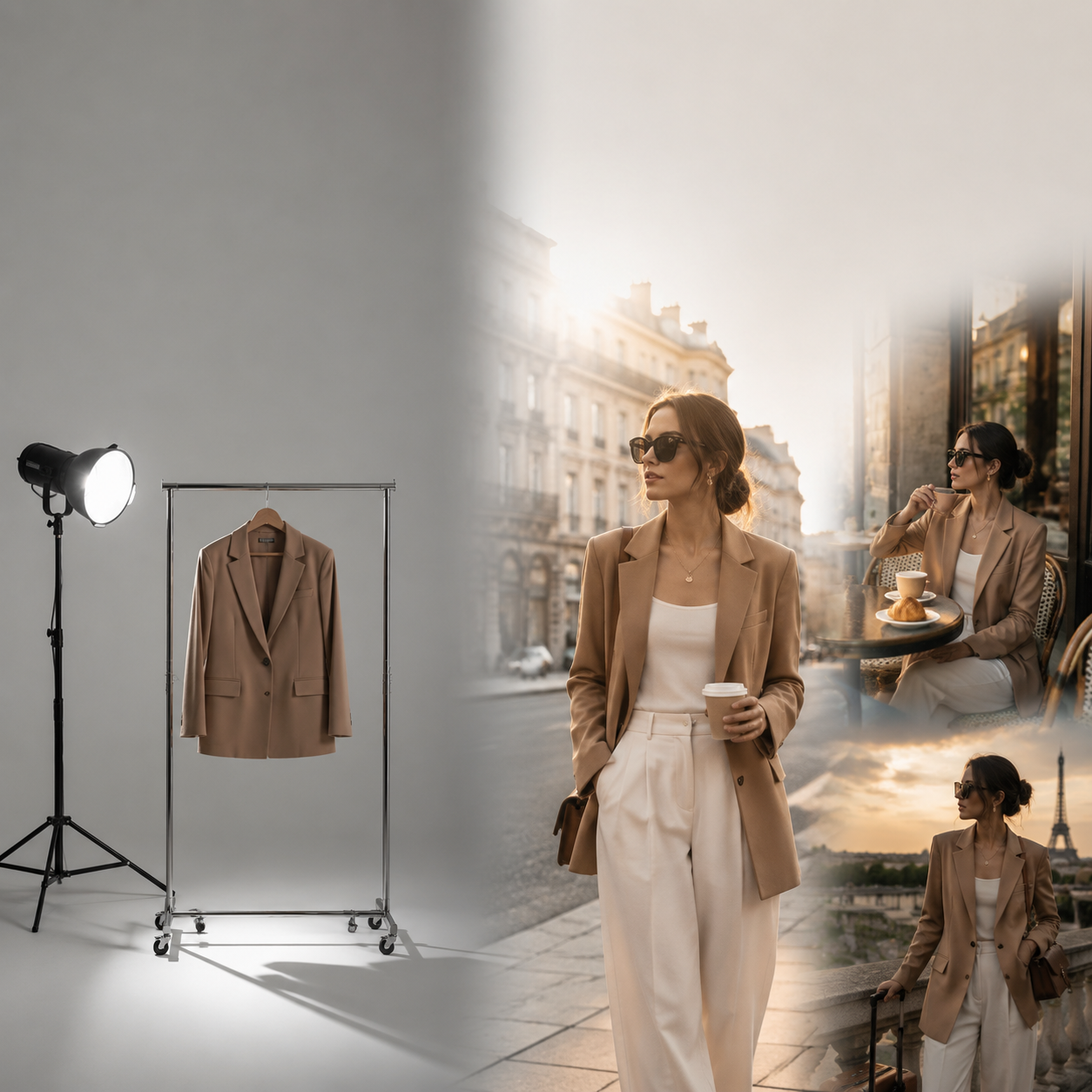
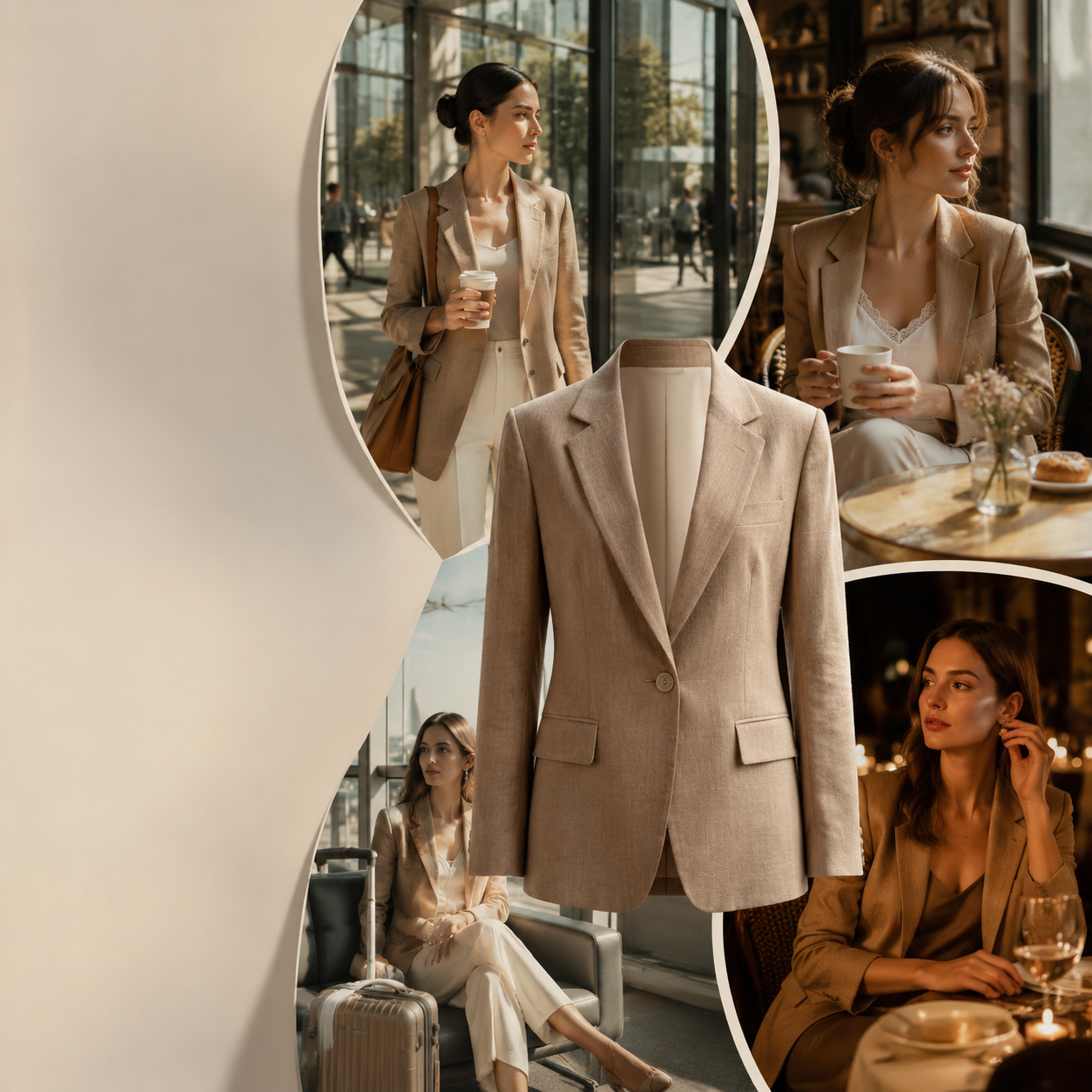
    AI lookbook collage — one camel blazer across office, café, travel, and evening lifestyle scenes
    One garment, four worlds: the core idea of AI lookbook thinking.

    What Is the Difference Between a Traditional Lookbook and an AI Lookbook?

    A traditional lookbook answers one question: What does this piece look like on a body, in controlled light, from three angles?

    An AI lookbook answers a different question: What world does this piece belong to — and can the audience imagine themselves inside it?

    That distinction matters for SEO, for conversion, and for creative quality. When shoppers scroll TikTok Shop or Instagram, they are not comparing hem lengths. They are comparing narratives. The brand that shows a linen blazer in a morning commute, a rooftop aperitivo, and a rainy taxi ride is not just showing a blazer. It is showing a personality.

    Adobe's report also notes that 53% of creators who find it harder to stand out blame the sheer quantity of content online, while 42% say AI-generated work makes it harder for distinctive voices to surface. Volume is no longer a competitive advantage. Point of view is.

    Studio vs world — empty photo studio compared with lifestyle fashion scenes
    Left: studio clarity. Right: world context. Most AI lookbooks should aim for the right — without renting the left.

    Why Do Most AI Lookbooks Fail Before the First Render?

    They fail at the brief — not the model.

    Most teams jump straight to generation: write a prompt, pick Flux or Seedream, render ten variations, pick the prettiest. The result is a folder of gorgeous orphans. Image four feels like a Scandinavian minimal brand. Image seven feels like a streetwear drop. Image nine looks like a stock photo agency. None of them wrong. None of them together.

    Three failure patterns show up repeatedly:

    1. Outfit-first thinking. The team describes the garment in the prompt but never defines the world around it.
    2. No moodboard gate. AI exploration starts before anyone agrees on light, palette, or emotional temperature.
    3. No curator at the end. Whoever generates the images also approves them — with no separation between exploration and selection.

    Adobe found that 85% of creators insist the final creative decision must remain theirs, whether the tool is generative or agentic. AI lookbook thinking respects that instinct. Generate freely. Decide deliberately.

    What Is the SCENE Framework for AI Lookbooks?

    Before you write a single prompt, map five dimensions for each look or hero piece:

    Letter Dimension Question to answer
    S Story What micro-story is this image telling in one frame?
    C Context Where is the person, physically and socially?
    E Emotion What should the viewer feel — calm, ambition, romance, rebellion?
    N Narrative How does this frame connect to the frames before and after it?
    E Extension What other scenes could this same outfit inhabit without breaking character?

    Example: One jacket, four worlds

    Imagine a structured camel blazer for a small contemporary brand targeting urban professionals aged 28–40.

    Scene Story Context Emotion
    1 Monday momentum Glass office lobby, soft morning light Composed confidence
    2 Saturday slow Corner café, newspaper, ceramic cup Unhurried warmth
    3 Red-eye ready Airport lounge, carry-on, muted tones Capable, in motion
    4 After hours Dim restaurant, candlelight, laugh mid-conversation Approachable elegance

    Same garment. Four narratives. One lookbook chapter — not four random outputs.

    Monday momentum — professional in camel blazer, sunlit office lobby commute scene
    SCENE 1 in practice: Monday momentum, composed confidence, glass office lobby.

    This is the core of AI lookbook thinking: you are not generating "a photo of a jacket." You are generating evidence that a jacket belongs in a life.

    For a deeper breakdown of SCENE applied beyond fashion, see our upcoming guide on the SCENE method for AI product storytelling (publishing soon).

    What Are Five Creative Directions When You Have No Studio?

    These are not button-click tutorials. They are art-direction decisions that hold whether you use Orauria, Midjourney, or any multi-model workspace.

    Direction 1: World before wardrobe

    Start with environment and emotion, then introduce the garment. Ask: If this brand were a film, what is the opening shot? Is it rain on a Tokyo crosswalk? Sun on a Lisbon balcony? A empty gallery with one figure?

    Only after the world is defined do you specify cut, fabric, and fit. Designers who reverse this order produce technically accurate images that feel like product cutouts pasted onto backgrounds.

    Direction 2: Moodboard before render

    Skilled designers still moodboard — even when AI is the camera.

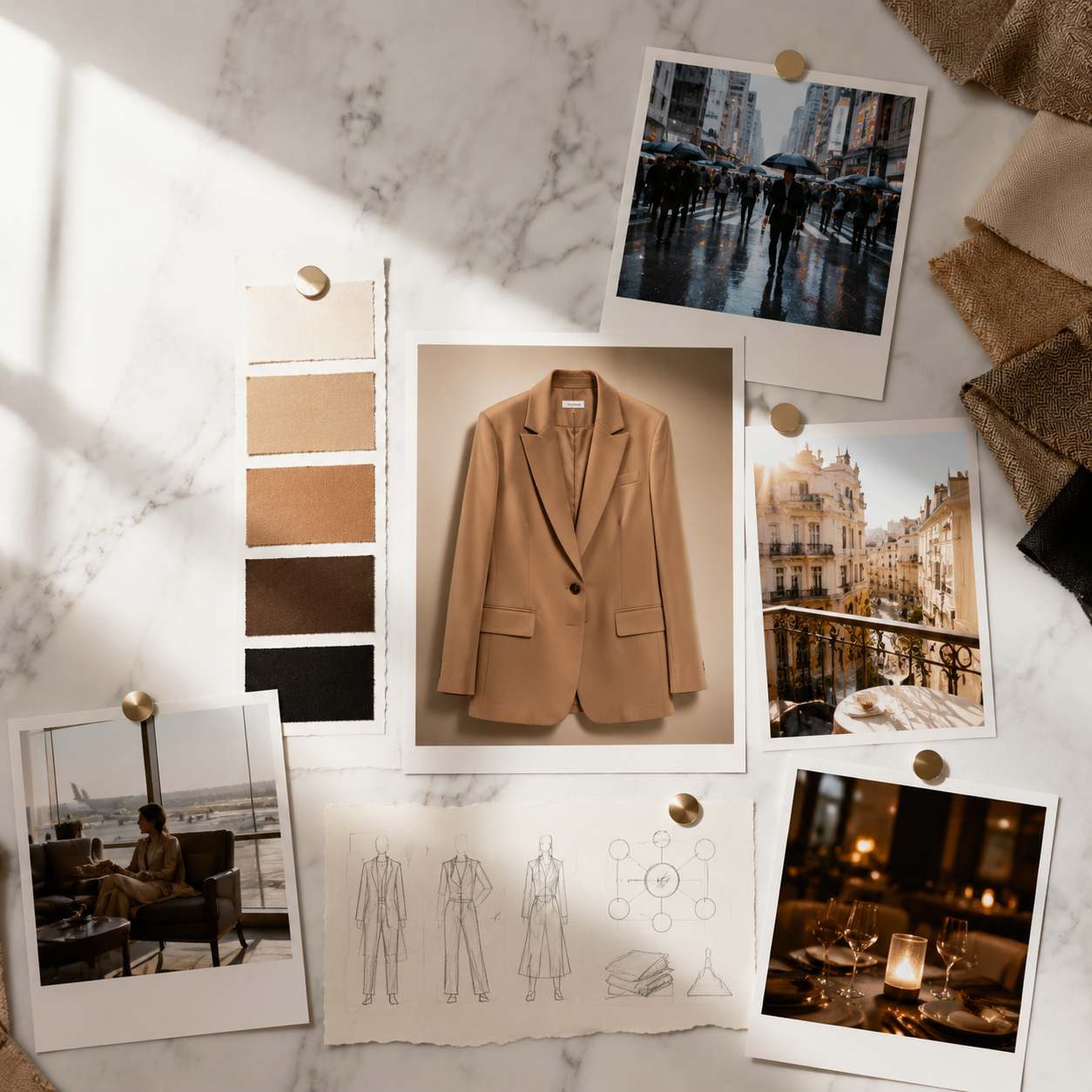
    Collect 8–12 references: not for copying, but for locking temperature. Warm vs cool. Soft vs hard shadow. Documentary vs editorial. Share this board with anyone generating images. It becomes your Brand Style guardrail before a single pixel renders.

    If your team uses a workflow tool with a Brand Style node, this is where it earns its keep: reference images plus palette rules stop drift across a 20-image batch.

    Fashion art director moodboard with blazer hero, lifestyle polaroids, and color swatches
    Moodboard before render: lock temperature, palette, and emotional direction before AI exploration.

    Direction 3: Lifestyle context mapping

    Ecommerce creative is moving from white-background clarity to scene-based persuasion. For fashion, map contexts your buyer actually inhabits:

    • Commute / work
    • Social / dining
    • Fitness / wellness
    • Travel / transit
    • Home / leisure

    One outfit per context beats five angles on a grey seamless. Shoppers on TikTok Shop and Instagram do not save flat lays. They save identities they recognize.

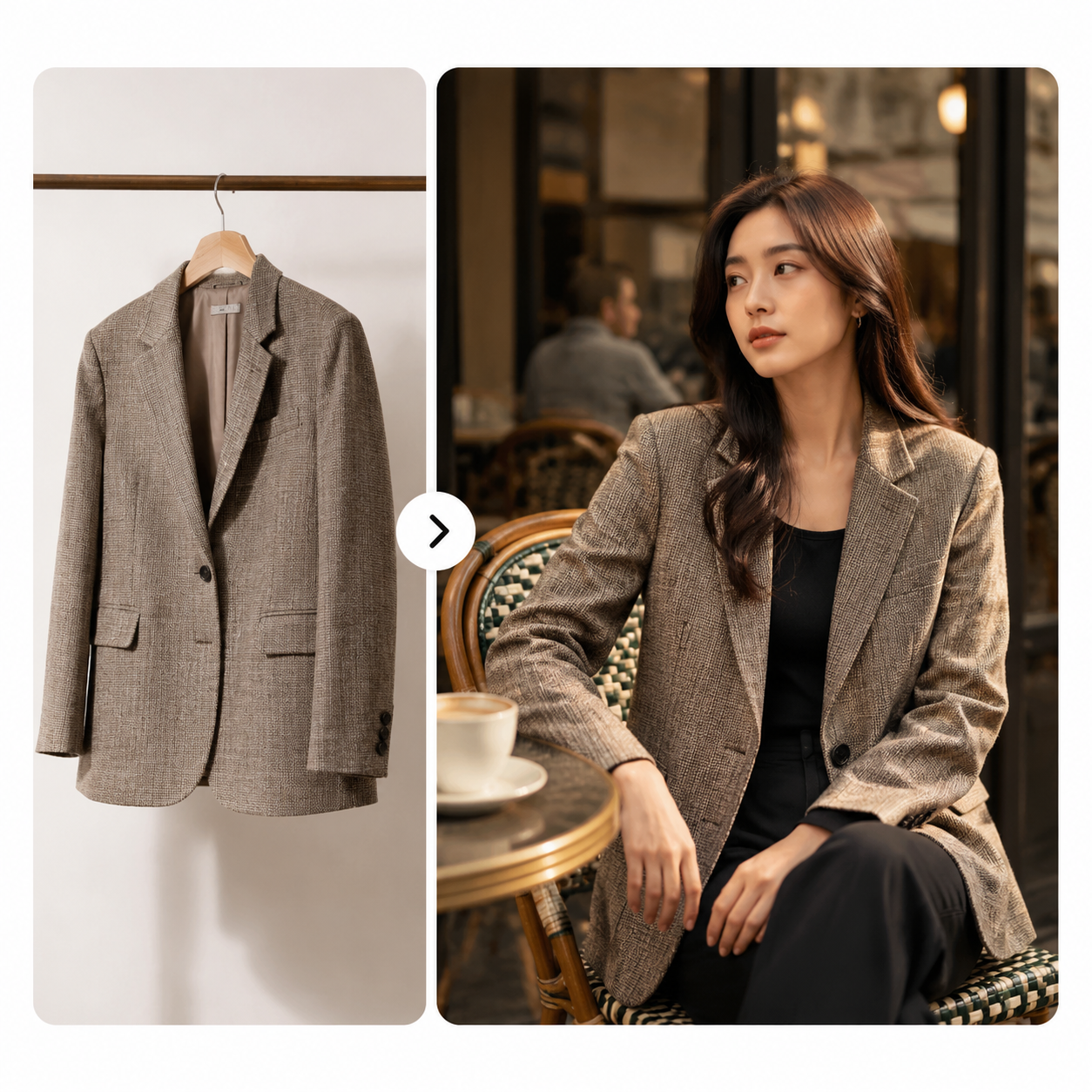
    Blazer on hanger vs styled in outdoor café — product isolation vs lifestyle context
    Scene-based persuasion: the same blazer reads differently in isolation versus in a world.

    Beauty and FMCG brands use the same logic — lifestyle scenes instead of sterile product isolation. We explore that pattern in Lifestyle Context Mapping for Beauty Ads (coming soon).

    Direction 4: The consistency trap

    The most common AI lookbook failure is aesthetic drift: each image beautiful, the set incoherent.

    Fix it with three non-negotiables across every scene:

    • Light logic — same season, same time-of-day feel
    • Color discipline — palette pulled from brand kit, not model defaults
    • Character continuity — same face, posture language, or silhouette when using reference images

    When drift appears, do not tweak prompts randomly. Return to the moodboard and ask which dimension broke: Story, Context, Emotion, Narrative, or Extension.

    Our experiment post Brand Consistency Trap: 5 Times AI Broke Your Visual Identity walks through real failure modes (publishing soon).

    Direction 5: Curator beats generator

    Adobe reports that 93% of creators say AI helps them produce content faster — but 57% say outputs need moderate or extensive editing before they are ready to share. Speed without curation creates noise.

    Adopt a two-role habit, even if one person wears both hats:

    Role Job
    Explorer Generate 15–20 variations per scene. No judgment during exploration.
    Curator Select 3–5 that belong in the same world. Kill the rest without sentiment.

    The lookbook is not the folder. The lookbook is the selection.

    When Should You Use Reference Images vs Let AI Explore?

    Use reference images when continuity is the brief: same model face, same product details, same brand silhouette across twelve formats. Use open exploration when you are searching for the world itself — the first chapter of a new season, a rebrand, a collection you have never visualized before.

    Rule of thumb:

    • Reference-heavy → campaign extension, SKU scaling, character-led brands
    • Exploration-heavy → mood discovery, pitch decks, first lookbook for a new line

    We cover the decision tree in detail in When to Use Reference Images vs Let AI Explore (coming soon).

    How Does This Connect to AI Ecommerce Design?

    Fashion lookbooks are not a separate discipline from ecommerce creative. They are the top of the same funnel: aspiration first, product second, cart third.

    An AI lookbook thinking approach scales down cleanly:

    • Hero lookbook scenes → cropped for product detail pages
    • Lifestyle frames → adapted for paid social
    • Character continuity → reused in video and voice content later

    If you treat AI image generation as "make pretty pictures," you will rebuild every asset from scratch for each channel. If you treat it as world-building, one creative direction propagates across image, video, and campaign copy.

    That is the difference between AI image tools and AI ecommerce design — a topic we unpack in AI Ecommerce Design Is Not AI Image (publishing soon).

    A Brief Note on Tools (Not a Tutorial)

    This article is about thinking, not clicking. Still, teams often ask where world-building lives in practice.

    In workspaces like Orauria, the pattern maps naturally: Upload reference images → define Brand Style → generate scene variations → upscale and crop for channel formats → save the workflow as a template for next season. Fashion teams on the platform often reuse workflows labeled for lookbook, thumbnail, or editorial batches — because the creative direction is what gets saved, not just the pixels.

    If you want to see how phone-to-campaign thinking works for non-fashion products, read From Phone Photo to Campaign: A Workflow Mindset for Small Brands (coming soon).


    Explore creative workflows on Orauria: Try Orauria

    Frequently Asked Questions

    Can an AI lookbook replace a professional fashion shoot entirely?

    For many small brands and pre-launch collections, yes — with caveats. AI lookbooks excel at context, volume, and iteration speed. They still require human curation: 57% of creators in Adobe's 2026 report say AI outputs need moderate or extensive editing before publication. Use AI for world-building and exploration; use human judgment for final selection and brand alignment.

    How many scenes should a seasonal AI lookbook include?

    Start with one hero garment or look and map four to six SCENE contexts. That yields enough narrative range for a launch week without aesthetic drift. Expand only after the moodboard and consistency rules are locked — not before.

    Do I need a photographer on retainer to publish a credible lookbook?

    No. You need a point of view. Adobe found that 58% of creators feel better equipped to compete with larger studios since adopting creative AI. Credibility comes from coherent storytelling, not from proving you rented a cyclorama.

    What is the biggest mistake brands make with AI fashion imagery?

    Generating outfit descriptions without defining the world first. The fix is simple and unglamorous: moodboard, SCENE map, then render. Skipping straight to prompts is how brands end up with twenty unrelated beautiful images.

    How do I keep the same model face across multiple AI lookbook scenes?

    Use reference-image workflows and character consistency tools — treat the face as a design asset, not a filter. Define posture and expression rules in your brief so the character feels intentional across scenes, not accidentally duplicated.

    Is AI lookbook content acceptable for ecommerce and advertising platforms?

    Policies vary by platform and region. Many brands disclose AI-assisted creative where required. Adobe reports that 75% of creators believe audiences can detect meaningful AI involvement — transparency and authentic brand voice matter more than hiding the toolchain.

    Conclusion

    The lookbook is not dead. The studio-only lookbook is.

    When you cannot rent the crew, you can still publish work that feels authored — if you stop asking AI for "photos of clothes" and start asking for worlds that clothes belong to. Define the story before the outfit. Moodboard before render. Map lifestyle contexts. Guard against consistency drift. Curate ruthlessly.

    Your lookbook does not need a studio. It needs a world — and someone willing to protect it.


    References

    1. Adobe, 2026 Creators' Toolkit Report, June 16, 2026. https://news.adobe.com/news/2026/06/creators-toolkit-report-2026
    2. Kerr, M., "AI Made Content Abundant. For Creators, Voice Is Now The Scarce Asset," Forbes, June 16, 2026. https://www.forbes.com/sites/maureenkerr/2026/06/16/ai-made-content-abundant-for-creators-voice-is-now-the-scarce-asset/
    3. 9to5Mac, "Adobe survey: AI is helping creators grow, but not without tradeoffs," June 16, 2026. https://9to5mac.com/2026/06/16/adobe-survey-ai-is-helping-creators-grow-but-not-without-tradeoffs/