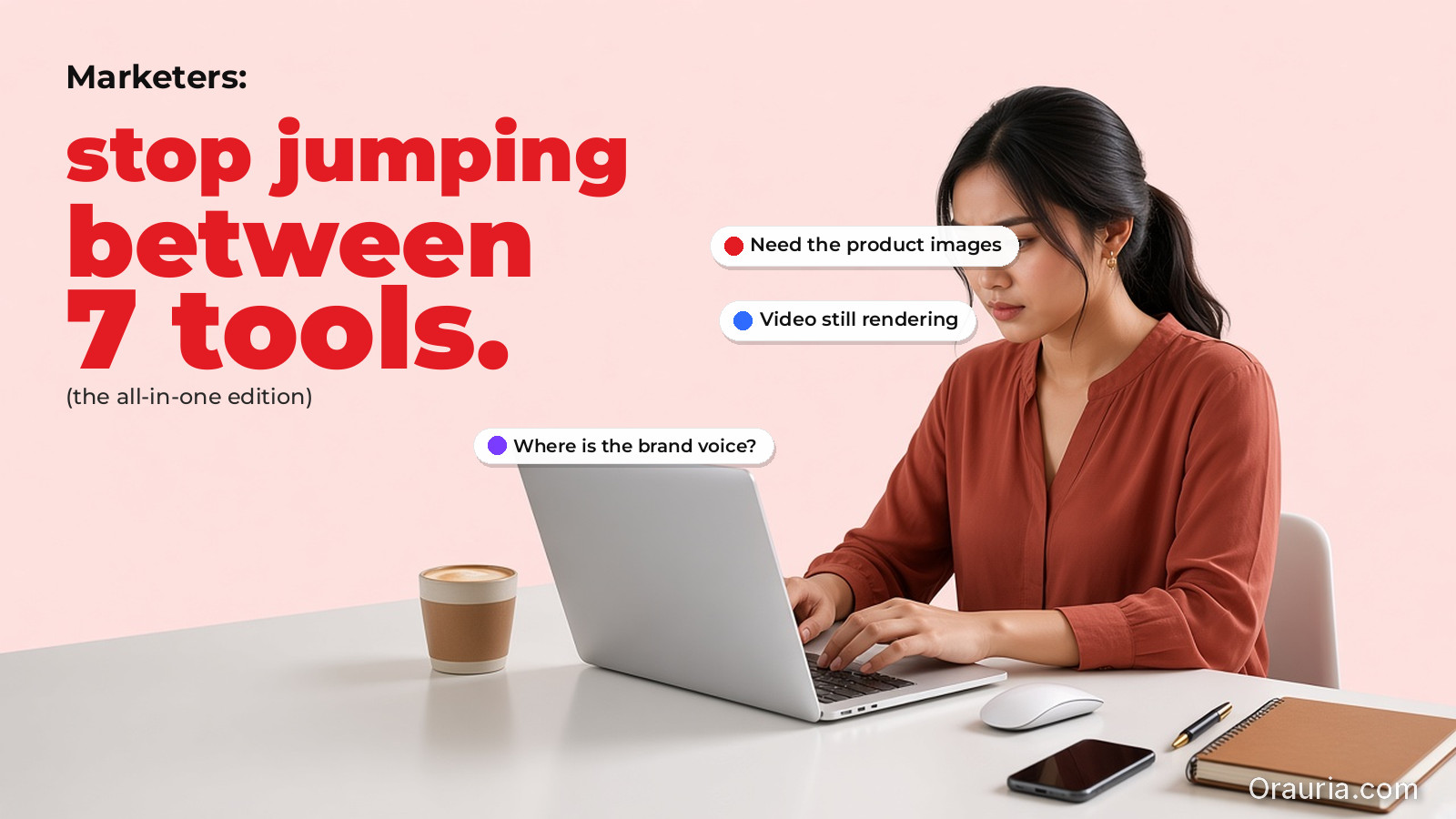
Are you bouncing across five to seven tools just to finish one content campaign? One tab for images, another for video, then voice, OCR, saved prompts, and a last round of copy-paste to publish. That is exactly the problem Orauria is built to solve.
Key Takeaways
- McKinsey estimates that GenAI can raise marketing productivity by about 5–15% of marketing spend when it is deployed well.
- Orauria brings multiple AI capabilities into one platform: image, video, voice, OCR, workflows, plus prompt, brand, and character libraries.
- The real advantage is not the number of tools. It is a continuous workflow from idea to publish-ready content.
In 2026, the question is no longer whether to use AI. It is how to use it so a team can move faster without losing quality or brand consistency.
What is Orauria, and how is it different from a pile of separate AI tools?
According to McKinsey’s report The Economic Potential of Generative AI, GenAI can create the most value in four functional areas, including marketing and sales. AI is not only a faster writing assistant. It can be the operating layer that actually lifts a marketing team’s output.
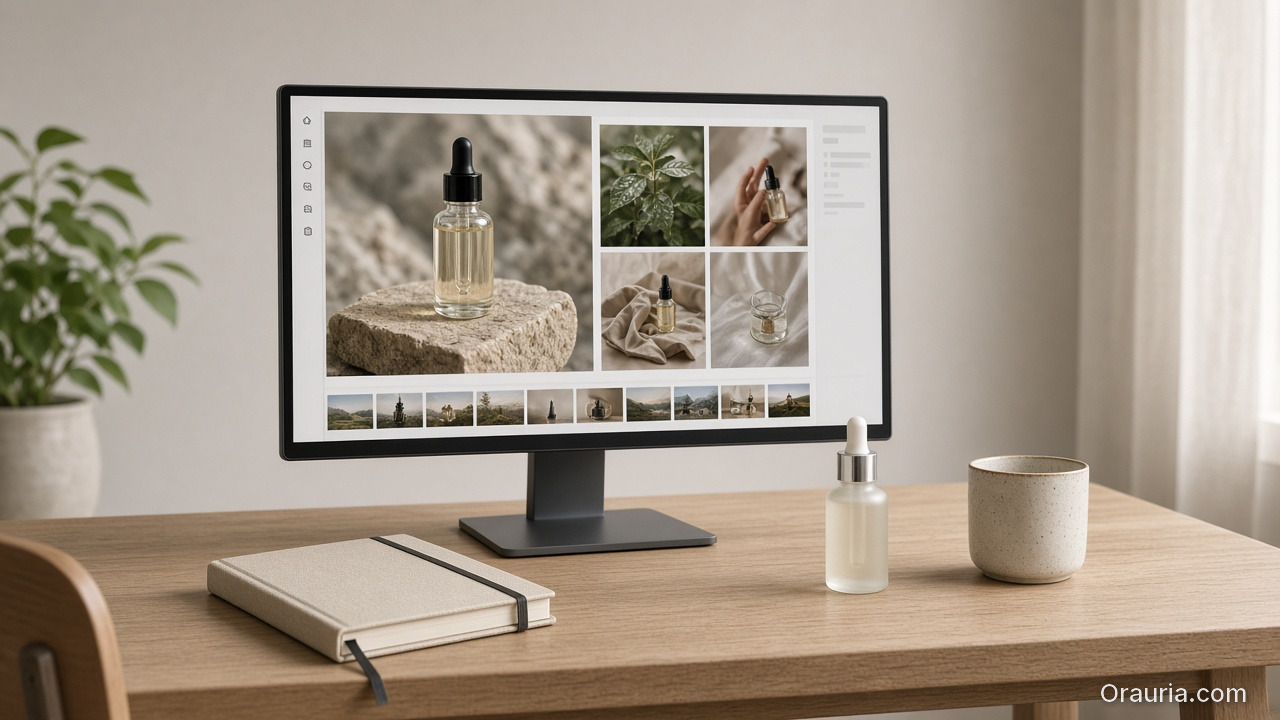
Orauria is an all-in-one AI platform that lets you run the full content-creation process in one place, instead of stitching together separate apps. Instead of opening a new tab for every task, most of the process can live in a single workspace.
- AI Image Generation
- AI Video Generation
- AI Voice (TTS, voice clone, podcast, narrator)
- AI OCR (documents, photos, invoices, PDFs)
- AI Workflow (automation from idea to publish)
- Prompt Library
- Brand Style Management
- Character Management
The important difference is that Orauria does not stop at making isolated assets. It is built for real production volume, where images, video, voice, source material, and brand standards have to travel together in one continuous workflow.
If a standalone AI tool is one link in the chain, Orauria is meant to work like a content studio: connecting those links in one system and keeping brand standards intact.

Why do marketers and creators need an all-in-one AI platform?
McKinsey notes that marketing productivity can rise by 5–15% of total marketing spend when GenAI is applied in the right context. Many teams leak that benefit in operations: disconnected tools, broken processes, and internal knowledge that is hard to reuse.
When a team works across separate tools, four bottlenecks show up again and again:
ol class=”wp-block-list”>Orauria solves this by bringing the full process into one workspace:
Idea -> create assets -> refine to brand -> build video/voice -> export -> publish

Which Orauria features actually matter in a content workflow?
According to Adobe’s Creators’ Toolkit Report 2026, 87% of creators who use creative AI say it is helping their business or audience grow, and 75% see AI as an integrated or essential part of their workflow. That finding is close to what creative teams in Vietnam actually need: they are not short on tools. They are short on a system coherent enough to make those tools work together.
1) AI Image for real marketing work
Not just art for art’s sake. Marketing teams usually need purposeful assets: product photos, posters, social creatives, mockups. Orauria focuses on those outputs so the path from concept to a usable asset is shorter.
2) AI Video for social-first content
Generating video from text, an image, or a storyboard makes it easier to recycle an idea into a reel, a short, a teaser, or a short ad without jumping through several editing tools.
3) AI Voice + OCR to widen production capacity
- OCR turns raw documents into data you can actually use.
- Voice turns written content into audio, a podcast, or narration.
Together, a small team can still produce multiple formats without a sharp increase in headcount. That is a clear advantage for startups, lean in-house teams, and agencies juggling many workstreams.
4) Prompt Library + Brand Style + Character Library
These are the modules many platforms skip, and they are the ones that decide long-term quality:
- Prompt Library: save and reuse prompts that already work.
- Brand Style: keep the brand voice consistent.
- Character Library: keep an AI character stable across campaigns.
In day-to-day content operations, this system memory is what reduces errors and revision cost over time.

Who is Orauria for?
HubSpot reported in 2024 that 74% of marketers were already using at least one AI tool at work. The market has left the experiment phase and entered the phase of operating for performance.
- Content creators: need steady output without dropping quality.
- Digital marketers: need to launch multi-channel campaigns quickly.
- Designers: need a faster loop from concept to asset.
- Agencies: need a standardized process across many clients.
- Ecommerce teams: need product content at scale.
- Startups and businesses: want lean marketing without a tangled tool stack.
- Teachers and trainers: need to process documents, lectures, and voice quickly.

How to get started with Orauria in 7 days
Many teams stall with AI because they try to do too much in week one. A better approach is a small pilot that still covers the full cycle.
Days 1–2: Lay the foundation
- Pick 2–3 priority use cases, such as social posts, landing copy, or short video.
- Standardize a Prompt Library for each use case.
- Set a minimum Brand Style: voice, banned words, colors, and visual tone.
Days 3–4: Run a complete workflow
- From one topic, run the full pipeline: brief -> image -> video -> caption or voice.
- Measure time before and after using Orauria.
Days 5–6: Refine and standardize
- Lock the best prompt templates.
- Build a Character Library if you use a recurring character.
- Set a review checklist before publish.
Day 7: Review and expand
- Compare output and time across the week.
- Add one more workflow to scale up.
You can invent simple internal KPIs such as time per asset, revision rounds, and the share of content approved on the first pass. Those numbers say more about real efficiency than post volume alone.
Frequently asked questions about Orauria
Will Orauria replace a content team?
No. Adobe’s Creators’ Toolkit Report 2026 found that 57% of creators say AI content still needs moderate to heavy editing before it can be published. AI speeds up drafts and asset production. Final quality still depends on human judgment.
What is the benefit of using one all-in-one platform?
HubSpot’s 2024 data showed AI use in marketing rising quickly, with 74% of marketers using at least one AI tool at work. As the number of tasks grows, putting content production in one place cuts context-switching, reduces copy-paste between apps, and makes it easier to standardize the process for the whole team.
Is Orauria better for individuals or for teams?
Both. Individuals gain speed. Teams gain consistency. For teams, Prompt Library, Brand Style, and Character Library usually have the clearest impact because they reduce quality drift across multiple writers.
How do you keep AI content from all sounding the same?
Adobe’s 2026 report found that 85% of creators want to keep final creative control. The effective approach is to use AI for drafts and fast production, then add an editorial layer for brand voice, real data, and the company’s own point of view.
Can Orauria be used for ecommerce?
Yes. Ecommerce usually needs several formats at once: product photos, short video, captions, descriptions, and voice. Orauria fits because it connects those steps into one continuous workflow instead of leaving them in separate tools.
Conclusion
Orauria is a strong fit if you are dealing with one or more of these: a scattered tool stack, slow publishing, inconsistent content, and a team worn down by repetitive work. Orauria’s core value is not “one more AI tool.” It is turning AI into a content operating system you can repeat and scale.
If your goal is to speed up production without losing brand standards, an all-in-one model like Orauria is a practical way to start this quarter. Instead of patching one gap with one tool and the next gap with another, begin with one small workflow and grow it on the same system.