Author: lytran

  • Integration Architecture: MCP, the Cloud Computer, and Studio

    In the first article of this series, we mapped what Grok Bot is — from public xAI docs — and what Orauria already ships for product images and video. This piece is an architecture note for a tech lead or technical founder who will attach the two systems or hire a team to do it.

    It is not a partnership announcement, and it is not a click-by-click tutorial. Grok Bot facts come from public pages on x.ai/bot and docs.x.ai, checked on 11 November 2026 (Asia/Saigon). Orauria facts come from Orauria’s own site, especially the MCP page. We describe three layers that fit those documents. We do not claim an official partnership with xAI. We do not claim that Orauria’s MCP server has been verified end-to-end inside Grok Bot. A connection tutorial will be published only after that test.

    Key takeaways. Treat the connection as three layers: a contracted MCP tool path, a browser path on the Bot’s cloud computer, and an orchestration layer of skills, routines, and multiple Bots. MCP is the intended default because a tool call is easier to repeat and test than a click path through a web UI. Grok Bot documents a custom Remote HTTPS connector — server URL, optional HTTP headers — or a Command type. Orauria documents a Bearer API key and six tools that bill a Studio credit wallet. Whether Grok Bot will accept and store Orauria’s Authorization: Bearer header has not been independently verified here. Workflow Builder, Fashion Poses, upscale, and Chrome extensions are not MCP tools. And because the cloud computer is shared across every Bot on an account, API keys belong in a connector header or a secret card — never in ordinary chat, and never in /workspace.
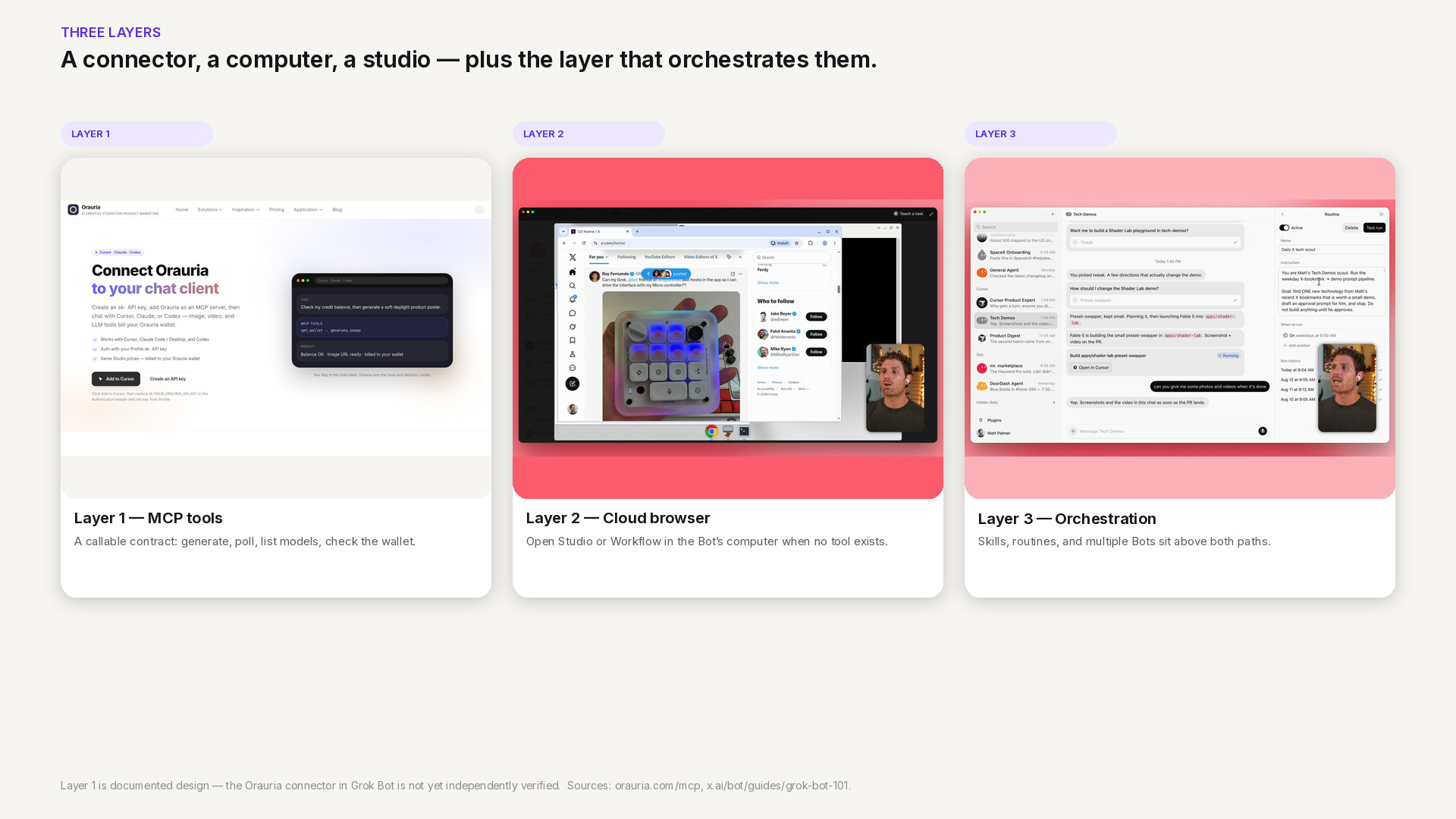
    Three layers for connecting Grok Bot to Orauria: documented MCP tools, the cloud-computer browser, and skills or routines that orchestrate both. The MCP path is documented design, not independently verified.

    Three layers: MCP, the browser, and orchestration

    A useful architecture starts by naming the layers, not the vendor logos. When a merchandising brief arrives, which contract does the Bot actually call — and what happens when that contract is not enough?

    Layer 1 is the tool path. Model Context Protocol gives a Bot a small, explicit set of functions it can call over a documented interface. On Orauria today, that set is public: generate_image, generate_video, chat, list_models, get_wallet, and get_task. A call has a typed result you can inspect — an image URL, a job id, a credit balance — which is what you want if a routine or a specialist Bot will run the same step tomorrow.

    Layer 2 is the browser path. Every Bot on a Grok Bot account shares a persistent cloud computer with a browser, a filesystem, and a terminal. When a job needs a visual UI that MCP does not expose — a node canvas in Workflow Builder, a Fashion Poses board, a click-through in Studio — the Bot can open the public site in that browser, the same way it would open any other page. This path is available today. It is also harder to test, easier to break when the UI moves, and a poorer home for a standing routine.

    Layer 3 is orchestration. Grok Bot’s skills, routines, and multi-bot chats sit above both paths. One Bot can write a brief; another can call image tools or watch a job; a routine can fire on a schedule. The collaboration model is documented. Wiring it to Orauria still waits on a verified connector, and on skills we will only publish after they run for real.

    If you only remember one sentence from the opening guide, let it be this: MCP is the intended default; the browser is the escape hatch; skills and routines are how you stop doing the same handoff by hand.
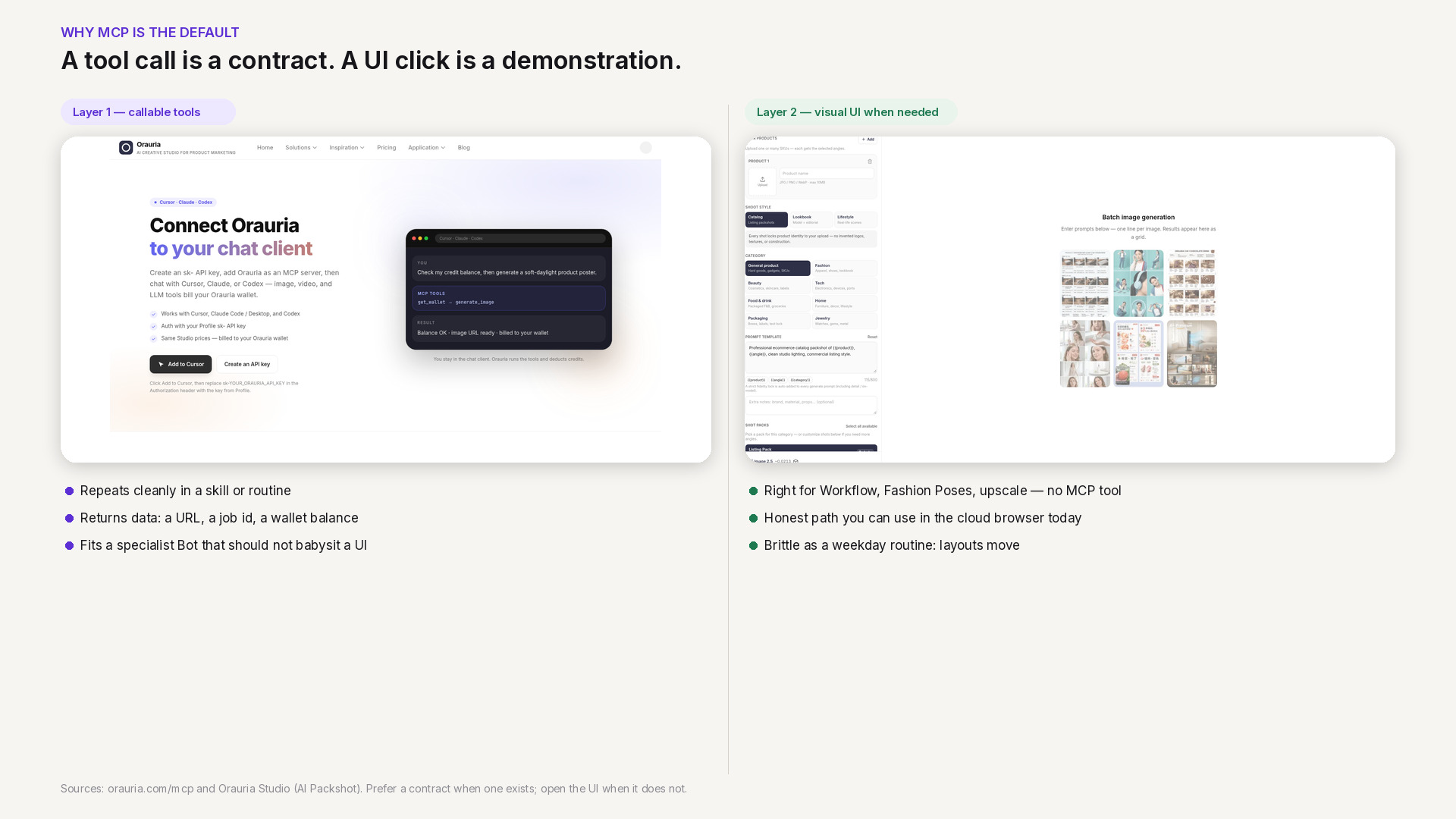
    Two-column comparison: calling a documented Orauria MCP tool versus clicking through Studio in a cloud browser. The tool path is repeatable; the browser path is visual but brittle for routines.

    Why MCP is the preferred path

    There is a reason we keep calling MCP the default, even though the browser path is the one you can use this afternoon. The difference is whether the work can survive contact with a calendar.

    A UI click is a demonstration. You watch the Bot open Studio, choose a model, wait, and download a frame. That is useful for a one-off, and it is the honest answer for any Studio surface that has no MCP tool. It is a weak foundation for a routine that should run every weekday at 09:00, or for a specialist Bot that should generate a packshot set without you watching the computer preview. Layouts change. Buttons move. The Bot has to see, infer, and click again. You can recover, but you cannot write a tight skill around that recovery.

    A tool call is a contract. get_wallet returns a balance. list_models returns the current catalog. generate_image, when it succeeds, returns a URL you can file or hand to the next step. get_task lets you poll an asynchronous job — video especially — until it finishes or fails in a way the Bot can report. Success and failure are data, not a screenshot of a spinner. That is also why MCP is the better home for a team of Bots: a merchandising Bot and a retouching Bot can share named tools without sharing a click script or the same brief.

    The browser path is not second-class. It is the right tool for the remainder: Workflow Builder’s node canvas, any Fashion Poses or upscale flow, and any review that is simply faster in a visual UI. The rule is narrow: prefer a callable contract when one exists; open the UI when it does not. Do not pretend a missing contract is already there because the page looks impressive.
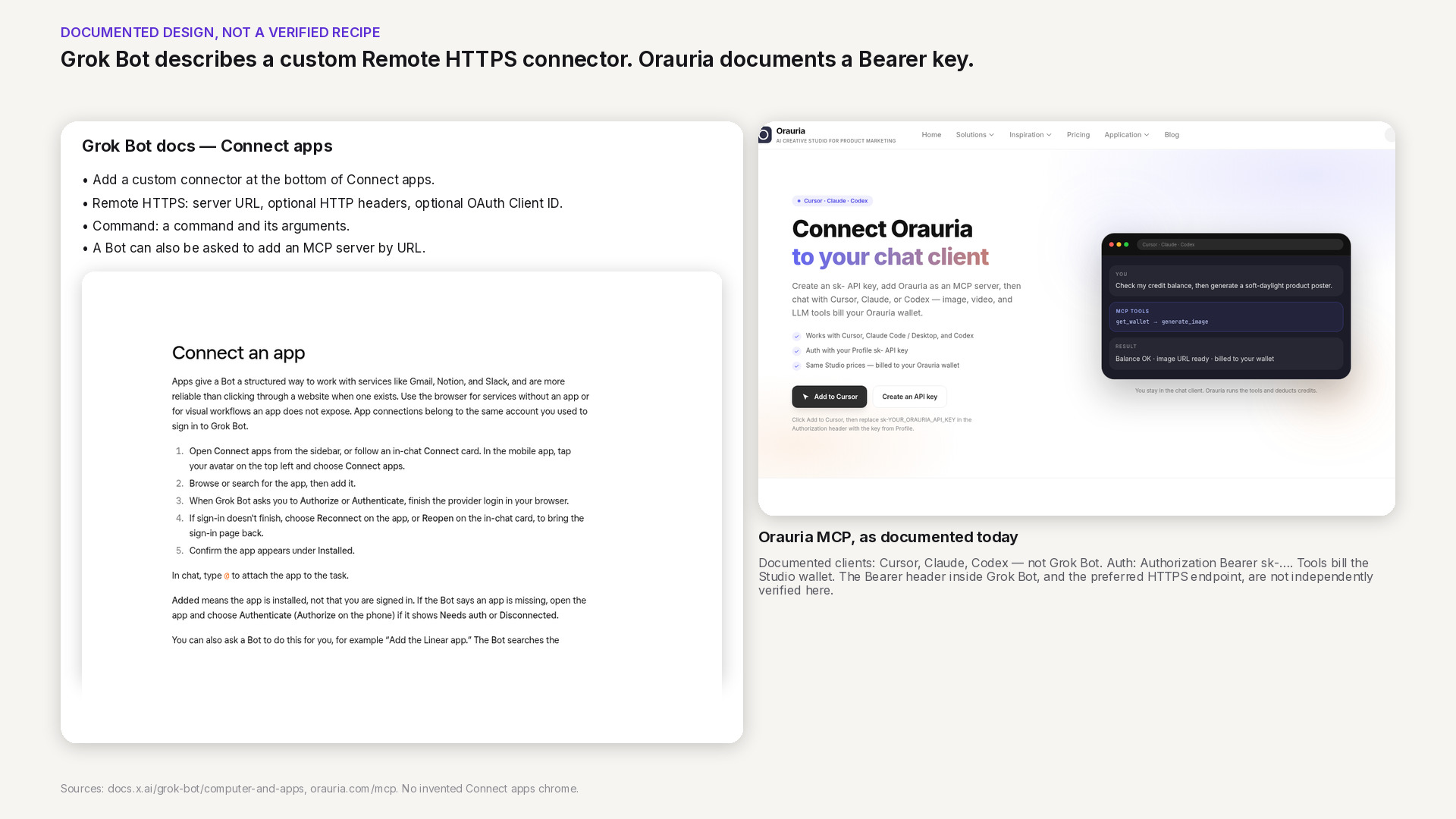
    How Grok Bot documents a custom Remote HTTPS connector — server URL and optional headers — beside Orauria’s MCP authentication model. The Bearer header in Grok Bot is not yet independently verified.

    Custom connectors, as Grok Bot documents them

    Grok Bot’s public computer-and-apps documentation describes how to add a custom connector in the desktop app. You choose Add a custom connector at the bottom of Connect apps, give it a name, and pick a type. Remote HTTPS takes a server URL, with optional HTTP headers and an OAuth Client ID — a Client Secret field appears once you enter one. Command takes a command and its arguments. You then save the plugin. The same documentation says you can also ask a Bot to add an MCP server that is not in the catalog, by URL, or by a command that runs on its computer.

    That shape is what we mean by “documented design.” It is the interface Grok Bot already publishes for third-party MCP servers. It is not, by itself, a verified recipe for Orauria.

    Orauria’s side of the contract is also public, and narrower than a casual reader might hope. The MCP page documents how to connect Cursor, Claude, and Codex today. Auth is a Bearer token: an sk-… API key created in your Orauria profile, sent as Authorization: Bearer. Tools bill the same Studio credit wallet you see on the pricing page. The technical endpoint is written in places as http://orauria.com/api/mcp; HTTPS should be preferred, and that exact URL has not been independently confirmed here. Documented clients, as of the date on this article, do not include Grok Bot.

    Put the two documents side by side and a plausible mapping appears: a custom Remote HTTPS connector would carry Orauria’s server URL and an Authorization header, and a Bot would call list_models or get_wallet without pasting a key into the transcript. Two things remain unverified. First, whether Grok Bot will accept, store, and actually send that Bearer header on each tool call. Second, whether the HTTPS endpoint we would prefer is the one that should be entered, given the http:// form still visible in docs. A later tutorial will record those results with real, redacted screenshots. Until then, do not treat the mapping as a setup guide, and do not paste a key into chat to “just try it.”
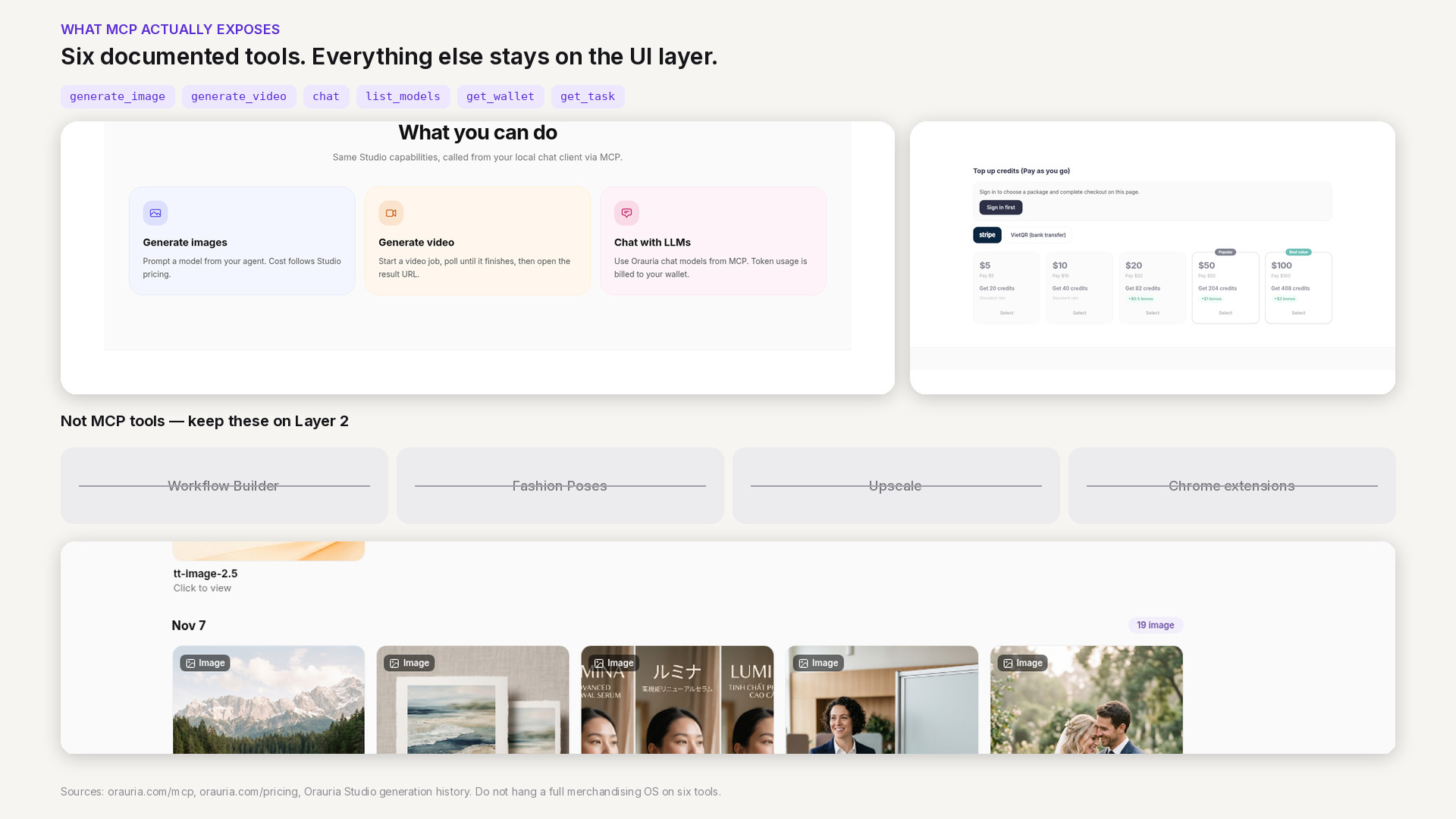
    The six documented Orauria MCP tools beside Studio features that are not MCP tools: Workflow Builder, Fashion Poses, upscale, and Chrome extensions, plus a credit-wallet crop from pricing.

    The current boundary of Orauria’s MCP tools

    Architecture goes wrong when it draws boxes around products that do not yet have an interface. Orauria is a creative workspace for product marketing — Studio, Workflow Builder, specialized apps, and a credit wallet. Only a slice of that surface is callable through MCP.

    The six tools have clear jobs. list_models tells a Bot which image, video, or chat models it can use. get_wallet is the gate before you spend: read a balance, and stop cleanly if the wallet is empty. generate_image and generate_video create the work and bill that same wallet at Studio prices. get_task is how you wait on a long job — particularly video — without guessing. chat calls Orauria’s billed chat models through the same server. That is a complete, if thin, pipeline for “brief in, media URL out,” as long as the brief fits those tools.

    What is not in the list matters as much. There is no MCP tool to run a Workflow Builder graph, and none for Fashion Poses, upscale, or the Chrome extensions. Those are real Studio capabilities, and they remain Layer 2: the Bot can open them in its cloud browser, or a person can open them in their own. They are not contracts you should put in a skill and promise will fire unattended.

    If you are designing a system, or briefing a vendor to extend one, keep this boundary visible. The honest diagram is smaller than a single box labeled “Orauria.” MCP covers generation, model discovery, wallet checks, job polling, and chat. Everything else is UI, a future tool, or a custom server someone has to build — which is exactly the kind of work a custom AI team can take on, but not something this architecture should pretend already ships.
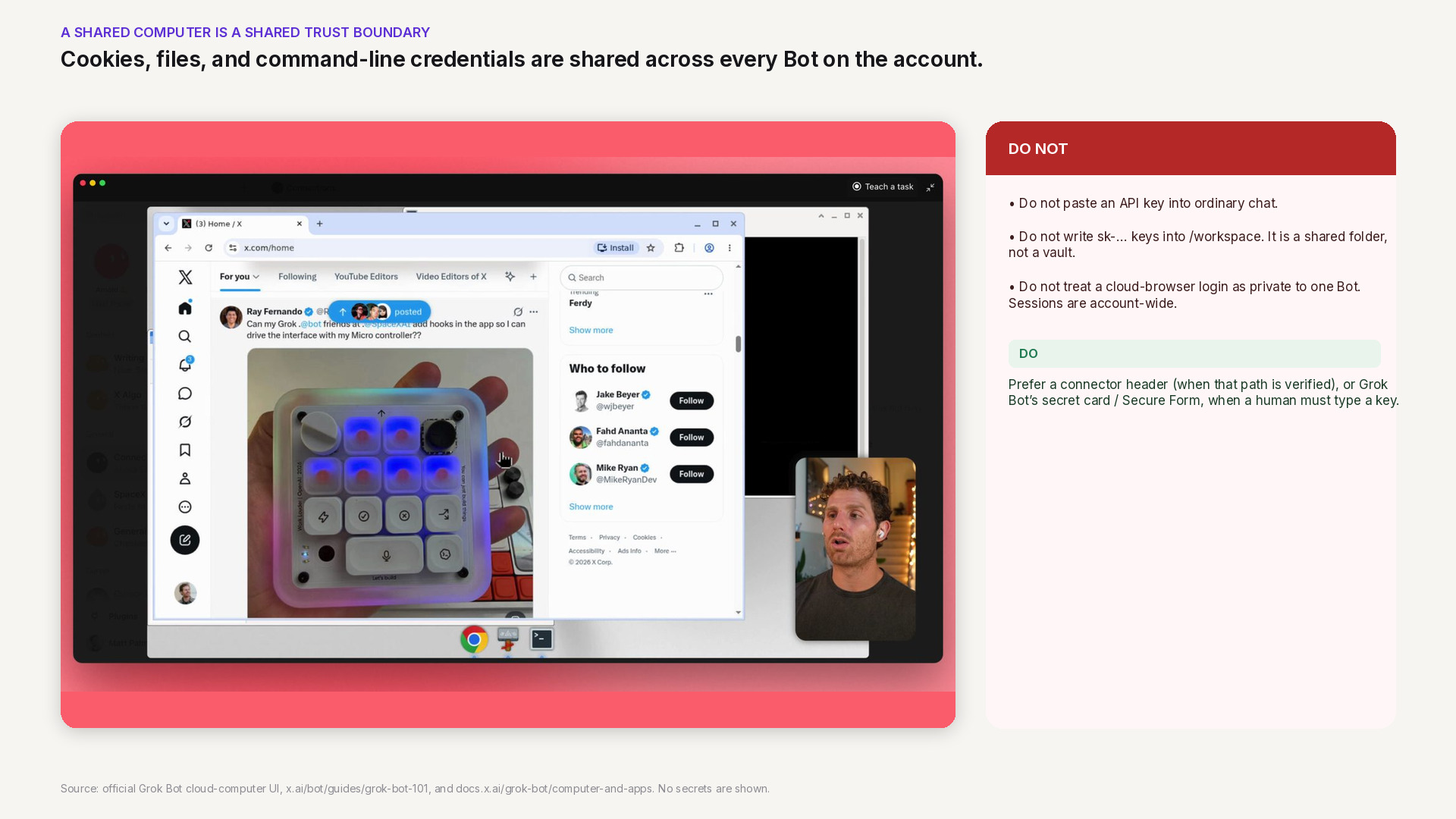
    Official Grok Bot cloud-computer UI with a warning that sessions, files, and CLI credentials are shared across Bots on the account. API keys do not belong in ordinary chat or in /workspace.

    A shared cloud computer, and the credential risk

    Grok Bot’s documentation is blunt about the computer. Every Bot on your account uses the same one. Browser cookies and signed-in sessions are shared. Files are visible to every Bot. Command-line credentials are shared. One Bot can continue from work another Bot saved. The computer is assigned to your user account, not to an individual Bot. Isolation between users is strict; isolation between your own Bots is not.

    That design is what makes handoffs between Bots possible. It is also a credential hazard if you treat the computer like a private laptop. A store login you complete so one Bot can download a reference pack is available to the next Bot that opens a browser. A file in /workspace is not a vault. An API key pasted into a prompt, saved in a scratch file, or typed into a page the Bot is watching can leak into a transcript, a log, or another role’s context.

    The safer pattern follows both products’ public advice. Orauria’s key should live as a connector header — if and when that path is verified — or be entered through Grok Bot’s secret card or Secure Form when a human has to type it. It should not be pasted into ordinary chat, and it should not be written to /workspace. If you sign into orauria.com in the cloud browser for Layer 2 work, remember that the session is account-wide: do not leave a privilege on that computer that a less trusted Bot should never have. We will return to vaults and key rotation later in this series. The point already belongs on the architecture diagram: a shared computer is a shared trust boundary.

    Design tradeoffs, and what to do next

    Three decisions follow from the documents we have, and they are enough to brief a build.

    First: MCP-first. If a step has a documented tool — generate, poll, list models, check the wallet — that is the path a skill or routine should call. It is the path you can test, and the path a specialist Bot can share without inheriting a click script.

    Second: use the UI when the tool does not exist. Workflow Builder, Fashion Poses, upscale, and the Chrome extensions stay on Layer 2 until they have contracts of their own. The cloud browser is a valid, documented way to reach them. It is not a substitute for a missing tool in an unattended routine.

    Third: do not inflate the diagram. Do not label Orauria as an official Grok Bot app. Do not assume the Bearer header already works. Do not hang a full merchandising OS on six tools. The thinness is a feature. A small, billing-aware MCP is something you can reason about, hire against, or extend without pretending the rest of Studio is already an API.

    To see how that MCP is documented for the clients it already supports, start at orauria.com/mcp. If you need a connector, a workflow, or a pipeline that does not yet exist as a tool, send a brief to Orauria’s custom AI team. A step-by-step tutorial for attaching Orauria to Grok Bot will come only after we have run that connection ourselves. Until then, this architecture is the map: three layers, a clear boundary, and no keys in the wrong place.
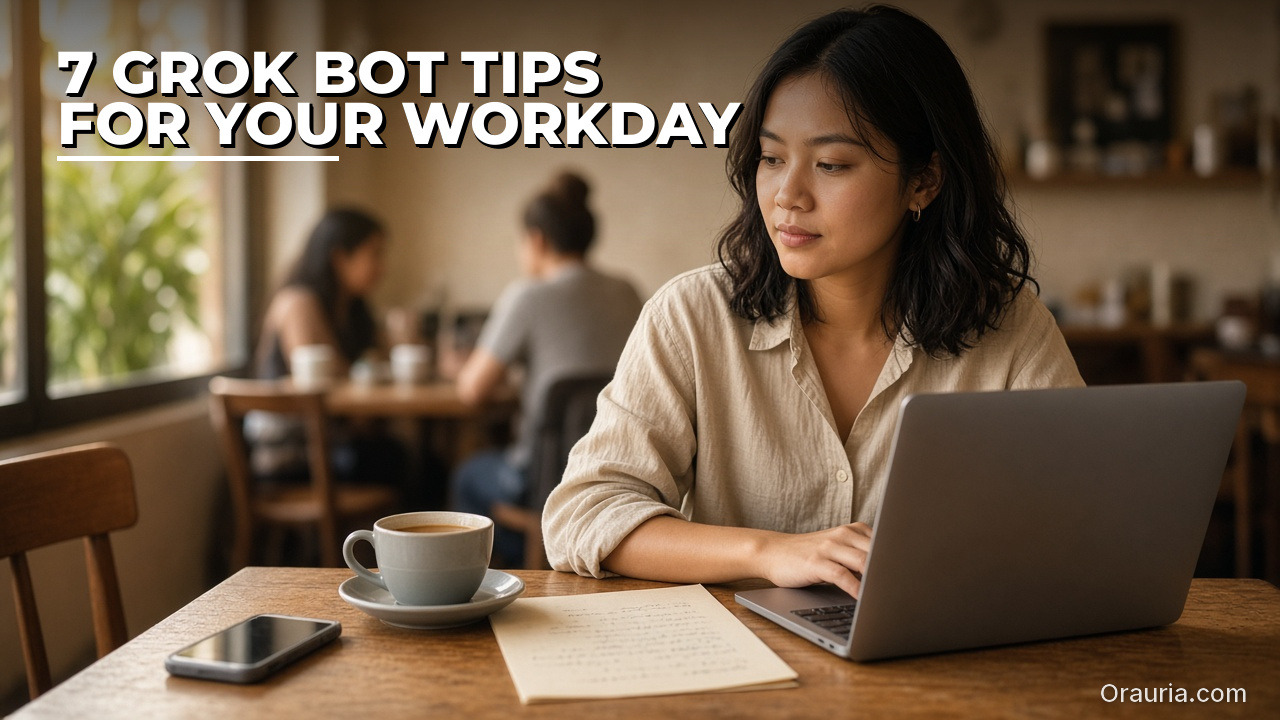
  • 7 Grok Bot Tips to Schedule Posts, Filter Upwork Jobs, and Research Faster

    7 Grok Bot Tips to Schedule Posts, Filter Upwork Jobs, and Research Faster

    If you freelance, sell products, or run a one-person marketing stack, a lot of the week disappears into three jobs that never quite end: planning the next social posts, scanning Upwork for work you can actually do, and researching a client, a keyword, or a competitor before you reply. Grok Bot is built for that kind of work. It is an AI teammate with a persistent cloud computer — a browser, files, and a terminal — so it can keep going after you close the laptop. Official pages on x.ai/bot and in the Grok Bot documentation describe skills, routines, Connect apps, and custom connectors, plus channels on desktop, mobile, Slack, and X. We checked those docs, together with official Postiz and Upwork materials, on 12 November 2026 (Asia/Saigon, UTC+7).

    This article opens a practical-tips series. It is not a partnership announcement, and it does not claim that Orauria is an official partner of xAI or Grok Bot. The first six tips stay inside features Grok Bot already documents, or that official plugins provide. The last tip is where Orauria comes in: when a scheduled post needs product images or a short video, you can extend the Bot with Orauria’s Studio and MCP tools — as a user-side integration, not a joint product.

    Key takeaways. Use Postiz to draft and schedule social posts, and keep a human in the loop before anything goes live. Use an official Upwork connector to filter jobs and draft pitches — then review them yourself before you spend Connects. Use web research and the cloud computer to turn a long reading pile into a short, sourced brief. Save a good run as a skill, put it on a routine, and talk to the Bot from Slack or X. When the work needs sell-ready product creative, attach Orauria.

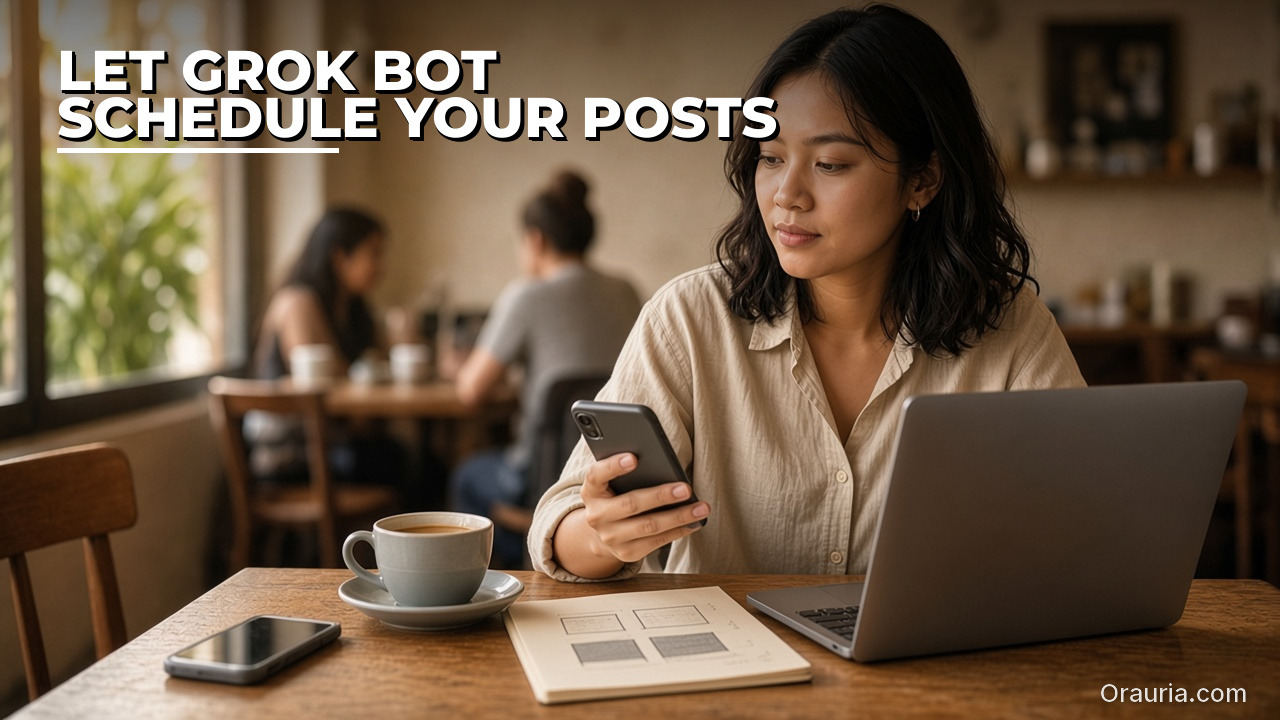
    The same freelancer sits in a cafe, checking her phone beside a notebook of sketched post squares and an open laptop. Hook text: Let Grok Bot schedule your posts.

    Let Grok Bot plan and schedule your social posts

    Most people start by asking a chatbot for captions, then paste them into a scheduler by hand. With Grok Bot you can keep the draft and the calendar in one place. Postiz publishes an official Grok Bot plugin for this. In any Bot chat you can run /add-plugin postiz, or add it from the Plugins sidebar or the marketplace listing. When you are prompted, store your POSTIZ_API_KEY as a Bot secret — not in ordinary chat. Postiz’s guide describes what happens next: the plugin installs a CLI and a skill on the Bot’s cloud computer, and the Bot can list your connected channels, draft posts, attach media, apply platform settings, and pick a time. It should ask you to approve before anything is published. Postiz says that coverage includes 30+ platforms, among them X, LinkedIn, Instagram, YouTube, and TikTok.

    The useful habit is not a one-off “post this now.” It is a queue. Keep approved copy and images in a folder on the cloud computer, or in a connected Sheet or Drive file. Then ask the Bot to build a week of slots — for example two posts a day, weekdays only — and to schedule drafts via Postiz for you to review. You can also save that as a routine, so every weekday morning the Bot checks for new drafts, books them into the calendar, and sends you a summary. Official Grok Bot documentation is clear that routines run in the cloud while your laptop is closed. Leave the last mile to yourself: captions, timing, and brand still need a person.

    The same freelancer sleeps in a quietly lit bedroom, with a phone charging on the nightstand and a closed laptop on a nearby table. Hook text: Filter Upwork jobs while you sleep.

    Filter Upwork jobs while you sleep

    Scanning Upwork at midnight is a poor use of a freelancer’s attention. A better pattern is a Bot that already knows what you sell, your minimum budget, and the clients you will not take, and that leaves you a shortlist in the morning.

    Grok Bot can connect to Upwork through a plugin, and Upwork documents its own MCP server for supported AI agents. Prefer that official path over asking the Bot to click through the site in a browser. Some sites block automation, and a browser login is a weaker, easier-to-break setup — and a poorer fit for Upwork’s terms — than a documented connector.

    A practical routine looks like this. Every few hours, or once in the morning and once in the evening, the Bot searches for jobs that match your skills, drops anything below your budget floor, scores the rest, and writes the good ones to a Google Sheet or a Doc. For the best two or three, it can look at the client’s public profile or website and draft a short pitch in your voice. Upwork’s own MCP FAQ is explicit on the next step: an AI agent can help you draft a proposal, but you review the details and explicitly confirm before it is submitted. Do not let a routine auto-submit. Connects cost money, and a weak pitch sent at 2 a.m. is worse than no pitch.

    The same freelancer sits at a tidy home desk, circling notes in a notebook beside a coffee cup and a laptop. Hook text: Research in 5 minutes, not 5 hours.

    Research in minutes, not hours

    The hook is a little sharp on purpose. A Bot will not always finish serious research in five minutes, and we will not pretend it will. What it can do is collapse the first pass — the tab explosion of “open twenty pages and maybe write notes later” — into a brief you can actually use.

    Grok Bot’s cloud computer includes a browser, so it can search the web and open pages when there is no app connector. The computer-and-apps documentation also says Bots can search and read what is public on X without you connecting an X account; that access is read-only. For your own DMs, bookmarks, or home timeline, you add the X plugin and sign in. When a connector exists for the place you want the notes to land — Google Docs, Sheets, Drive, Notion — use it. Structured tools beat a pile of untitled files in /workspace.

    Give the Bot a tight brief: the question, the audience, which sources to prefer or avoid, the output shape (a one-pager with links and a “still uncertain” list), and when you need it. Ask it to quote or link rather than invent. Then you read the brief, not twenty tabs. That is the real win: not a promise about the clock, but a shorter path from a question to a decision.

    The same freelancer files an index card into a standing organizer at a tidy desk, with a notebook and laptop nearby. Hook text: Save the workflow. Reuse it every week.

    Turn a good run into a skill

    A tip only sticks if you do not have to re-explain it every Monday. Grok Bot’s skills and routines documentation (updated 9 November 2026) splits this into two parts. A skill is a reusable set of instructions: when to use it, required inputs, the steps, how to check the result, what to return, and what needs your approval. A routine tells one Bot when to run that work — on a schedule, or when something happens in Slack, email, or a webhook.

    After you have had one clean run — a week of scheduled posts, a useful Upwork shortlist, a research brief you did not have to rewrite — ask the Bot to save the process as a skill. Put your constraints in the skill, not in a long chat: brand voice, banned claims, budget floor, “never publish or submit without me.” Then attach a routine only when the trigger is clear. The same docs page publishes rate limits: all of your routines together can run up to 300 times an hour, and each routine up to 200 times an hour. That is plenty for a freelancer’s daily queue; it is not a reason to fire the Bot at every new email.

    The same freelancer walks a sunlit city sidewalk, looking at her own phone, a tote bag on her shoulder. Hook text: Message the Bot from Slack or X.

    Meet the Bot in Slack or on X

    You do not have to open the Grok Bot desktop app to use these tips. Official materials say you can work with Bots on desktop, on mobile, in Slack, and on X. That matters when the work arrives where you already live. A mention in a Slack channel can start a job-filter pass. A message on the go can ask for a research brief before a call. Grok Bot also documents an email address for your Bots at mail.grokbot.com, and routines can start from an email or a webhook as well as from a clock.

    Treat public channels with the same care you would give a shared computer — because, in a way, you are. Do not paste API keys, Postiz secrets, or Upwork credentials into a Slack thread or an X message. Official Grok Bot guidance is to use a Vault, a Secure Form, or a secret card for passwords and keys. And remember the sharing model: every Bot on your account uses the same cloud computer, including its sign-ins and files. A convenience in Slack should not become a leaked key.

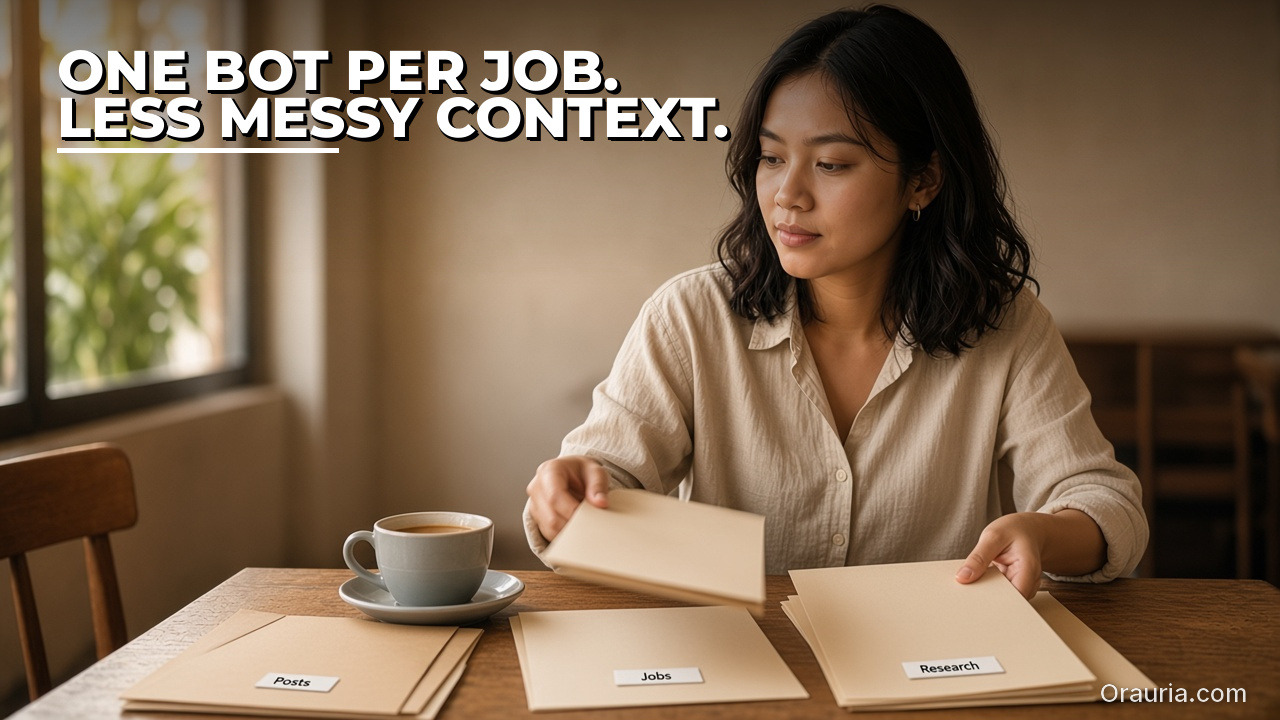
    The same freelancer sorts three plain folders labeled Posts, Jobs, and Research on a wooden table. Hook text: One Bot per job. Less messy context.

    Give each job its own Bot

    If the same Bot is writing Instagram captions, scoring Upwork jobs, and researching a competitor, context gets messy. Official Grok Bot materials describe running more than one Bot, letting them message each other, working in a group chat, and handing work along for you to approve. A simple split works well: one Bot owns the social queue (Postiz), one owns the job filter (Upwork), one owns research. They can still pass files to each other because they share the same cloud computer — which is also the caution. Cookies, sign-ins, and files are visible to every Bot you run. Separate Bots are a way to keep prompts and memory clean, not a security wall. Do not put a credential on the machine if another Bot should not see it.

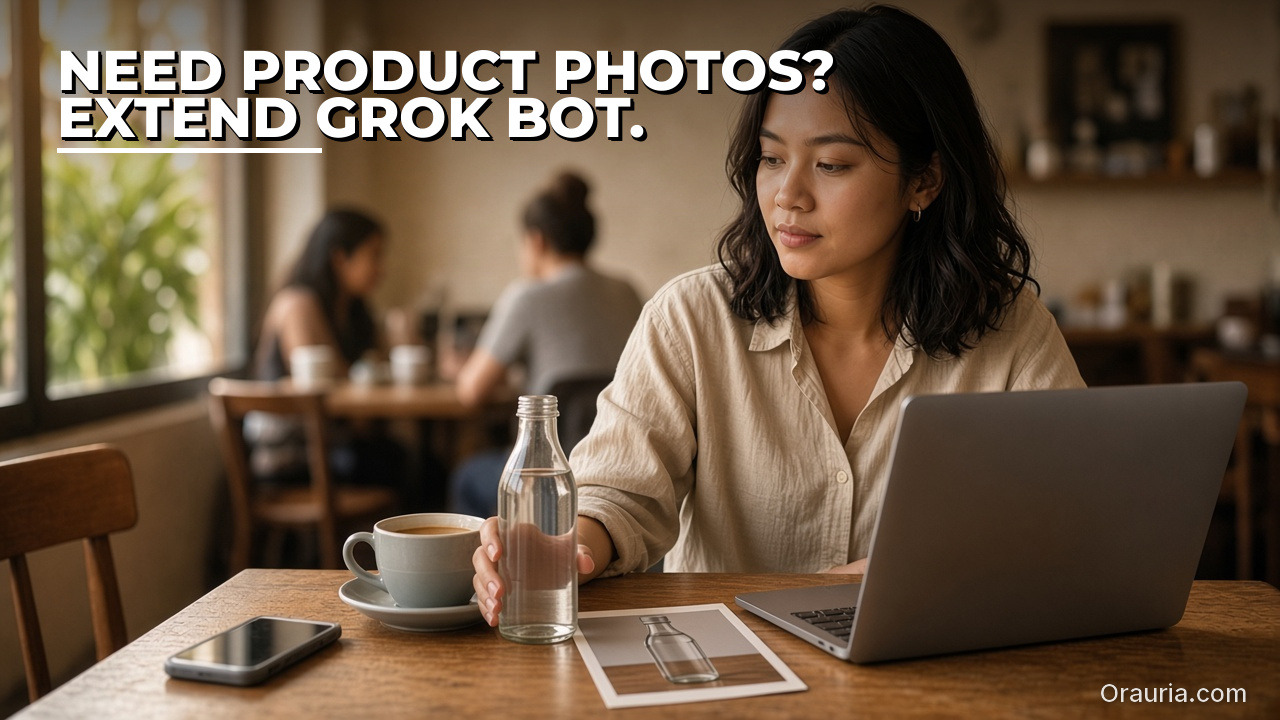
    The same freelancer holds a simple glass bottle next to a printed product photo at a cafe table. Hook text: Need product photos? Extend Grok Bot.

    When you need product creative, extend Grok Bot with Orauria

    Scheduling a post is only half the work if you sell a physical product. You still need packshots, ratio variants, and sometimes a short video. Grok Bot will not become a product studio on its own. That is a boundary, not a slight. For the creative layer, Orauria already ships Studio and an MCP server whose published tools include generate_image, generate_video, chat, list_models, get_wallet, and get_task. Calls use the same credit wallet and prices as Studio. If you are new to the product, start with What is Orauria or the MCP setup page.

    There are two ways this can fit. The intended default is to add Orauria as a custom Remote HTTPS connector, with an API key in an Authorization header — the shape Orauria already documents for Cursor, Claude, and Codex, and the shape Grok Bot documents for custom connectors. As of 12 November 2026, that path is documented design. Orauria’s MCP page does not yet include a Grok Bot recipe, and we have not published an independent end-to-end test inside Grok Bot. Until that test exists, do not treat this as a finished how-to. Keep the API key in the connector header or a secret card, never in ordinary chat. The second path is available today: a Bot can open orauria.com in its cloud browser and use Studio the way a person would, especially when you need a visual UI.

    If you want a connector, a skill, or a creative Bot built around your catalog and your approval rules, that is a software project. Hire Orauria to build it — the same team that already shipped Studio and the MCP server. The framing stays the same as in our earlier guide, What Grok Bot Is, and How Orauria Extends It for Product Creative: this is how to use Orauria with Grok Bot, not a claim of official partnership.

    What to try first

    You do not need all seven tips this week. Pick one queue that already hurts — the social calendar or the job board — connect the official plugin, run it once with you in the loop, and save the skill if the run was clean. Keep research briefs short and sourced. Keep keys out of chat. When the posts need product images, bring Orauria in, and if you want that wired into a routine instead of a one-off, send a brief to hire Orauria.

    Use Grok Bot for the teammate layer: schedules, shortlists, and first-pass research. Use Orauria when the work has to look like a product you can sell. Keep a person on the last click.